Ecosystem
A loosely-coupled, capable network of illustrators, painters, librarians, gardeners, engineers, entrepreneurs, and authors — people I met, worked with, and stayed in touch with.
The group formed after a layoff, when several of us were rebuilding at the same time. Spwashi is a strong ecosystem brand; underneath it are loosely-coupled agentic pools that trade work, vouch for each other, and share release rhythms without pretending to be one organization. I want this page to do two things: let you find the person you actually need, and let people reach out who'd like to join.
How It Works
The Shape
The network is loosely coupled but capable, with agentic pools that form around a task, cadence, or practice and gradients of initiative and capacity within them. Individual creators remain distinct: each person is differentiating and developing a unique combination of skills, references, and working rhythms. Some people are active in a given release; others stay in looser contact until the right work appears. The overlap is attention — everyone cares about paying real attention to the work. When a page or a flow is ready to be seen, the right part of the network can read it for taste.
Group chats can act as streams where ideas are workshopped and cultures of attribution are explored and discussed.
How Referrals Go
If you send me a project I can't do alone, or can't do well, I'll suggest one to three people. You take it from there. I stay available for context if useful, and step back if not.
I'm open to being a mentor, but I prefer cohort-shaped relationships to long-term 1:1 mentorship. In practice that usually means pointing to the Discord servers and creator channels that keep a shareable pace of development across dimensions. A living network is more useful than making myself the only source of guidance.
The page stays visible so a referral is really a bookmark, not a handoff.
What This Isn't
Not a directory. Not a marketplace. Not a certification scheme. People are added to the network by working together, not by signing up. That keeps the signal high and the door warm.
Regions And Relationships
People arrive from different rooms. The orbit’s worth is a small book of holds that stay in relation: a close, a taste note, a seed that renders twice, a series home, a referral that remains a bookmark.
Each region is a channel, not a stall. Count in the lab, name a beat in the studio, keep identity, boundary, and ledger policy in the vault companion. Start with one unary or one pair.
Studio
Commissions, plates, openings. Color and material live here. First beat →
Table
RPG Wednesday pressure-tests a figure before it hardens. Play →
Lab
Counts, gradients, phrases. State on a slider should name the next door. Count lab →
Vault companion
Seed, season, table version—holdings another system could reuse as policy, not as a pitch. Holdings →
Orbit
A growing network that can read a page for taste when people have the initiative and capacity. One note, not a committee report. Taste →
Close
The 13th and 26th are the shared landmarks. Relationship without a feed. Cadence →
Emphasis and palette change how a region is seen; they do not replace the hold. Tune those on settings and palettes.
Taste
People in the growing network will look at a page or a flow for taste when they have the initiative and capacity and the work is ready to be seen. You get one short note, not a committee report.
This is not a review marketplace and not a design committee. It is the same people who already share a close: they read for whether the room holds, whether the path is kind, and whether a phrase wants to stay. A $500 taste pass is one close. On a series home, it usually sits before a 13th or 26th ship — cheap to learn the page is wrong while it can still move.
If you are in the orbit and want to read, say so. The ask is the same as the rest of the ecosystem: show up for the people who show up for you. Neighboring crews—a table, a shared scene receipt, a parser phrase—can send a surface the same way.
Release Cadence
Release days are the 13th and 26th of each month. The A cycle closes on the 13th; the B cycle closes on the 26th. Twenty-four releases annually — at least one step more than doing nothing.
The cadence exists so that "I'm going to do something" has a real landmark attached. Two intentional ships a month is modest enough to keep, cumulative enough to matter. People in the ecosystem use it as a shared rhythm: some ship writing, some ship code, some ship dinners.
- A cycle / 13th — mid-month close. Often the smaller of the two releases: a polish, a migration, a note published.
- B cycle / 26th — pre-end-of-month close. Often the larger: a feature, a book chapter, a client deliverable.
- 24 per year — two dozen landmarks. Most yearly goals are tractable in that many steps.
You are welcome to adopt this cadence without asking. If you want to, I'm happy to pair you with someone else already on it — accountability is easier in parallel than alone. A taste pass fits on a close: the orbit reads, then the ship happens.
Join a Group
I know engineers, entrepreneurs, authors, and makers who'd like more of a village around their work. If that's you, reach out.
The groups are small (usually four to eight people), genre- or craft-aligned, and run at a steady low simmer. Some are project-based, some are practice-based, some are just "once a month, we show each other what we made." I'm happy to match you to one that already exists, or help you start a new one if the shape you need isn't here yet.
- Pair-programming cohorts — engineers working side by side, especially senior folks thinking about what's worth paying attention to as automation changes the floor.
- Authoring ecosystems — genre-aligned where possible; writers, editors, and readers who actually keep each other's work moving.
- Entrepreneur cohorts — founders who want peers who don't pretend to have figured it out.
- Makers & caretakers — illustrators, gardeners, cooks, librarians, anyone who works with physical materials.
@reach_out_about_a_group !email[directly]
There's no fee, no formal membership. The ask is that you show up for the people who show up for you.
Where You Can Watch the Work
The clearest way to know someone is to watch them think in public. These are the places where my work is visible — and by extension, where the ecosystem shows up.
RPG Wednesday
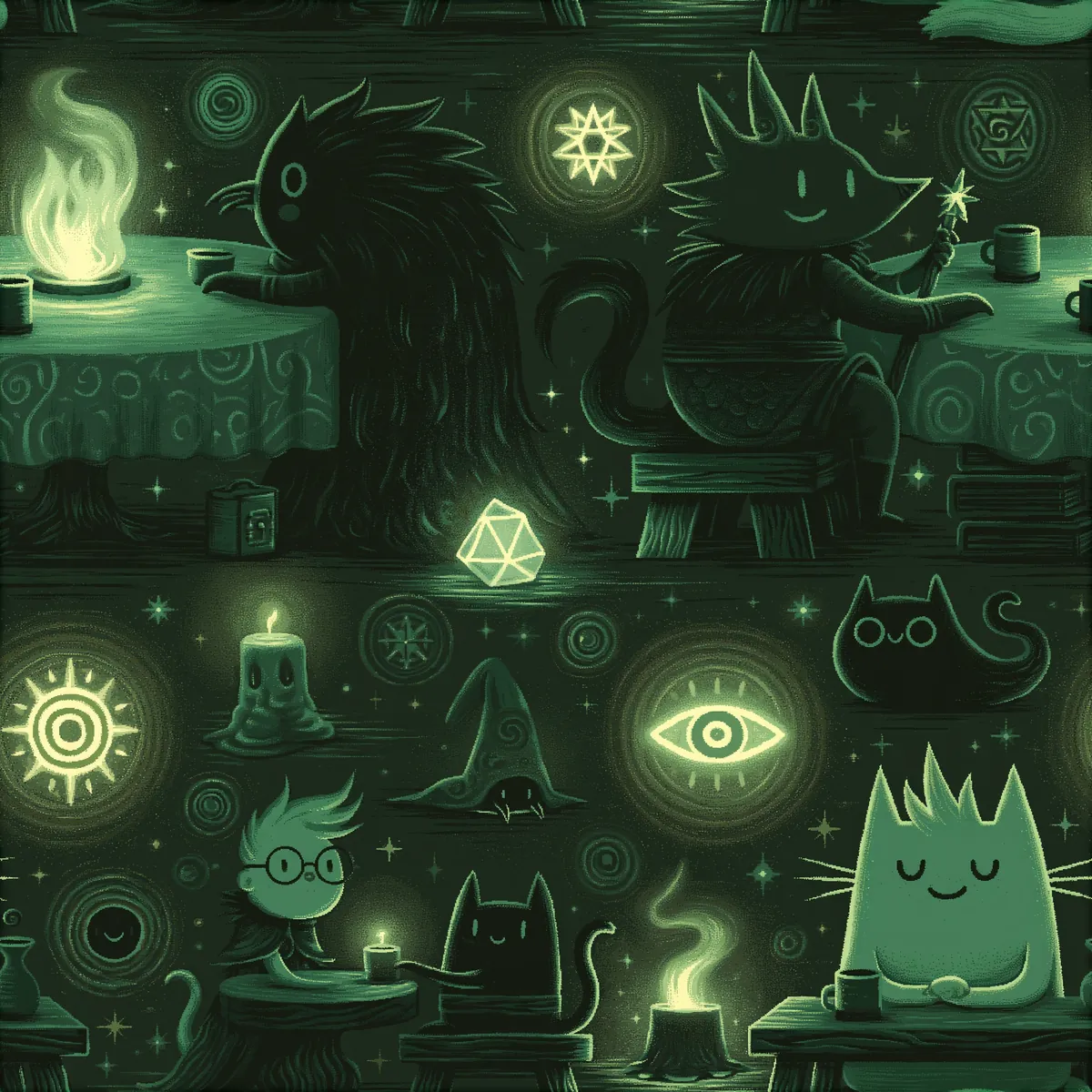
A recurring tabletop session. Watching how someone moves through a fantastical problem reveals how they handle uncertainty and credit others.
Pretext.js
A measurement-driven layout library. No reflow. Reads prose and writes CSS custom properties. Code as calling card.
spw-workbench
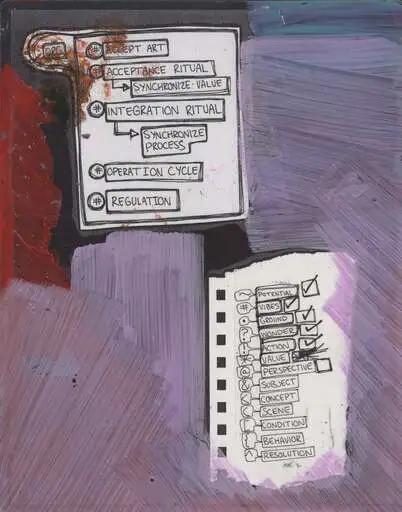
Public grammar research. Try a phrase in the literal parser first — if it holds, it is worth keeping as an idiom. The repo is for people who want the kernel under that.
lore.land
A show that is also a book. The public companion for long-form that should not stay in a vault. Series home is the same shape for someone else's story.

This site
A living system: semantic HTML as ledger, CSS as material physics, JavaScript as readable state. Every component has a declared contract.