Play Surface · Recurring Session
RPG Wednesday
A homebrew tabletop game my team plays on Wednesdays, with a table you can pull a chair up to on your own time: make a character, bring a doodle for the table to try, or keep a sheet of your own. This page is the table between sessions: who is in town, what the market needs, and how a drawing becomes part of the world.

Next table: Wednesday. Bring a doodle or one late-summer pressure. Leave with one artifact that can be read aloud.
- session
- cast
- world
- arc
- library
- language
- story
- communication
A recurring Wednesday tabletop RPG session and a shared working surface for collaboration under enchantment. It has been developing for more than a year, so the public pages focus on what repeats: character sheets, session logs, the Town Library, and a readable record that can keep growing. Start with a character sheet, then move into the session log, world, and cast once the canon has enough weight to keep.
lore.land is the pantry for this homebrew table: characters, places, motifs, and scenes you can bring into play. Some TikTok group chats with streaks — ours is 314 days, and the pet has outfits now — make art and tell stories around that canon on RPG Wednesday. Bring one small, otherwise inconsequential wonder. My own laminated folios grow alongside that shared play on the Art route.
Character sheets arrive first. Sessions are dated events. The world and cast become persistent references once details recur enough to matter. The local gameplay kit stores private table state in this browser for use during play, including clay bodies, gustational protagonists, cartoon nemeses, spill prophecy, and relationship beats that read more like timing, ritual, and repair than formal declaration. After play, the same notes can become receipts: a recap, a proof card, a prompt packet, or the next quest.
The party has met. Aetheris Solune and 'l'n'd'r are finding rhythm while a library is being built in town. That library is not background dressing. It is the current civic stage where records, magic, translation, and harmony across generations can take durable form.
It is also a pressure test for the rest of this site. If a prompt, card, or capture surface cannot survive a real table read, it probably needs another pass before it graduates into canon. Publishing starts as narration that can be revisited, cited, drawn, rehearsed, or converted into a prompt without losing the reason it existed.
Boonhonk is the wager here: boon, bane, bone, bonk, and honk functioning as readable transforms that can steer names, props, scene cards, and character logic. The public shape of the work matters too: captions, transcripts, and clear route labels let humans and external models review the page for education, entertainment, literacy, numeracy, and worldbuilding intent without needing to infer the purpose from the mood alone. The Town Atlas keeps the story bible separate so the play surface can stay focused on what is happening now.
Topic links are not here as decoration. They are metacognitive exits: algorithms for procedure, statistics for evidence, scale intuition for scope, nutrition for inputs, and mental health for return paths that help a practice keep going.
Culinary technique is a practical gameplay grammar here. A session can begin with mise en place, reduce to one playable pressure, emulsify character motives, ferment a slow mystery, and end with service: what the table can carry back into notes, art, or the next route.
Materials can carry table logic too. Clay remembers pressure, broth carries flavor, glass reveals and distorts, copper oxidizes, and rice paper glows at the edge. Use those properties as scene prompts only when they point to a playable behavior: warn, reveal, bind, soften, fracture, or return.
Tropes and jokes need ingredient discipline. Some arrive as base stock, some as garnish, some as heat, some as acid, and some should stay unopened until the table has enough context to taste them. The goal is not to explain every joke; it is to give the world enough timing and dimension that the joke can land cleanly when served.
Linguistics, storytelling, and communication are not three separate rooms on this site — they are three postures on the same evolving material. Linguistics names the signal before grammar. Storytelling turns the signal into scene pressure. Communication asks who receives it, through which channel, and what proof survives the week. The language evolution workbench, trope forge, and local kit demonstrate that ladder in public: scratch in private, grammar in handles, canon in routes, publication in cards and briefs a patron or collaborator can inspect without guessing the mood.
Spw interactions should teach the same distinction a table needs: a click projects you into the next surface, a deliberate hold acknowledges resonance, and a collected value becomes material for later play. That makes links, sigils, recipe terms, and character handles feel like interoperable props instead of decoration. The same cauldron (hook for jump-to-highlight on interactables/categories; utility toggle for subtle/balanced/prominent visibility of candidates) and spell trails that live in the Library are at work here; when you plant from the cauldron the trail remembers the gestures that fed it. Subvocalization and attentional refinements (resonance probe + handle) tie directly to priming, discharge on sections/lists, and cauldron/spell bidirectional magic for inner-speech rehearsal of operators.
RPG Wednesday should feel like a recurring occasion where potential has been prepared in advance. Bring a specialty, a technique worth trying, a vocabulary word, a recipe question, a visual hypothesis, or a cheerful reason a concept deserves to exist. The table can then celebrate the material by testing what it does.
Wednesday, August 26, 2026 is a stacked clock: B-cycle close and the weekly table on one night. The wager stays the same — can public play become language, story memory, and proof worth funding? This week’s seed is late-summer market pressure: a deal that expires, corn that will not wait, a coupon that is a one-use scroll. Bring one of those to the table and leave with one artifact — brief, card, scene prompt, image packet, or library note — that survives a read-aloud or screenshot.
because live play should survive the night as usable memory, shotboard material, and episode pressure without losing the energy that produced it.
doodlers and illustrators first, then players, GMs, filmmakers, actors, developers, and worldbuilders who want one table artifact to carry canon, staging, and promptability together.
session recaps, cast pressure, world rules, arc candidates, episode hooks, scene prompts, and visual-reference packets that can move into production.
Real-world analogs that make scenes playable
A strong analog should change what the table can do. It gives a player a behavior to try, a conflict to notice, or a material constraint that can produce a turn.
Classification, circulation, quiet policy, archives, and public access become playable rules for who can find, borrow, hide, or preserve knowledge.
Arrival, seating, menu rhythm, refusal, repair, and service timing turn social care into table action instead of background flavor.
A sale is a timer. A coupon is a one-use scroll with a limit. Marked-down corn and tomatoes are spoilage clocks. Couponing is not flavor text; it is scarcity you can play.
Ants trail. Bees forage remaining nectar. Paper wasps keep caterpillars. Nest-cooling is hospitality. Last-use is expensive. A friend’s hymenoptera RPG keeps its own cast; this table may share keepers and forage clocks. How to live beside them: seasonal ecology.
Ramps, markets, drains, notices, routes, and maintenance schedules make the town feel governed by systems people can navigate or break.
Use the analog as a constraint first, then let wonder move through it. If a public library, kitchen, workshop, garden, clinic, or transit stop would have a policy, habit, bottleneck, or repair protocol, the scene can have one too.
- Coded lunchDabbawala marks. A tiffin at the wrong desk is a failed route.
- Ditch turnAn acequia junction: water in equals water out, on a clock.
- Dark earthTerra preta. The yield is a midden you can read in layers.
- Solar termA planting date. A forecast that cannot beat it does not move a row.
- Grain ledgerThe Nine Chapters. Three grains, several carts, one fair division.
- Three sistersPole, climb, shade, then a skillet. The bed shrinks and someone loses a row.
- Alkali and starterNixtamal and qu. Miss a condition and the dough tears or the crock dies.
- Pot, not clinicOne pot, a clock, and a spoken limit. Care can be played. Diagnosis cannot.
The deeper grammar for tending these forces (semantic labels, brace priming, the memory cauldron, spell trails) is introduced gently in the Library garden.
Image publishing loop
Favorite Midjourney images should not float as isolated trophies. A kept image earns a public role when it becomes a dated session prop, a private vision, a library ward, a cast reference, a world rule, or a shotboard beat that someone can cite later.
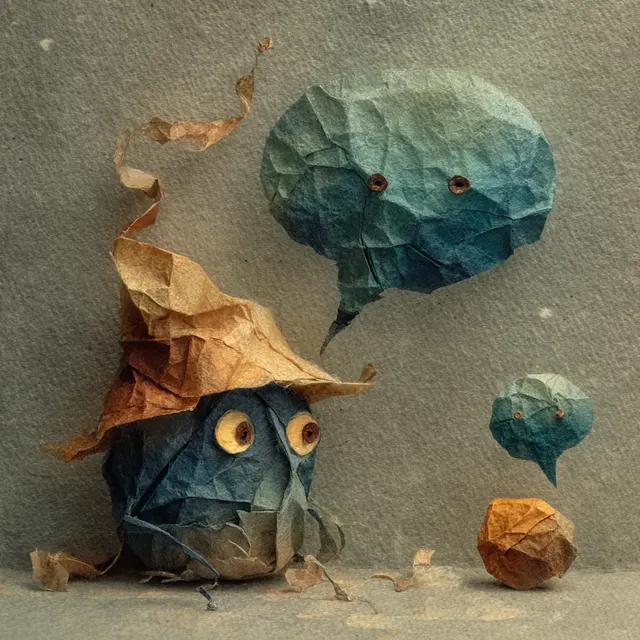
.spw sidecar metadata.
This is also a screenshot contract: visible headings, captions, operator handles, and route links help models interpret the image’s role when a screenshot is fed back into a visual workflow.
A shared meal can carry etiquette, debt, care, refusal, repair, and rank. Library tea cake, market-day stew, or lantern broth can say what a speech would flatten.
meal -> relation
Seeds, pests, weather, storage, and harvest make time playable. A town remembers what it had to tend.
growth -> consequence
Some magic should behave like culture: it needs a vessel, a starter, a boundary, a temperature, and enough time to become itself.
conditions -> spell
If saffron, cacao, citrus, coffee, black garlic, or a magical salt is inconvenient to make nearby, let it arrive with a person, favor, rumor, substitute, guild habit, or small risk.
route -> character
Carrots, cucumbers, corn, peppers, potatoes, squash, and cabbage can become recurring comfort: dips, pickles, roasted edges, and small rewards between heavier scenes.
snack -> return
Gumbo can teach integration, chili can teach heat and variation, succotash can teach companion crops, and barbecue can teach slow systems under care.
dish -> concept
Lantern broth, market stew, gumbo, chili, or stockpot soup can turn many separate clues into one served context.
many -> bowl
A wing sauce, gravy, stock, herb oil, or brine can turn leftovers into value. That is good cooking and good campaign design: do not waste the residue.
residue -> reward
Pastry can function as an attention model: crust as boundary, filling as motive, slice as frame, lattice as relation, and service as reveal. The geometry gives the room a practical way to look.
pie -> attention
Mr. BoonWAP should be able to survive three tests: a table scene, an augmented-reality story prompt, and a restaurant or pop-up truck concept where flavor, mascot, ordering ritual, and lore all reinforce each other.
protagonist -> medium
#>rpg_wednesday
#:layer #!play
#:surface #!event_log

^"structure"{
 sessions: ~"./sessions/"   @event  session log, dated /YYYY-MM-DD/
 world:    ~"./world/"      ^object  stable setting and lore
 cast:     ~"./cast/"       ~refs    character reference nodes
 arcs:     ~"./arcs/"       ?[probe  narrative thread groupings
}
Sessions are events at specific moments in time. The world is the stable setting those events happen inside. Cast members are references back into sessions. Arcs are open questions carried across multiple sessions.
The URL structure follows the Spw operator model. See the grammar surface and the deeper spw-workbench notes.

Thirty-one pieces in October
If you draw, October is a good month to draw with the table. Do Inktober one piece a day, or work in batches and scan thirty-one pieces by the 31st. Either way counts.
Thirteen pieces scanned earns bonus morale at the first close. Post them together; the table notices.
Cycle A
Twenty-six pieces is the second close and a second round of bonus morale. The set is starting to hold a style.
Cycle B
Thirty-one finished and scanned. A finished set may be offered as a reference entry on lore.land, credited to you, if it fits the world and you want it there.
Cycle C
The table shelf
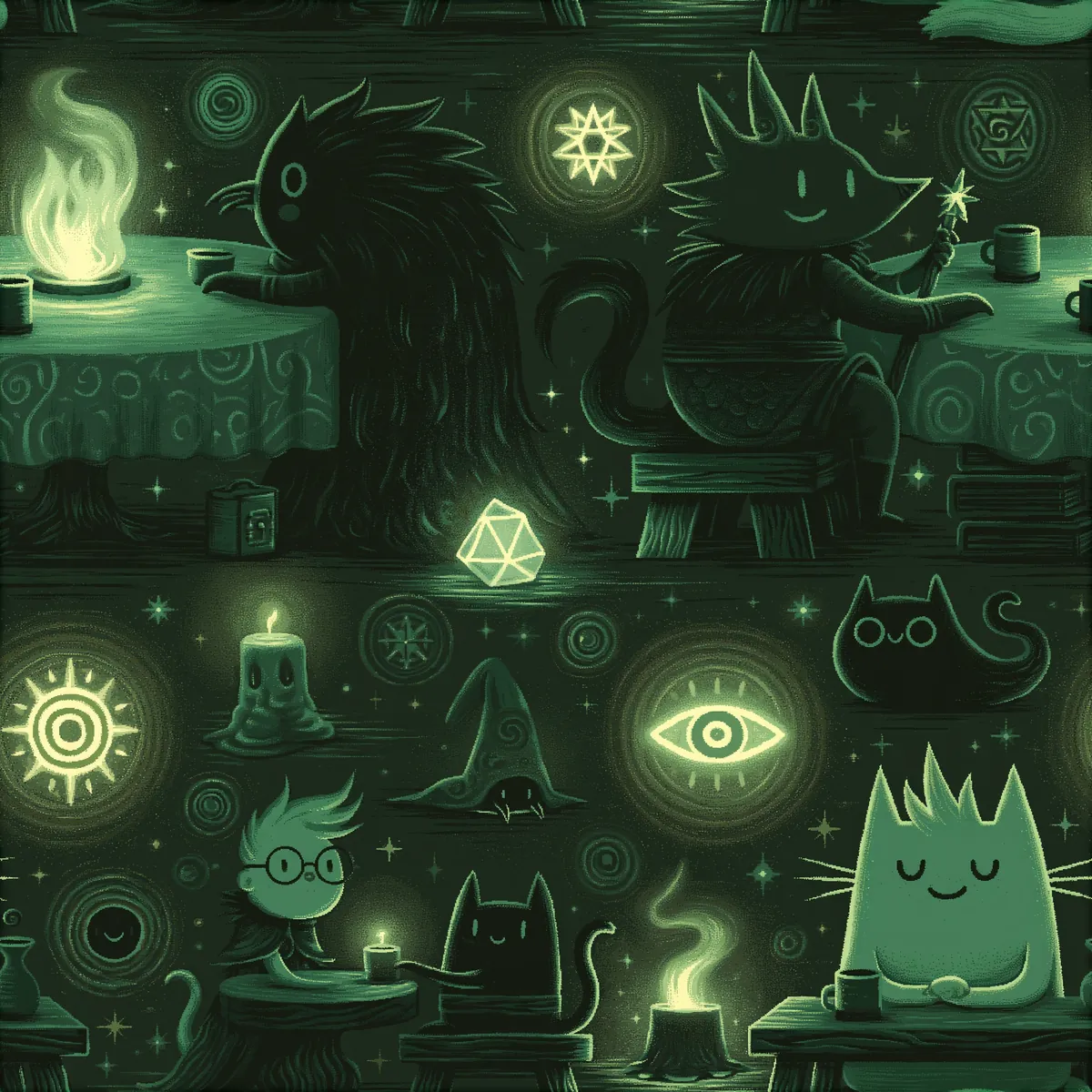
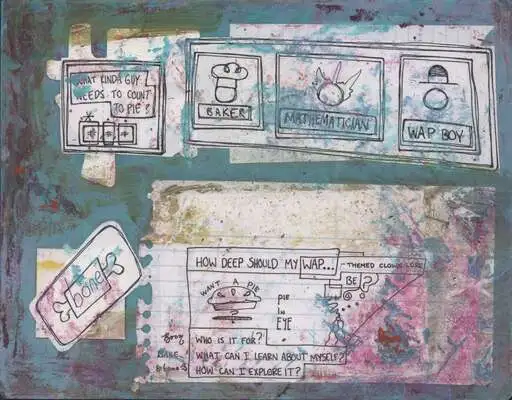
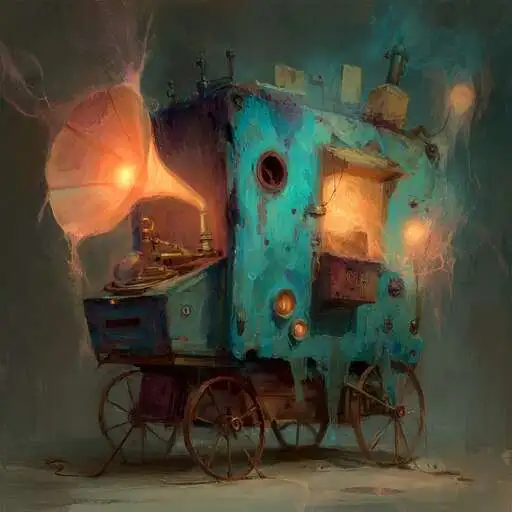
New table art lands here as it is scanned: mine first, then pieces other artists offer. Each one arrives with a caption someone can read aloud and a line on where it sits in the world.
Scanning tips: flat light, the whole page in frame, one file per piece named by day (ink-2026-10-13.jpg). The image publishing loop covers what happens next.
Start Here
This route works best when it gives you an immediate first move. Choose the path that matches how you arrived: as a player, a reader, an illustrator, or someone trying to understand the wider medium.
Use the session log and character sheet when you want play to stay legible after the table.
Use the library and shotboard when you want a drawable object. Midjourney packets here are briefs, not replacements: they show what the table already understands so a hire can start from pressure, not from vibes.
Use the cast and arc routes when you want timing, voice, and unresolved pressure that can be rehearsed later.
Why this card exists
Characters need a private place to form before they become public cast memory.
This route produces a starting point for players, illustrators, and collaborators who need a person before a whole session.
Why this card exists
This is the route for making play legible as study, documentation, and a public learning surface.
It keeps the campaign close to the library metaphor instead of letting it drift into a generic menu.
Why this card exists
This card exists for one-person development work that should remain editable before it is public-facing.
It is the place to sketch a portrait, voice, or pressure lane before promoting anything to cast status.
Why this card exists
The log is the source of truth because a campaign needs chronology before it needs theme compression.
It can produce recap seeds, episode pages, and durable memory of what actually happened at the table.
Why this card exists
This card exists so image work can stay close to campaign memory and not become a separate archive.
It helps collaborators stage visual canon, shotboards, copy-layout experiments, and prompt packets before rendering anything.
Why this card exists
This route keeps the site from collapsing every question into the same campaign vocabulary.
It gives the reader a place to move sideways when the current problem is really procedure, evidence, or scope.
Why this card exists
This card connects campaign play back to interface design so the site can learn from its own game surface.
It produces better hooks, better cards, and better handoff seams for the next session.
public canon should grow from actual play, not from a summary written too early.
you need session recaps, cast pressure, world rules, arc candidates, or a route that can teach the table back to itself.
episode pages, trope candidates, magic-system experiments, scene prompts, and reusable artifacts for collaborators.
Promotion Ladder
Private table residue should mature in order—scratch before resonance, resonance before grammar, grammar before canon. The state curator shows live counts from this browser; the workbenches below are where you edit each lane.
Cross-route rule: language evolution, character hooks, and world slots can write into the local kit even off the hub. The curator refreshes whenever any RPG workbench saves in this browser.
Enable JavaScript to use the language evolution workbench: posture switch, stage rail, copyable brief, and promotion into kit lanes, character hooks, and world slots.
Turn Concept Clusters Into Playable Tropes
Factshift began as a mindful interface for considering concepts: sparse fields, labels, hashes, and small handles that let an idea sit in view before it becomes explanation. This forge translates that posture into spwashi.com utility for dimensional imagination, shared play, visual prompting, and language-model-readable story development.
A render like Boonhonk is useful before it is finished art. Treat the central object as the current proposition, the surrounding marks as adjacent concepts, the data hash as a memory handle, and the empty field as permission to keep considering. From there, a character, prop, sensory rule, joke, dream seed, or tabletop complication can be developed without losing the source relation.
A tile matrix does a different job. The marked square can be an exception, a premise, or a blocked move. The color blocks become semantic slots: warmth, danger, depth, vegetation, bruise, brass, water, shadow, paper, or appetite. The circles behind and below the grid become latent forces, while the bright teal orbs read as active emphasis. This gives models and collaborators a compositional grammar instead of only a palette.
A numbered side rail adds the learning posture. Read spw, story, debug, query, node, filter, map, color, and reflex as different ways to ask the same concept what it is doing. Color asks for palette and lighting. Story asks for consequence. Query asks what to search or prompt. Debug asks where the concept is failing. Reflex asks what the interface or player does back.
Name the light source, temperature, contrast, material glow, and palette tension before asking for a render.
Use taste, texture, aroma, sound, pressure, and service rhythm as concrete story variables, not just mood adjectives.
Attach domains, methods, and pleasant dream conditions so the concept can become study, image prompt, scene beat, or restful imagination.
1. Name The Concept
Give the cluster a readable handle before polishing it. A strange name can stay valuable if it also carries a plain-language gloss.
concept[name]{label.handle} · example: Boonhonk, boon pressure, friendly alarm, table reward
2. Gather In The Cauldron
Collect related ingredients: color, material, sensory cue, research domain, character pressure, trope family, and one constraint that keeps the idea from becoming generic.
cauldron[cluster]{gather.adjacent} · color · texture · topic · relation · constraint
2b. Read The Matrix
When the concept arrives as a grid, read by position and contrast: marked cell, missing cell, repeated hue, shadow row, active orb, muted background, and which colors are allowed to touch.
matrix[concept]{slot.mark.orbit} · layout becomes semantic evidence
2c. Pick A Dimension Rail
Use the rail as an analysis pass: spw for grammar, story for arc, debug for failure, query for prompts, node for object relations, filter for constraints, map for spatial logic, color for palette, and reflex for response.
rail[dimension]{select.posture} · one concept, multiple readable passes
3. Cast A Consequence
Turn the cluster into a table move: warn, invite, reward, distort, reveal, bind, soften, fracture, return, or make a small public promise.
spell[trope]{cast.consequence} · move first, lore second
4. Test Topical Rigor
Route the trope through at least one neighboring domain: algorithms for procedure, statistics for evidence, scale intuition for scope, nutrition for care, or mental health for return paths.
topic[rigor]{route.evidence.limit} · prevents lore from floating away
5. Build The Render Packet
Prepare a compact prompt packet with lighting, color, material behavior, sensory vocabulary, camera relation, and what the image must communicate after the joke fades.
render[packet]{light.palette.material} · useful for Midjourney, ChatGPT Images, Gemini, Firefly, or hand drawing
6. Promote Only What Repeats
A concept becomes RPG Wednesday canon when it survives use: the table repeats it, a collaborator can cite it, or it produces a better scene, prop, dream, card, or shared play artifact.
canon[promote]{repeat.cite.share} · memory earns public status
Use this forge when a screenshot, phrase, food image, interface sketch, research note, or generated render has "some data" but not yet a story. It keeps abstraction generous while giving language models and collaborators enough nouns, verbs, domains, and constraints to continue the work. Pair it with the language evolution workbench when the question is how wording itself should mature across the week.
Why Fund This World Surface
RPG Wednesday is not only play. It is a recurring proof engine: language evolves at the table, story pressure accumulates in routes, and communication artifacts become inspectable without a separate pitch deck. This frame names what a patron, producer, or investor can verify on the site itself.
Players, story workers, illustrators, educators, and toolmakers who need one surface where play memory, visual canon, and readable systems stay linked.
A public campaign register with local kit, trope forge, language workbench, Town Library quests, asset atlas, and promotion lanes from private notes to publishable proof.
More than a year of recurring Wednesday structure, dated session routes, character sheets, library build arc, boonhonk genre physics, and screenshot-ready cards with spoken hooks.
The world compounds: library civic stage, clay-body speech physics, quinary characters, animated-series storyboard lane with Raven of the Broken Biscuits, and TikTok-readable code rituals.
lore.land serial horizon, curriculum bridge, AR story prompts, restaurant/pop-up prototypes, proof cards, and a skill OS loop that turns imagination into operational evidence.
Fund a production sprint: one animated beat, one library card edition, one public session log, and one language-evolution brief that survives investor review.
The wager is simple: if the table and these pages cannot leave a usable artifact this week, the bet fails in public. If they can, that same artifact is session memory, a still, and something a collaborator can fund without rewriting the world.
Local Gameplay Kit
Enable JavaScript to use private localStorage and IndexedDB tools for character-sheet drafting, scene state, initiative, tappable clocks, a Spw physics script, scratch notes, character beats, canon candidates, copyable recap seeds, and a local asset atlas for scenes, images, textures, and items. A scene can begin with only a title and deepen later. If you want the public-facing version first, begin with the character-sheet builder; the campaign pages remain readable without any scripting.
Scratch stays private. Use it for rulings, overheard lines, loose images, and half-formed reactions before they deserve a route.
Promote when useful. Move a note into character beat, canon candidate, recap seed, or name fabric when wording starts shaping the next decision.
Publish after pressure. The public pages should receive memory that repeated, changed play, or helped another person re-enter the scene.
Why this kit exists
This kit keeps private table state close to the campaign while leaving the public routes clean, searchable, and usable without JavaScript.
It helps the table track temporary scene pressure and produce later recap seeds without forcing every note into canon immediately.
Code can be read out loud on TikTok. A group chat lets multiple creators share a rhythm of production, maintain momentum, and keep one person from burning out while the canon develops. The local kit is intended to make those live riffs easier to stage, regroup, screenshot, and describe aloud without pretending they are public canon yet.
The adjacent mental-health topic is part of the same question. Good play surfaces do not only store lore. They give people a light enough return path that a concept can keep growing across the week.
Journal to Canon
The local kit is most useful when each note lane has a job. Keep emotional residue private, but promote recurring beats and stable facts quickly enough that the campaign can remember itself. When a relationship is developing, write the offers, refusals, timing, and repair beats before trying to explain the whole theory around them.
Scratch notes
Use these for rulings, loose dialogue, and impressions you are not ready to share. They are for the table, not for publication.
Character beats
Write what changed in a person: fear, trust, obligation, self-image, appetite, or the shape of a ritual exchange. This is the bridge between gameplay memory and character development.
Canon candidates
Mark names, places, items, rules, and promises that should move into the cast or world registers once they recur.
Session recap seeds
Use short recap seeds for what other players, future collaborators, or author-you need to remember when the next session or public write-up begins.
Name fabric
Track when the wording itself changes the scene: acronym pressure, boon/bane/bone/bonk/honk drift, title mutations, or the point where a joke starts acting like a rule of the world.
Read-aloud hook
Every promoted note should be able to survive one spoken sentence. Give it a stable title, a clear subject, and one line that a player or screen-reading agent can carry forward without the whole context window.
Authors can use the same ladder outside of games: keep residue private, name character pressure, promote durable world facts, then publish only the notes that survive contact with the next draft.
Weekly Affairs: Crops, Recipes, Trade
A campaign can increment more than plot. Pantry state, crop experiments, local ingredients, recipes, and slow hobbies all give the week somewhere practical to accumulate. This is also a good place to practice small evidence habits, scale awareness, and layout as procedure without leaving the story surface behind.
This week’s pressure · Saturday, August 22
The Sale Clock
A grocery deal is a timer. A coupon is a one-use scroll. Cook or trade before the mark-down vanishes. Kitchen list: Early September, Chicagoland. Food line: Now. Keepers: seasonal ecology. At the table, pick one beat: succotash pact, fridge pickle, peach hospitality, or a keeper (forage, trail, nest-cooling).
Crops as world-state
Track which herbs, grains, beans, roots, or preserved goods are abundant this week. That gives trade, scarcity, hospitality, and travel a material basis instead of only flavor text.
Recipes as party memory
A shared stew, tea, flatbread, ferment, or market lunch can become a recurring object like any other piece of canon. Players remember tastes, rituals, and tools surprisingly well.
Ingredient loops reward return
Use the same crop loop outside the fiction. If a player is growing herbs, trying a bean dish, or refining a weekly breakfast, that can feed directly back into the table's imagination about labor and care.
Low-noise prompts are enough
This week’s titles: The Sale Clock, Coupon Scroll, Three-sisters skillet, Fridge-jar dawn, Goldenrod forage, Nest cooling. The rest can arrive later through card edits, screenshots, or exports.
Keepers, not a borrowed cast
Late August: bees on remaining bloom, paper wasps on the garden, ants on harvest trails. If a scene needs an insect beat, play forage, trail, or nest-cooling. Neighboring insect tables keep their own names.
Weekly practice also lives on nutrition. The kitchen and the table keep their own lists.
Cadence as Gameplay
Use the 13th/26th release rhythm and the Wednesday table rhythm as two different clocks. Release days close production cycles. RPG Wednesday converts what closed into reflection, rules, scene pressure, and artifacts.
Probe days
Early-week motion asks what is available: one question, one crop, one image, one unresolved cast pressure, one scene seed. In Spw terms, this is ?[probe].
Frame day
Wednesday is the playable frame. Bring the probe to the table, choose one pressure, and let actual play decide what deserves memory. In Spw terms, this is #>frame @play.
Cycle close
The 13th and 26th should bind output: a session note, a prompt pack, a card, a recipe image, a route patch, or a production question. In Spw terms, this is ^artifact.
Streak spark
A streak is useful when it becomes more than a number. At 314 days the group pet has popped and wears outfits. Let the next return be a small, otherwise inconsequential wonder — a costume note, a scene hat, a soup — not only a production launch. The math lives on streak math.
Mechanic sketch: if a discovery reward appears during the cycle, attach its day, motion, reward kind, and production seed. Toasts are quick returns, popups are navigational sparks, and modals are stronger briefs for artifacts that should become cards, prompt packs, or session notes.
Asset Atlas Protocol
The local gameplay kit already carries a working asset atlas in the local kit. This section is the protocol for what gets promoted out of it: which card shape earns a screenshot, which metadata stays attached, and how a stable table card becomes prompt material, a storyboard panel, or later SVG cleanup work.
The composable fundamentals are simple on purpose: title, kind, namespace, timeline, hook, proof. Scene, dice, swag, texture, item, and threat cards can all use the same grammar if the title stays speakable and the proof stays local enough to trust.
Table narrator: what if today only needs one good scene frame, one die-result card, and one piece of recurring swag? That is already enough to remember the session by.
Storage boundary
Images should live in IndexedDB. localStorage should keep only metadata such as ids, labels, namespaces, timelines, tags, sheet cues, selected motif, and the current preset or filter state.
Composable fundamentals
Every durable card should tell you its title, kind, namespace, timeline, spoken hook, and table proof. That is enough structure to stay flexible while still being easy to sort, read aloud, compress, and export later.
Storyboard pass
When a scene feels promising, split it into three handles: what the panel must show, what the caption must preserve, and what an artist can change without breaking the beat. That makes layout workshop-friendly before the image exists.
Prompt bundles
A saved card should export more than an image dump. Keep the screenshot, the short prompt hook, the tags, the namespace, and the timeline together so Midjourney, ChatGPT Images, Gemini, Firefly, Ideogram, or a later collaborator gets the same local contract.
Screenshot pass
Controls should recede, contrast should increase, and the card should lock to a predictable aspect lane while leaving a manual exit path. The screenshot stays manual because human judgment still decides when a card is ready.
SVG cleanup handoff
When a card keeps recurring, hand it off with the role, the stable silhouette, the material cues, and the mutation budget. A simpler coding model should know what may change and what has to stay anchored for the canon to remain readable.
Screen-reader hook
A good card keeps a plain-language title, a one-line spoken hook, and a concise caption explaining what matters in the image. That is useful for accessibility, but it is also useful for collaborators who meet the canon through read-aloud tools or voice notes first.
JSON and video lane
Later the same bundle should be able to feed a JSON export or a short video wizard: title, namespace, timeline, tags, prompt note, spoken hook, and image references arranged so a recap reel or narrated overlay does not have to guess the canon.
Recent generator shelf
As of April 22, 2026, the nearby shelf includes Midjourney, ChatGPT Images, Gemini, Adobe Firefly, and Ideogram. Mention image generators in general first, then name the shelf when the date actually helps the handoff.
Discord keeps the live memory, TikTok keeps the performance beat, and the atlas keeps the table from losing good material between sessions. I am also currently fundraising and storyboarding for an animated series with Raven of the Broken Biscuits; later this surface should have a credited place for Raven's art that does not imply it is mine.
'l'n'd'r
The character
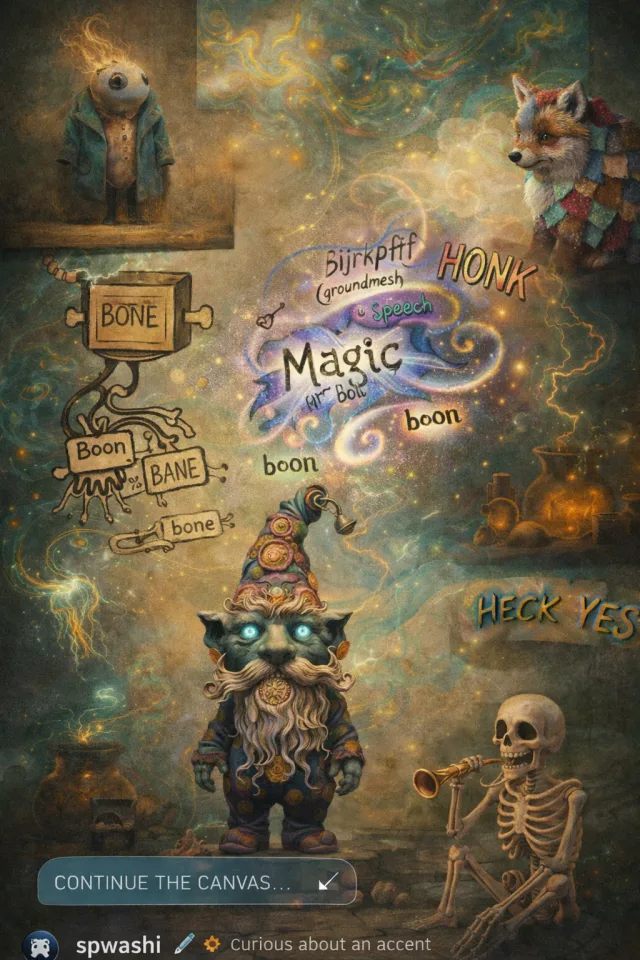
'l'n'd'r Bjrnkptpf is the main campaign character: less a rock gnome than a clay golem shaped by years of meditation, prayer into wonder, and the desire to understand how claimed spells reverberate into body, speech, and action. Bluish-grey skin like modeling clay, gemdust freckles, and speech bubble physics treated as an actual material problem. The character exists to narrate and explore trope physics: what enchantment is made of, how language becomes embodied, and what has to stabilize for collaborative meaning to hold.
Rock gnome was an earlier sketch, but clay golem is closer to the real pressure behind the character. After losing insurance, income, and housing in the aftermath of 2022 site-stabilization work, I kept returning to the irony that so much engineering labor touches public stability without carrying enough care for human lives. 'l'n'd'r is one answer to that frustration: a wonder-made body for studying enchantment, stabilization, and the moral weight of the spells we claim through speech and practice. Words are still the spell. Boon materializes as a nucleation field, Bone as the lattice that carries structure, and HONK remains pure propagation.
When the sheet changes, update the builder first, then move stable versions into the cast register or Midjourney Bench once the canon settles.
Someone new at the table:
Quinary Story Bible
In a town where jokes can acquire bodies, Mr. BoonWAP wants to do good—provided the room can survive his blind spots. Mr. BaneWAP keeps arriving with schemes evil enough to announce themselves and fragile enough to foil. Mx. BoneWAP has discovered that tropes are a kind of physics and is building machines from the evidence. Somewhere between a library drawer, a lover's translation, and a sentient pie's appetite, the quinary five are learning whether a role can become a person without losing the joke that summoned it.
Production-bible lens: each character gets a story promise and a development handle. The promise invites a reader into the fiction; the handle leaves enough room to invent a portrayal, argue about the trope, or bring a new pressure to the table.
Mr. BoonWAP
Mr. BoonWAP is a sentient pie with good intentions, a large sense of self, and a recurring difficulty noticing that the room has moved on. WAP expands to Wonder About Pi(e). Depending on the light—and who is hungry—he may be pastry, person, projection, offering, mascot, menu item, or all six arguing over who gets to speak.
Development handle: decide what changes when somebody wants to eat, sell, worship, protect, or perform BoonWAP. The dimensional pie relationship should still support a table scene, phone-camera overlay, pop-up ritual, shop sign, flavor flight, or conversation about appetite and service.
Slibbon Bap
At Mr. BoonWAP's side is Slibbon Bap: magical assistant, friend, and something close to a life partner. Where BoonWAP projects appetite into the room, Slibbon catches the small signals everyone else misses and translates them before affection hardens into doctrine.
Development handle: ask what Slibbon refuses to translate, what a translation costs, and when an assistant becomes the author of the relationship.
Mr. BaneWAP
Every well-intentioned pie deserves a nemesis. Mr. BaneWAP arrives in a gust of theatrical malice with a scheme, a monologue, and at least one visible off switch. The plots are comically evil and satisfyingly thwartable—right up until a larger harmony quest puts both rivals on the same side.
Development handle: every scheme should reveal a funny want, a fair way to foil it, and one reason BaneWAP might reluctantly need BoonWAP alive.
Mx. BoneWAP
Mx. BoneWAP has seen the machinery behind the punchline. In their laboratory, a recurring gag can become a power source, a transformation sequence can be measured, and a prophecy can be fitted with wires. They intend to harness trope-driven magic in a variety of inventions—assuming the tropes do not notice first.
Development handle: give each invention one recognizable trope, one practical use, one comic side effect, and one way observation changes the phenomenon.
Ensemble engine
Nobody here is only what the name predicts. Offers become rituals. Refusals become timing. A thwarted scheme may conceal an invitation, and the wrong pie may still open the right door. The theory can wait in the margins; the characters have a stranger book to survive.
Production-bible rule: preserve one contradiction per character. A useful new character should disturb at least two existing relationships rather than filling an empty job title.
This material should move through the existing ladder: jot it in the local kit, log it in sessions once it happens, and only then let it harden into cast memory, arc naming, or asset-atlas portrait cards.
Boonhonk Story & Trope Bible
This production-bible surface keeps the lore playable. Boonhonk is a combinatoric genre: boon, bane, bone, bonk, and honk recombine, so names like BoonWAP or Honk Bazongas are already miniature trope engines. The register lives at Boonhonk Register; the table plays the combination.
What a name can do: what it primes, what it withholds, what entrance it permits, what later reveal it makes possible.
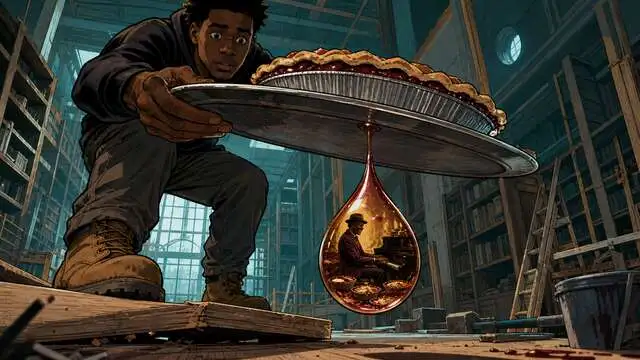
WAPboy has one job: keep 1pi from becoming airborne. But every night the same impossible performance returns. An actor wears WAPboy's outline. A clown turns toward the incoming pie. Inside one suspended drop, Gravy Davis is already at the piano, playing the aftermath as if it happened years ago. The Cult of Willby Spillzus calls it destiny. The Mimes Against WAP call it preventable noise. Honk Bazongas—an okay detective in excellent shoes—has misplaced the clue.
Name drift
Boonhonk treats naming as operational. Boon adds arrival, bane adds cost, bone adds scaffold, bonk adds collision, honk adds broadcast. A new combination is a genre beat.
Playable pantry
One force for a beat. A second force to flavor it. More than two if the scene can still name them. A sequence if the mix needs time.
WAPboy
WAPboy has one job: do not spill 1pi. Easy, except WAPboy is an abstract drawing who dreams in actors. Each performance offers another body, another medium, and another chance to watch the prophecy approaching from the outside. Somewhere beyond the dream, a clown is already turning toward the pie.
Character handle: each portrayal may expose a different reading of the role, but no actor becomes the definitive body. WAPboy is black and canonically two-dimensional. Pronouns remain open; this page uses WAPboy or the role until that choice receives more sincere character thought.
Gravy Davis
Inside the prophecy waits Gravy Davis, a jazz musician who has already spilled infinity pi(e)s and stopped apologizing somewhere around the third chorus. If WAPboy is restraint, Gravy Davis is the music after impact: the form continuing after the pie has left the tray and found a clown's face.
Character handle: keep it arguable whether Gravy Davis is WAPboy's future, an actor trapped in the part, a warning wearing a name, or an unrelated musician adopted by the prophecy.
Honk Bazongas
Honk Bazongas is a clown, an okay detective, and the owner of shoes too well made for the evidence stuck to them. Somewhere between the honk and the footprint is a clue that could save WAPboy—if Bazongas remembers which case this is.
Character handle: decide whether Bazongas is investigating the launch, destined to receive the pie, or both without realizing it.
Canonical plane
Three figures hold the plane together: WAPboy before the spill, Honk Bazongas at the signal, and Gravy Davis after consequence has learned to swing. Pull one point and the other two begin to move. Restraint becomes broadcast. Innocence puts on clown shoes. The aftermath starts playing before the event arrives.
Trope handle: a retelling may move one corner of the triangle—who restrains, who signals, or who lives in the aftermath—and then follow the pressure through the other two.
Willby Spillzus
The Cult of Willby Spillzus has reserved front-row seats for the exact instant WAPboy becomes Gravy Davis. To them, the airborne pie is not an accident but an appointment. Every successful rescue is merely destiny taking the scenic route.
Worldbuilding handle: give the cult a ritual for failed spills, a schism over whether the clown matters, and at least one believer who loves WAPboy enough to make destiny complicated.
Mimes Against WAP
Across the aisle, the Mimes Against WAP refuse the prophecy without giving it another sound to feed on. They care about WAPboy. They distrust any force that makes clowns blurt boonhonk. Their silence is protest, protection, affection—and perhaps the only stage direction the dream cannot rewrite.
Worldbuilding handle: decide whether silence blocks trope magic, redirects it into gesture, or merely prevents the prophecy from knowing it has an audience.
Open production questions
Who records the dream-performances, and can two productions contradict each other without either becoming false? What does a trope remember after its scene ends? Can Mx. BoneWAP build a machine that changes genre without changing the people inside it? When the pie finally flies, who gets to call the impact canon?
Treat these as invitation points, not missing answers. A new character or setting earns its place by making one question stranger and one relationship more specific.
Some jokes run on boof and wabopie drift, where characters briefly think am WAPboy. Keep that in the notes lane as name physics, then promote only the versions that survive repeated play. Every good screenshot card from this genre should also carry a stable title, a one-line spoken hook, and enough plain language that a screen-reading agent can still wonder productively about the instantiation.
Current Story Pressure
The jacket hook
At the edge of town, a library is rising one memory brick at a time. 'l'n'd'r and Aetheris Solune are trying to retell an old surprise without breaking it. Mr. BoonWAP may be a person, a pastry, or an appetite projected into both. His nemesis keeps choosing evil plots with visible off switches. Mx. BoneWAP is building inventions from the laws of recurring jokes. And WAPboy keeps dreaming the same impossible performance: a pie leaves the tray, a clown looks up, and inside one dream's first drop Gravy Davis begins to play. If the library records the prophecy, does it preserve a future—or cause one?
Production-bible handles: the library can preserve contradictory performances; the prophecy may react to being documented; BoneWAP's instruments can mistake genre convention for natural law; WAPboy can recognize a performer without accepting that performance as fate. This remains working pressure, not a formal arc. Name it on the arc register only after repeated sessions prove which images and relationships survive.
Last public log
The dated public log still starts at May 13. Living pressure this week is late-summer market and the August 26 stacked close — not a recap of a night that has not been written. When the next page lands, capture one library-construction beat, one market-clock beat, and one language artifact. Keep the log honest.
Next Session
Wednesday, August 26, 2026 — The Sale Clock. B-cycle close and the weekly table on one night. Stage one late-summer beat (succotash pact, coupon scroll, fridge pickle, peach hospitality, or a hymenoptera keeper: forage, trail, nest-cooling), one library-construction beat, and one language-evolution brief that can be read aloud. A friend’s insect table keeps its own cast. Details belong in the session log after play, not before.
Active Cast
'l'n'd'r remains the main anchor, with Aetheris Solune now part of the active memory lane. Mr. BoonWAP, Slibbon Bap, and Mr. BaneWAP act as the most immediate recurring companion cluster. WAPboy, Honk Bazongas, and Gravy Davis are still proving recurrence. Deskar Null is an incidental table PC — a deal-logic specimen, not serial-lore pressure and not a reason to retitle the library build. Move anyone into the cast register only after session pages prove they recur.
Library Build
The town library is the current stage for development, magic, and intergenerational harmony. It is also the cleanest place to test whether a prompt, screenshot card, spoken hook, or image study can carry memory without flattening the story.

scene memory idle
Use this section when the route needs a stable image seed for town memory, clay-body metaphysics, and wonder about how speech or enchantment takes material form.
Aetheris Solune and 'l'n'd'r are learning how to narrate a past surprise while the town builds a place sturdy enough to hold future memory.
The library lets the campaign ask better questions: what deserves indexing, what should remain touchy or provisional, what becomes public canon, and how readers with different histories might inherit the same story without flattening its magic.
This is also where a culture can start to hold. A good library card should survive a screenshot, a spoken caption, a screen-reading agent, and a prompt copied into a recent image generator without losing the scene's actual point.
Route Atlas
These are the routes that make the campaign legible. Read them as a small publishing system: event log first, references next, then surrounding tools and topic context.
-
@ sessions
Dated event log, ordered newest first, with each session at
/YYYY-MM-DD/. - ^ world Setting notes, currently a placeholder until sessions create enough stable lore to warrant it.
- ~ cast Character sheets, recurring portraits, and stable references once a person, creature, or quinary presence has enough weight to deserve memory.
- ?[arcs] Story threads, currently a placeholder because arcs should emerge from sessions instead of being forced in advance.