Tools
Benches for work already on this site: software, film, illustration, organization. Each one leaves a record you can reuse.
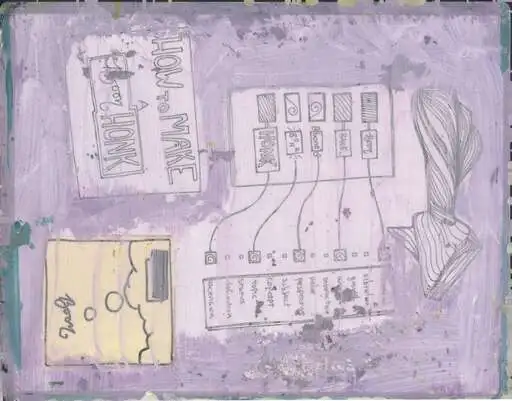
Local craft register. Five labeled boxes wired down to a list of words read like browser-local records — profile, sheet, budget, prompt packet — kept on your machine until you export them.
swipe to the travel view when a packet should leave with you, or the tuning view when the tool still needs adjustment. hold before you share to ask whether the record is truly reusable.
A tool is useful when it produces evidence someone else can read, reuse, or build from.
- practice
- bench
- export
- screenshot
- reuse
Each bench is a small state machine: enter the material, shape a local record, export when it is useful. Nothing is sent anywhere. Source goes to the parser. A year mix goes to the ledger. A character goes to the sheet. A prompt goes to depiction. A table goes to RPG Wednesday.
Practice that leaves a record — not a form that asks for a title.
Source, a year mix, a character, a prompt packet, or a sprint you can count.
ASTs, year-mix shapes, playable cards, depiction packets, screenshots, JSON you can move.
Quick Starts
Start with the bench that matches the pressure you can name. Source, year mix, character, prompt, and table need different entry states. Name the input, keep the useful state, leave an artifact you can find again.
story[home]{chapters}.
Why this card exists
Spw needs public, falsifiable proof. This runs the actual portable parser kernel in the browser. If a phrase holds, it is worth keeping as an idiom the orbit can reuse.
It produces a token stream, an AST, visible diagnostics, and an app-ready source URL. The workbench is the kernel under that — try the phrase here first.
Why this card exists
This card exists for people who need to describe work cleanly and reuse the result elsewhere.
It produces a shareable identity record, a screenshot, or a JSON seed that can travel.
Why this card exists
This card makes a role legible in play, illustration, and film language without flattening the world behind it.
It helps a character become a readable artifact for RPG Wednesday, depiction, and the movie in 2027.
Why this card exists
This card exists for people who want to see a year's money as a shape before they commit to anything on Services.
It produces a local ledger, a funding gauge, and a tier readout that names what the mix could fund.
Why this card exists
This card exists so visual references can stay organized with the rest of the project material.
It produces a prompt packet, a shotboard, a semantic cluster, or a visual canon seed for later rendering.
Why this card exists
A year is a triple you can count. The ledger makes a small capacity visible without turning it into a moral score.
It can produce a sprint budget, a year-mix shape, or a next action you can actually fund.
Why this card exists
This route links tool behavior back to live play so the site can test its ideas in a real table context.
It produces session memory, character artifacts, image prompts, and evidence you can reuse after play.
Integration loops
Tools are more interesting when they participate in a loop across the site — not when they sit alone as forms. These paths are written for returning readers who want novelty through depth, not through a feature count.
Identity → play → proof
Start in profile or character sheet, test the same role language in RPG Wednesday, leave a card someone can screenshot without a live demo.
Line → image → scene
Draw or tune a mark in SVG experiments, carry palette and stroke reasons into Midjourney bench, attach the result to a recipe card or cast note.
State → gesture → gather
Prototype a hover, hold, or charge behavior in CSS experiments, then test whether it reads on a long route with living terms and the footer cauldron.
Year mix → pantry → table
Name income × skill × expectation in year mix, translate the same constraint into a recipe list or an RPG trade, debrief in session notes.
Source → tree → app
Write literal source in the Spw parser, inspect the tokens and AST, then open a local .spw file as a room at /open/.
Standalone browser games are not part of the catalog yet. Play routes, session logs, and local tool state are the current game-like surfaces.
Profile Tools
For people naming work that already has rooms: software, film, illustration, design, oration, organization. A collaborator can read the card. A hiring screen can too, if that is the job this week. The years on About are the timing.
- ^ profile builder Fill in fields, get a configurable card with header, badges, sections, and footer. Copy as JSON or Spw seed. Screenshot for sharing. Local-only, no account needed.
- @ character sheet builder Start from a character sheet. Carry party role, quest, and signal items into play, film, and illustration language.
- ^ services card A pre-configured seed card for describing services and rates. From the services page.
- ~ ask card A card for personal asks — supplies, food, bills. The same aesthetic makes a personal need feel as intentional as a professional offer, which matters when your network includes mentors, peers, and future collaborators.
Seed Cards
Seed cards are minimal vessels — fill in, copy, screenshot, share. Templates: new year, session, wonder, services, ask. They travel to a collaborator, a table, or a later-you still learning the vocabulary. Each card can hold anchors, term clusters, component kinds, and settings notes.
- ^ new year card Annual threshold card — vow, bundle, relay, revisit. For the moment when time feels writable again.
- @ session card Date, scene, turn, carry, revisit. For documenting what happened at the table.
- ?[ wonder card Question, tension, material, relay, revisit. For open questions you're genuinely uncertain about.
- @ spell ingredient card Anchor, cluster, component, setting, attribute, event. For turning a strange idea into a reusable semantic recipe.
Play Tools
Character sheets are practice for oration and film as much as for a profile. Naming a role, a pressure, and a next arc is the same muscle as writing a shot, a scene, or a public card. RPG Wednesday is the recurring table. The builder carries that grammar into play, depiction, and the 2027 movie.
- @ rpg wednesday The recurring session — character cards, local gameplay state, session logs, and the character 'l'n'd'r as a profile specimen.
- @ session log Dated event log. Use the session seed card template to document plays.
- ~ character sheet builder Build a local character sheet that maps party role, tools, quest, and world state into a card a table, illustrator, or film surface can hold.
- ~ midjourney bench Keep style refs, omni refs, shotboards, and collaborator-aware image experiments in a route that can expand later.
Practice doors
The same six doors as About. A bench here is how a skill leaves a record. RPG Wednesday remains the honest table if you want to see how a group actually works.
Software & learning
- #>parsersource, tokens, AST, public specimens
- <softwaregrammar and interactive codeblocks
- ^workbenchparser kernel, open source
- #>curriculumlearning-from-text door
Illustration & design
- ~depictionpackets and hire briefs
- >foliosimages that travel with the software
- #>designcomponents and material surfaces
- ^profilea card a collaborator can screenshot
Oration & film
- @characterpressure, role, next arc
- *filmshot language toward 2027
- @tablethe recurring session
- ? voicetechnical work that can be read aloud
Organization
- $year_mixincome × skill × expectation
- .nowthe current sprint
- ! cauldronintake that can return
- @serviceswork someone else can commission