Design / Folio Archive
Small worlds, held in a folio.
I make laminated folios as a meditative practice. Collage and laminate what is current; paint a season across the stack; then paint those same surfaces again the next year. Fifty-eight scans are on this page. Later paint on the laminated sheets stays in the studio.
The stack stays in the studio and keeps changing. Below is the September scan. The seed studies are a way of looking.
A doodle from RPG Wednesday can become a table object or a story-led piece. Name the scene on the order card. A Seed is a small issue; a custom is quoted. Your mark is not automatically my inventory.
How this route works
The scans first, then the practice behind them: collage, laminate, paint seasons. Then studies and working prices. Adjacent routes can turn a study into a card, a note, or a commission.
Thirty-one folios, scanned for September 26
The first scans, in the order they came off the scanner. Open one, then ask for the sheet by card. Later paint is still in the studio.
In scan order, as they came off the scanner. Open one and flip through.
WAP Boy, Mimes Against WAP, and the question of counting to pie: the clown side of Wondering About Pi.
The operator list, lettered in blue, laddered in pencil, wired into a mixing board, and checked off.
Boon, bane, and bone as a mnemonic, a launch, and a recipe for honk, with Boof at the Boonberry Pool.
Plans for the other rooms: Lore Land, tealstripesvibes, factshift.
Seasons, courses, weekdays, a calendar page, and a zine declaration: the working week on paper.
Later paint nearly covering an earlier page. Look for what shows through.
-
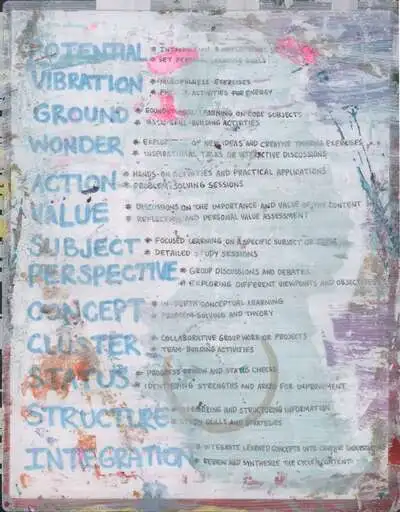
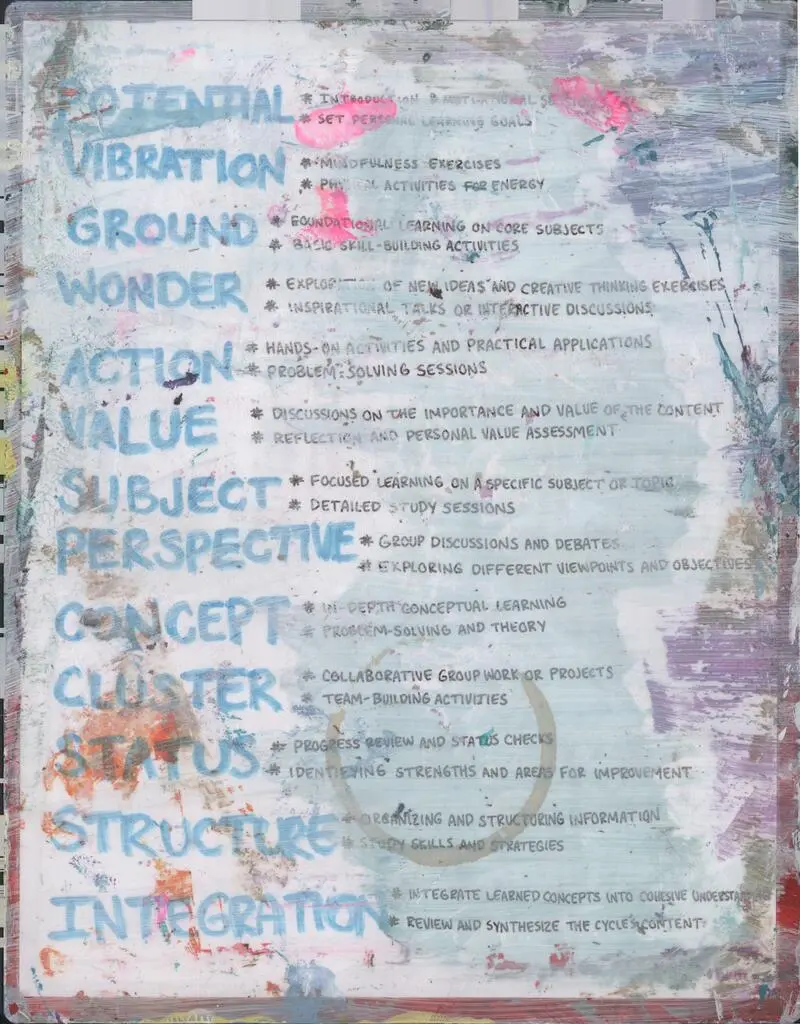
No. 00 Operator curriculum, teal
Thirteen operator words hand-lettered in blue down a teal-washed page, potential through integration, each followed by a line about how it is practiced
Follow its thread:
-
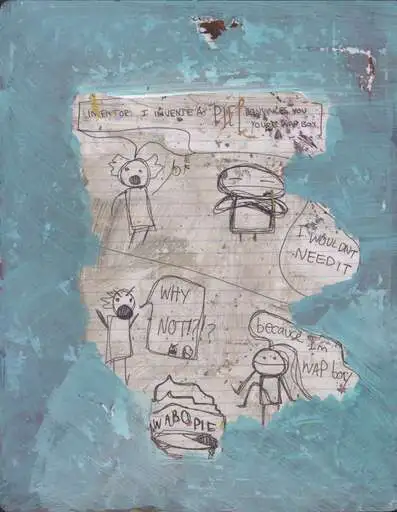
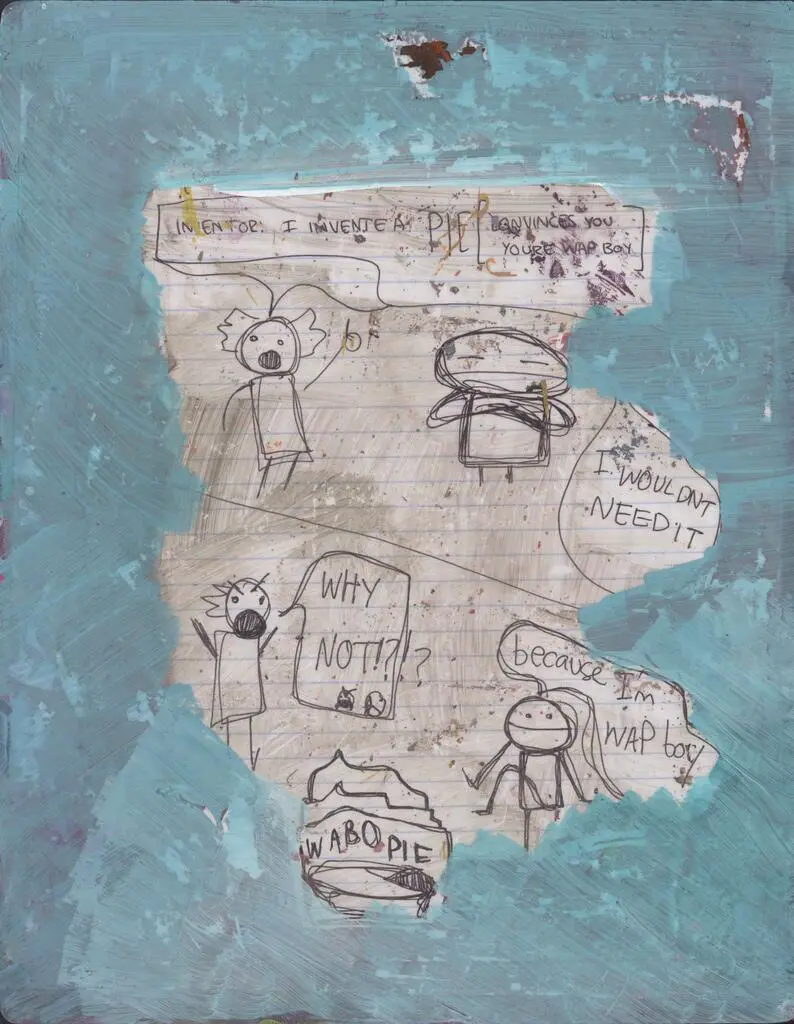
No. 01 WAP Boy invented pie
A torn pencil page on a teal field where WAP Boy claims he invented pie, a neighbor asks why not, and a pie labeled WABO sits at the bottom
Follow its thread:
-
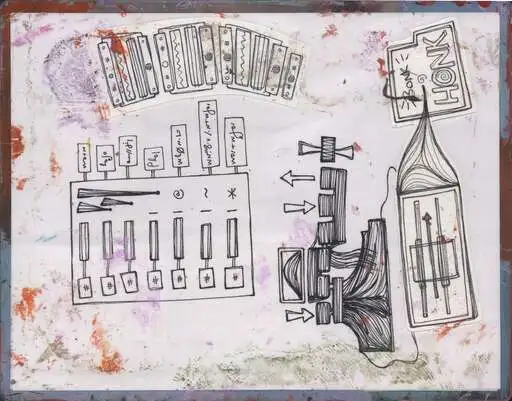
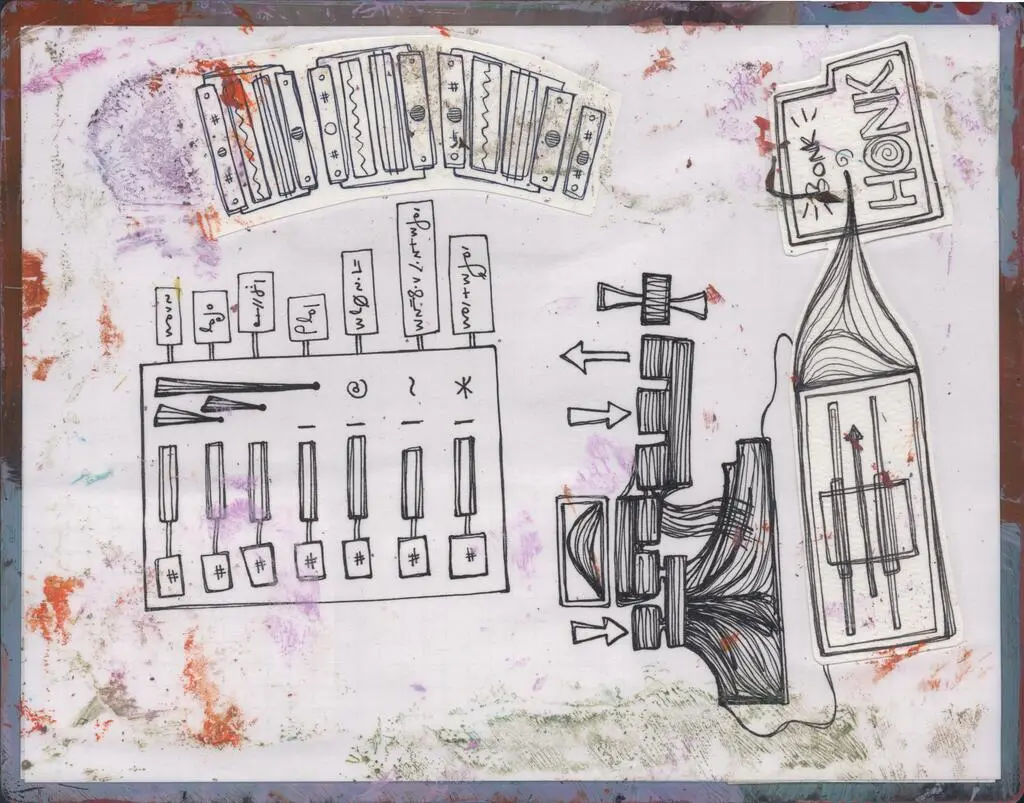
No. 02 Honk mixing board
A marker-drawn mixing board of sliders marked with operator sigils, arrows feeding a tower, and a HONK label in the corner
Follow its thread:
-
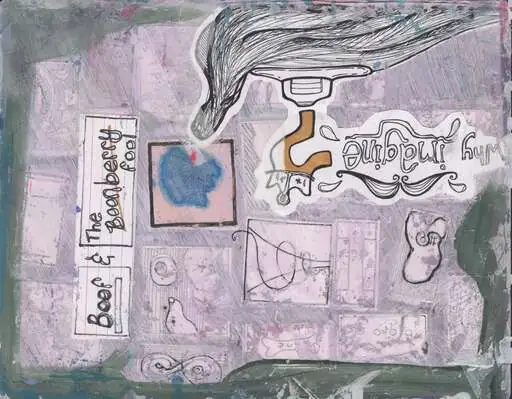
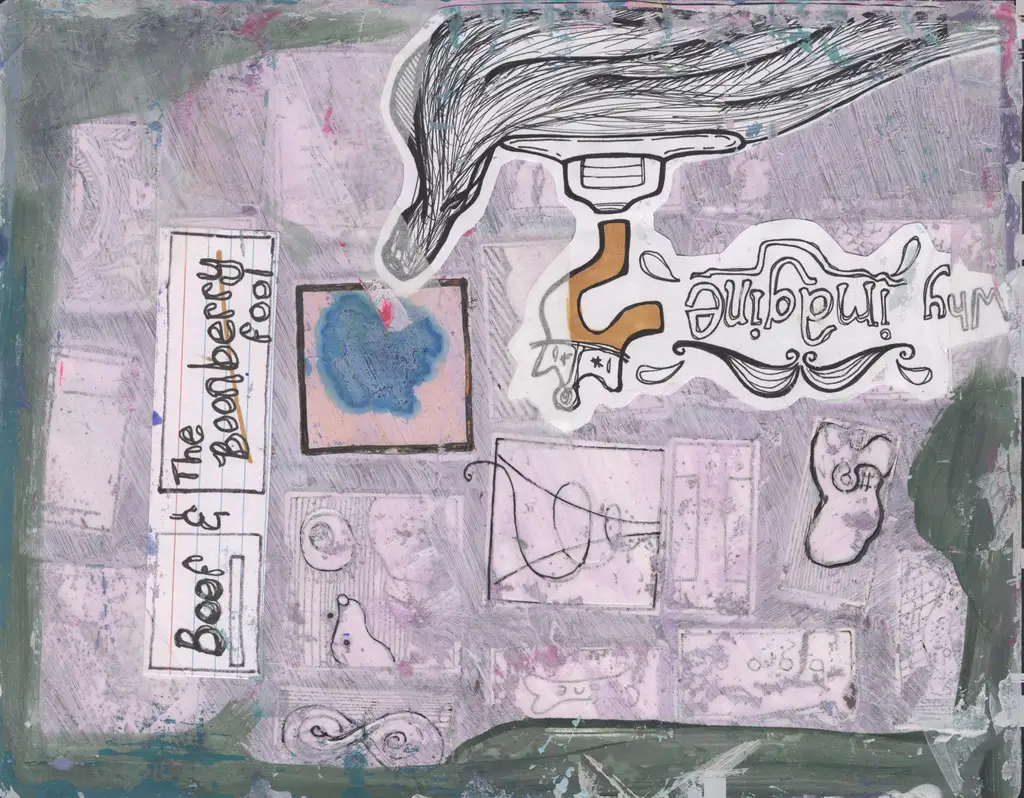
No. 03 Boof and the Boonberry Pool
Shown as scanned: some lettering reads upside down.
A lilac collage titled Boof and the Boonberry Pool, with a blue pool, a flowing hair-like plume, and a curling word card
Follow its thread:
-
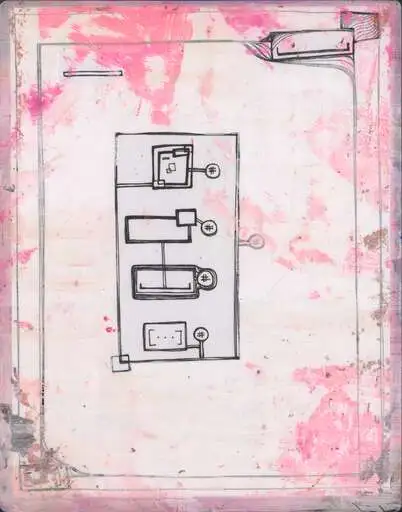
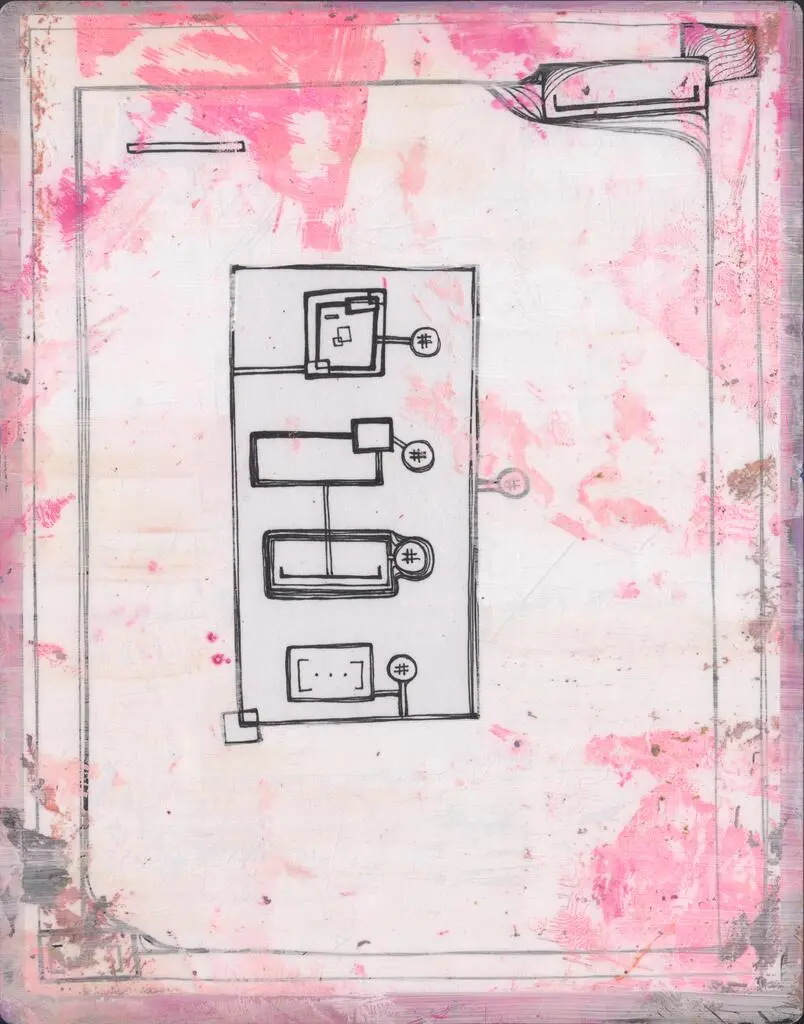
No. 04 Pink hash stack
A pink-spattered page framing a vertical stack of four ink boxes, each tagged with a hash mark
Follow its thread:
-
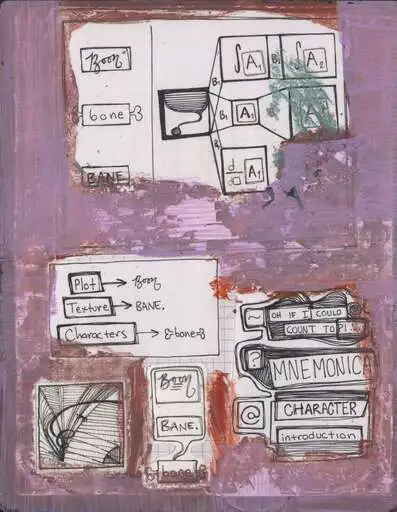
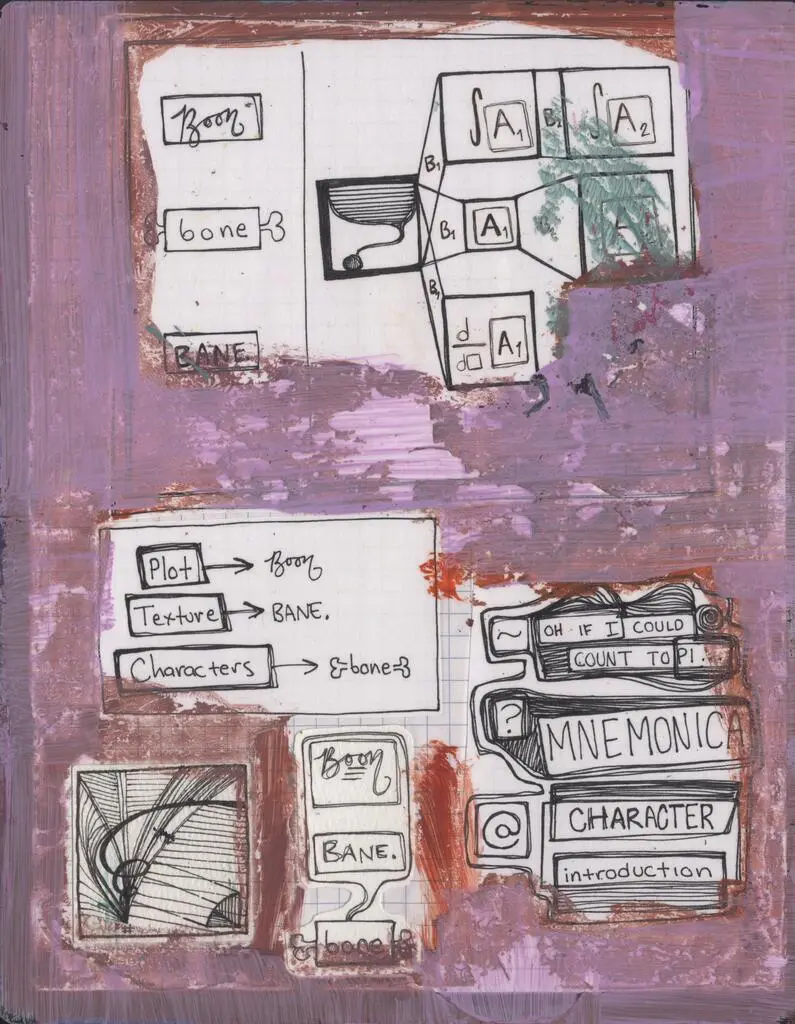
No. 05 Boon, bane, bone mnemonic
A plum page of cut paper cards mapping boon, bane, and bone to plot, texture, and characters, beside a mnemonic character introduction
Follow its thread:
-
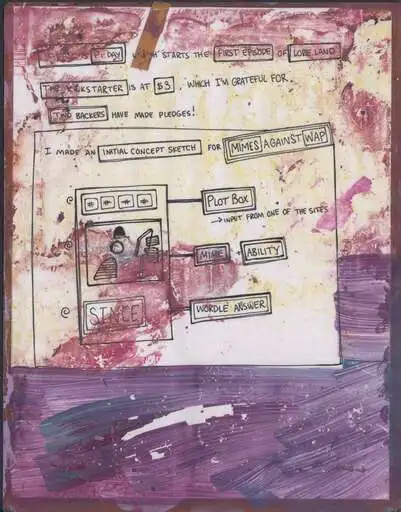
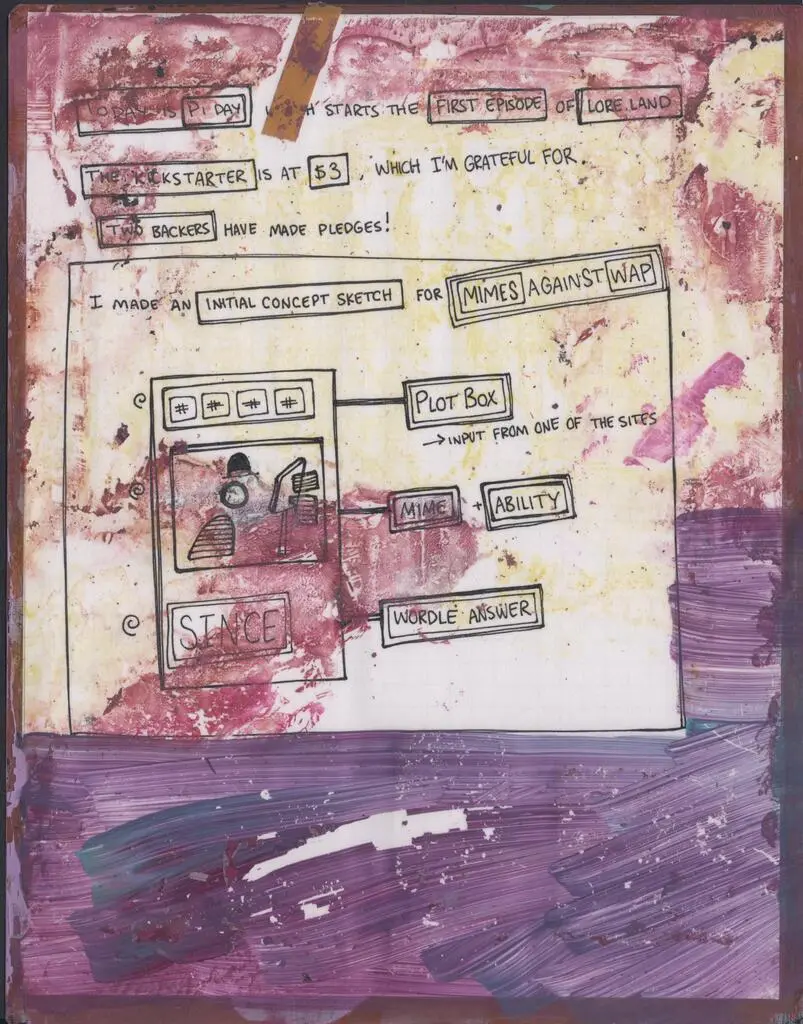
No. 06 Pi Day, Mimes Against WAP
A boxed-word journal page for Pi Day announcing the first episode of Lore Land and an initial concept sketch for Mimes Against WAP, over a violet band
Follow its thread:
-
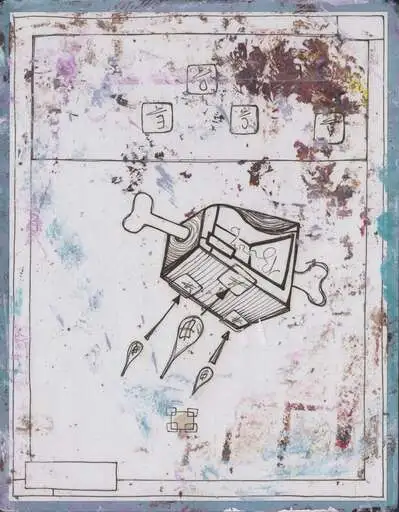
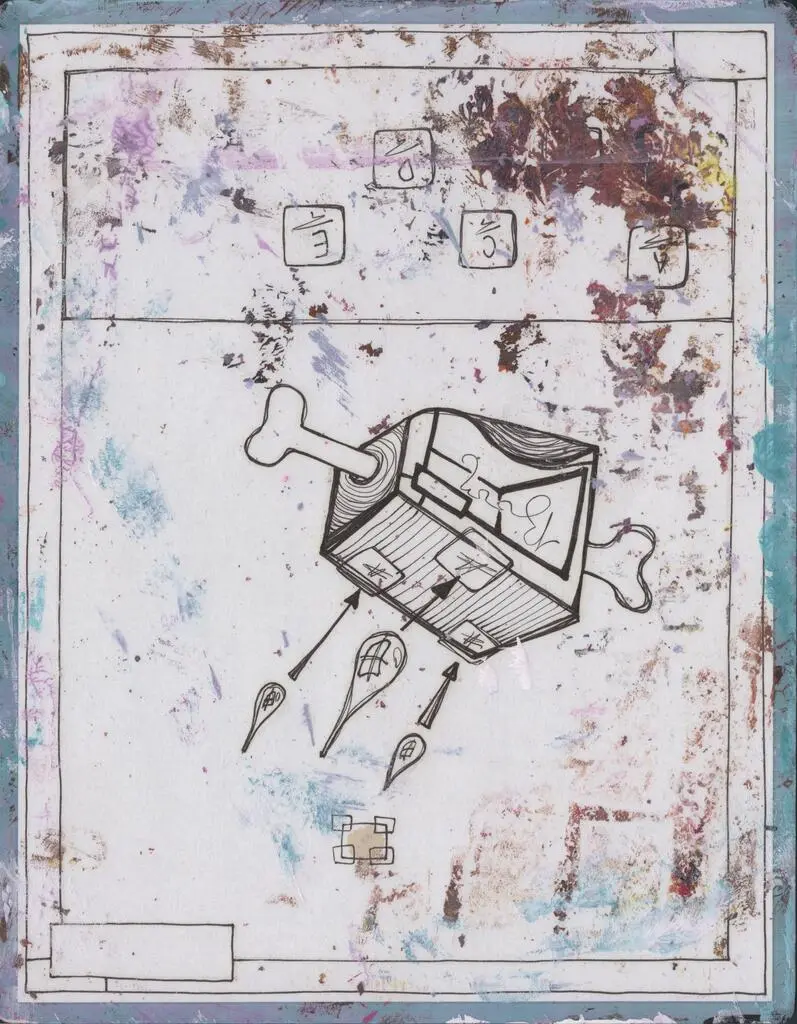
No. 07 Bone box launch
A bone pierces a drawn box that lifts off on three leaf-shaped exhausts inside a ruled frame
Follow its thread:
-
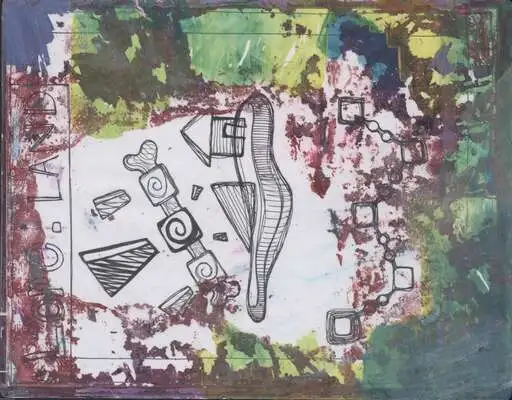
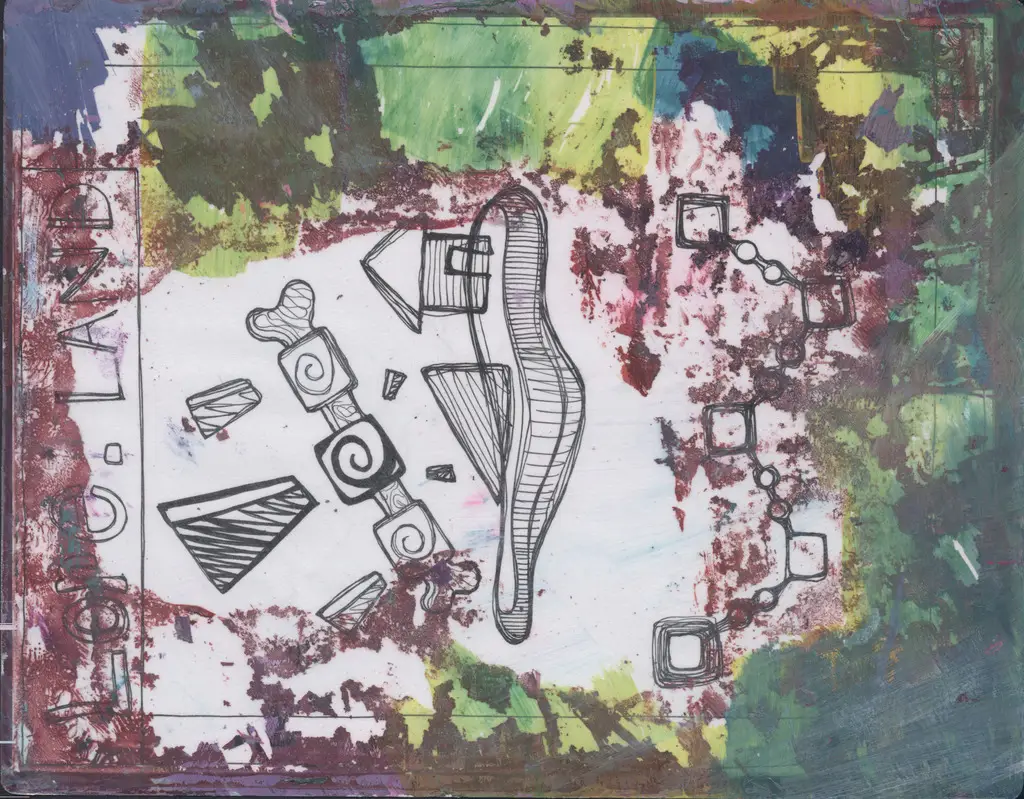
No. 08 Lore Land drift shapes
Spirals, wedges, and a long bone-like form drift across a white clearing ringed with green and plum paint, LORE LAND lettered along the edge
Follow its thread:
-
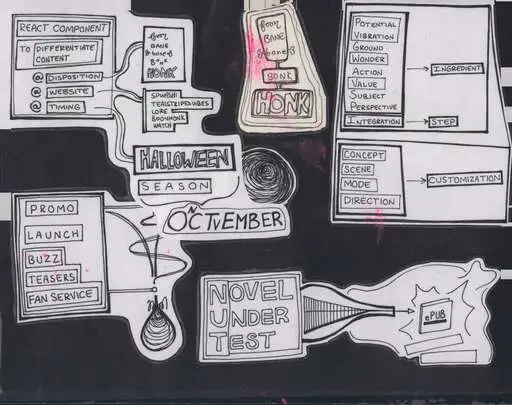
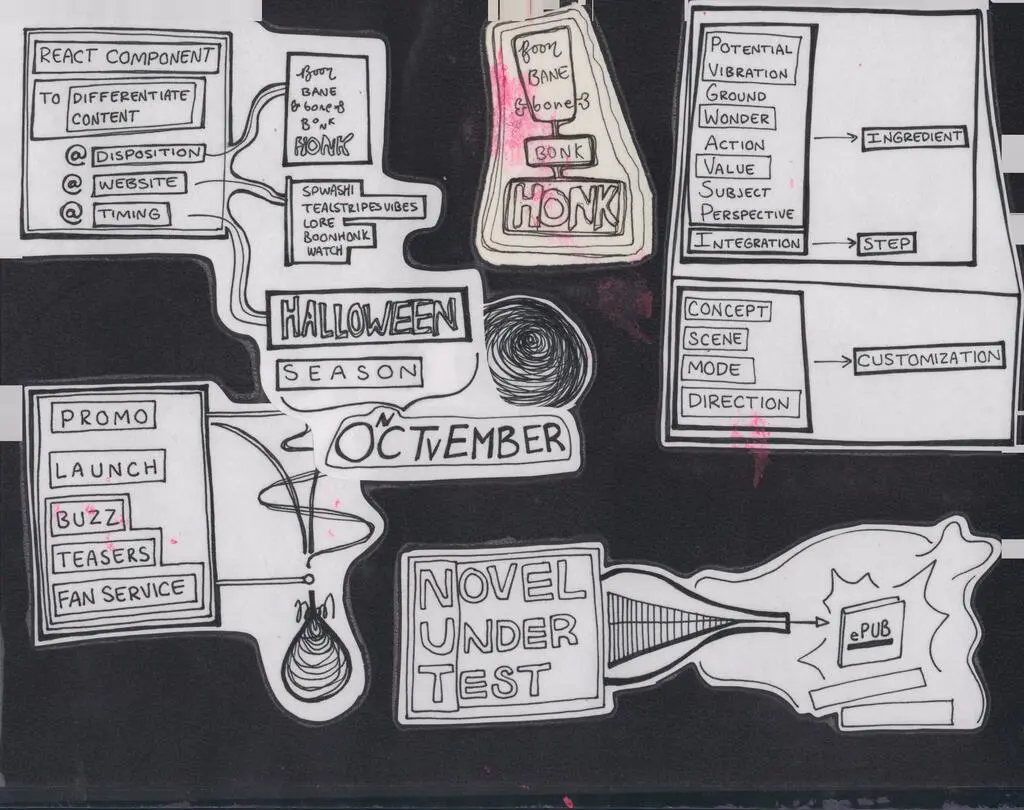
No. 09 Octvember, Novel Under Test
White cut-paper cards on black lay out a Halloween season: Octvember, promo, launch, teasers, and a Novel Under Test flowing into an ePub
Follow its thread:
-
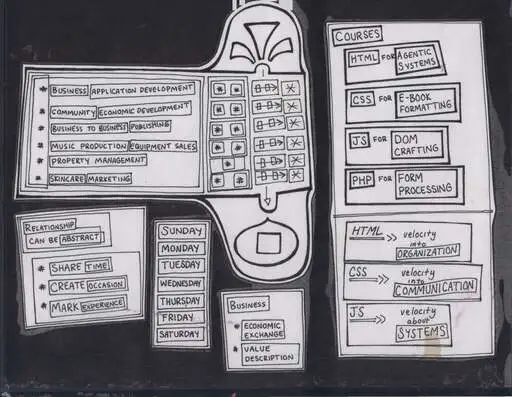
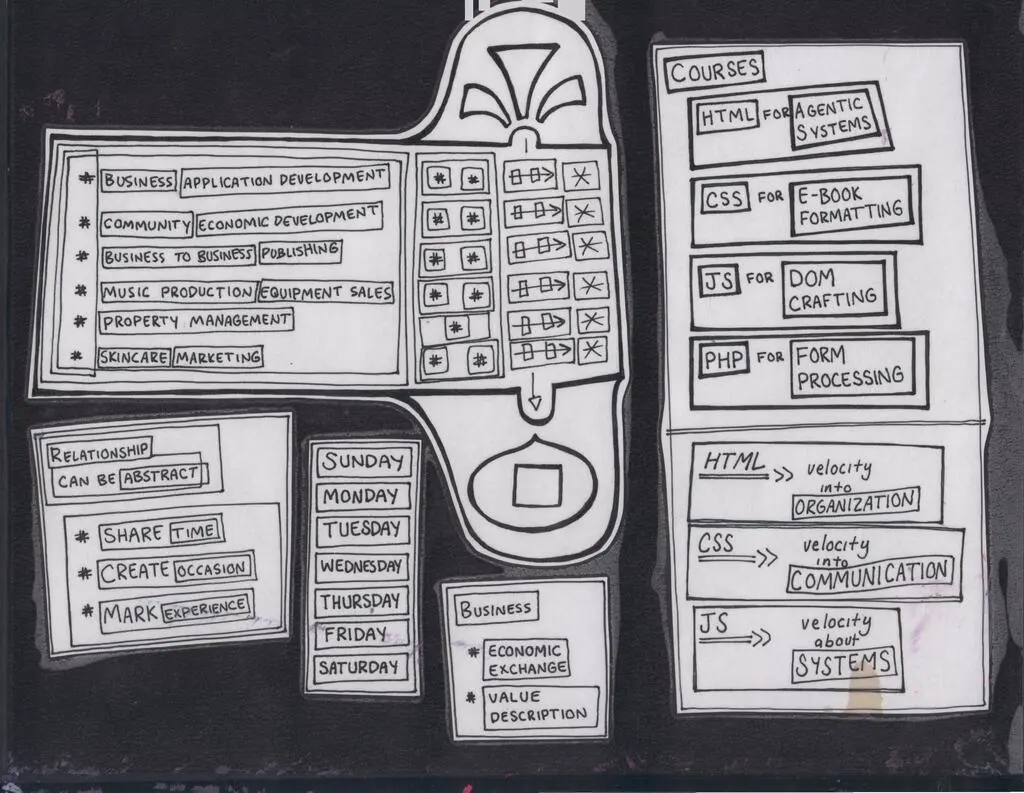
No. 10 Business, courses, weekdays
White cards on black list business kinds, courses in HTML, CSS, JS, and PHP, and the days of the week beside a keyhole-shaped plan
Follow its thread:
-
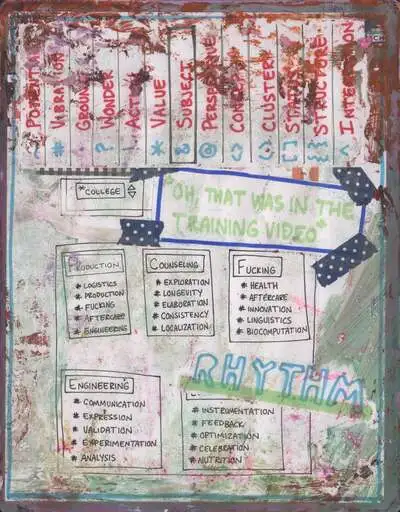
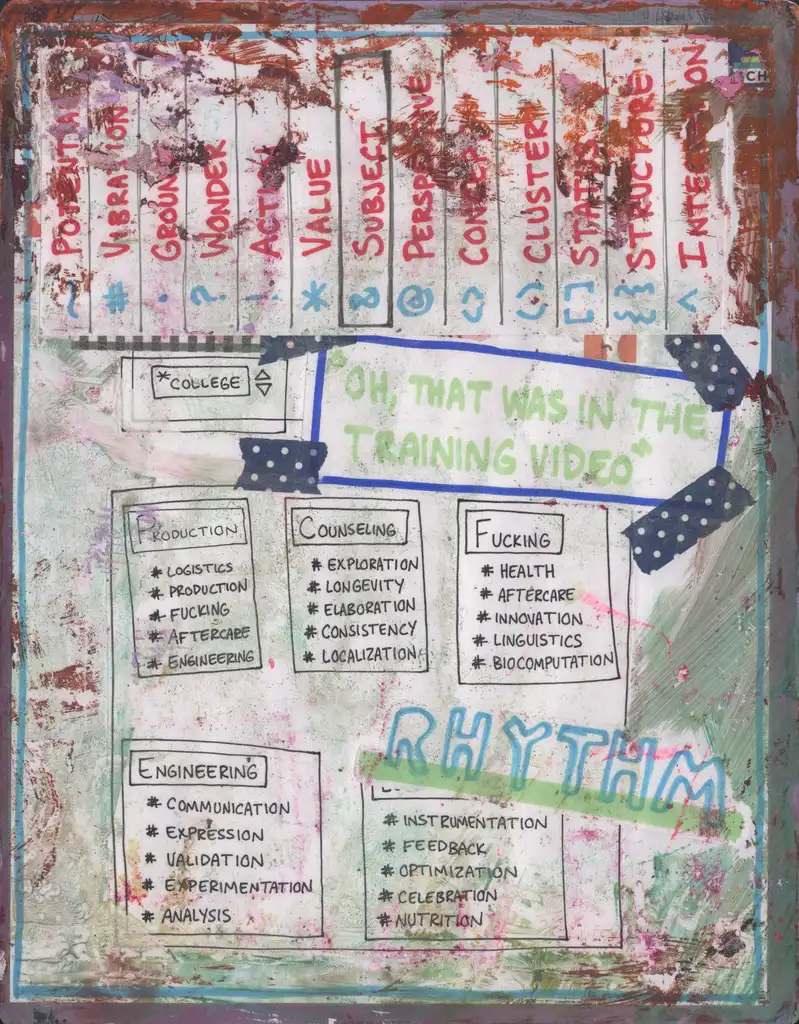
No. 11 Operator rhythm, training video
A row of operator tabs over practice lists for production, counseling, and engineering, with a taped note reading Oh, that was in the training video and RHYTHM in blue
Follow its thread:
-
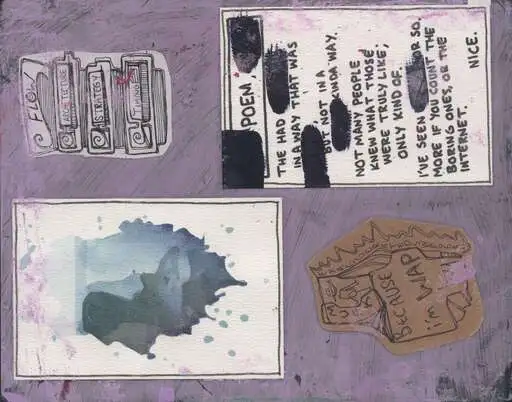
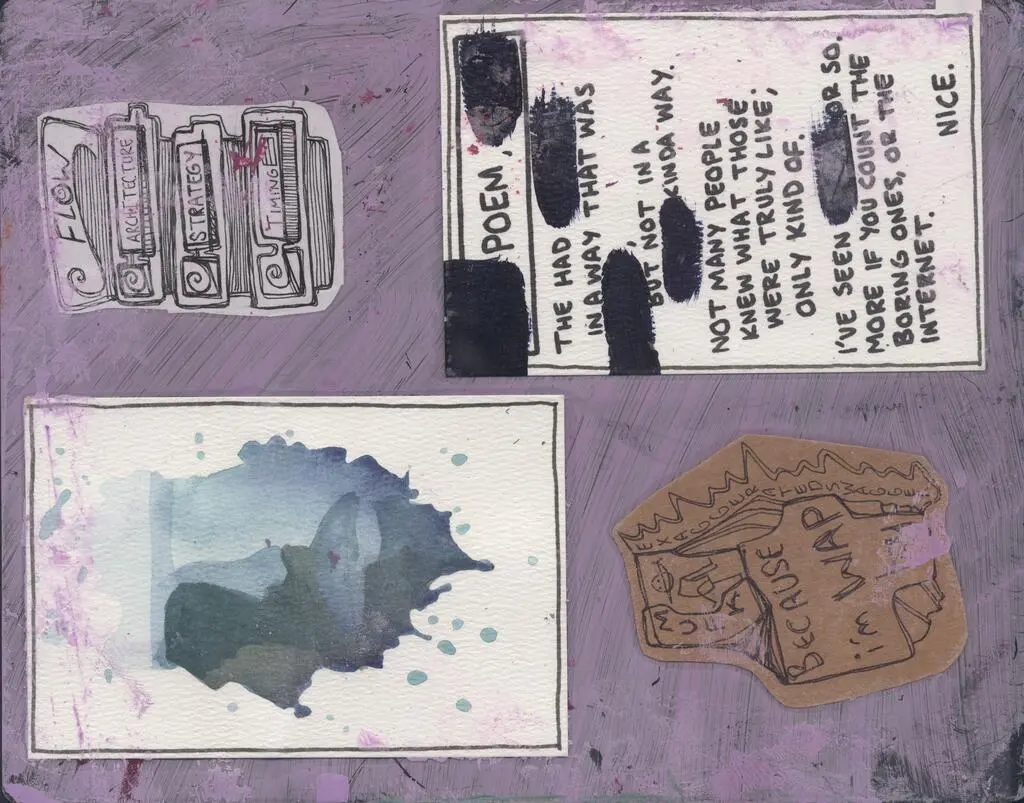
No. 12 Poem, count the boring ones
A lilac board with a partly blacked-out poem ending if you count the boring ones or the internet, an ink wash, a stacked flow card, and a kraft-paper WAP card
Follow its thread:
-
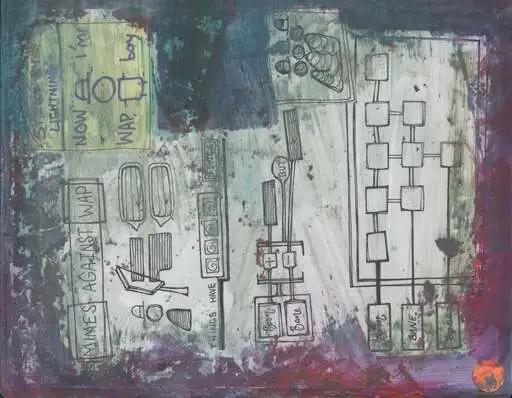
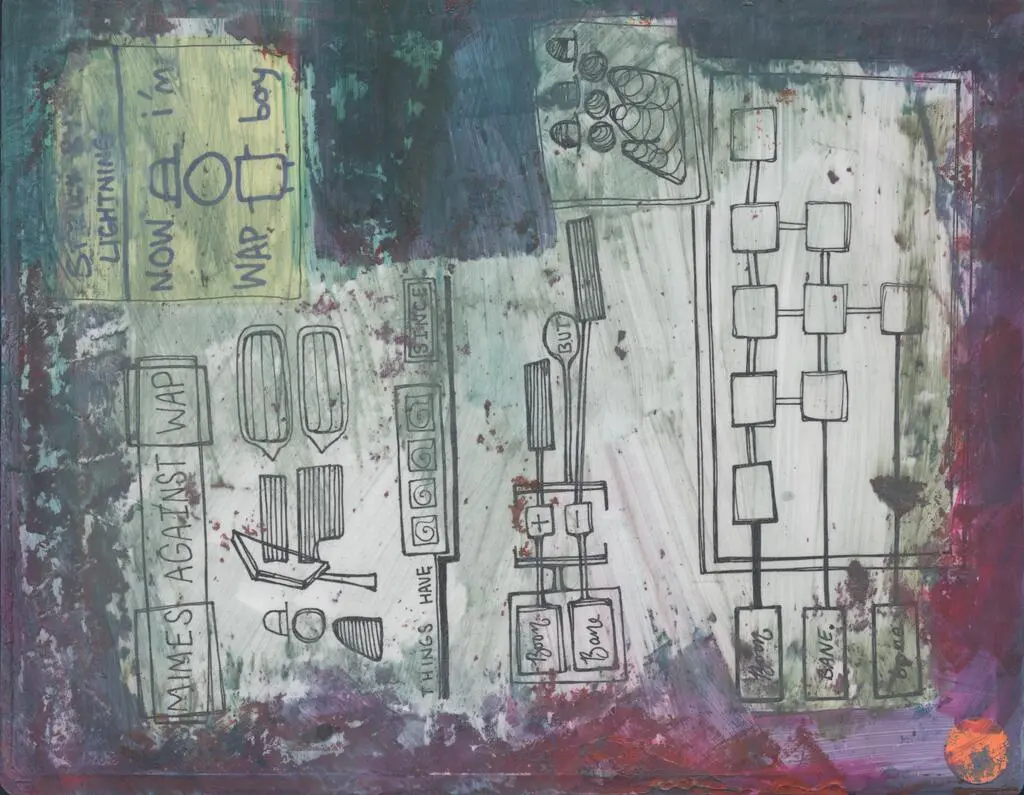
No. 13 Mimes Against WAP, lightning
Shown as scanned: lettering runs sideways.
A sea-green page of flow diagrams under Mimes Against WAP, with a yellow card reading Now I am WAP boy and a ladder of boxes toward boon, bane, and bone
Follow its thread:
-
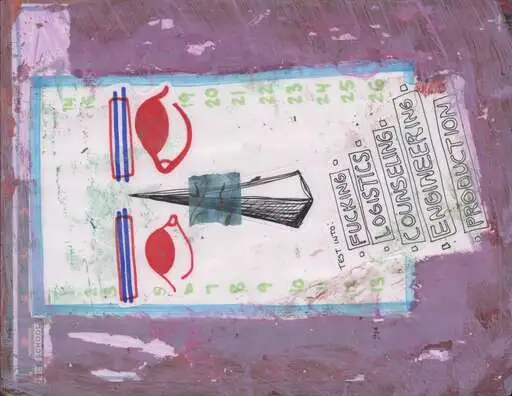
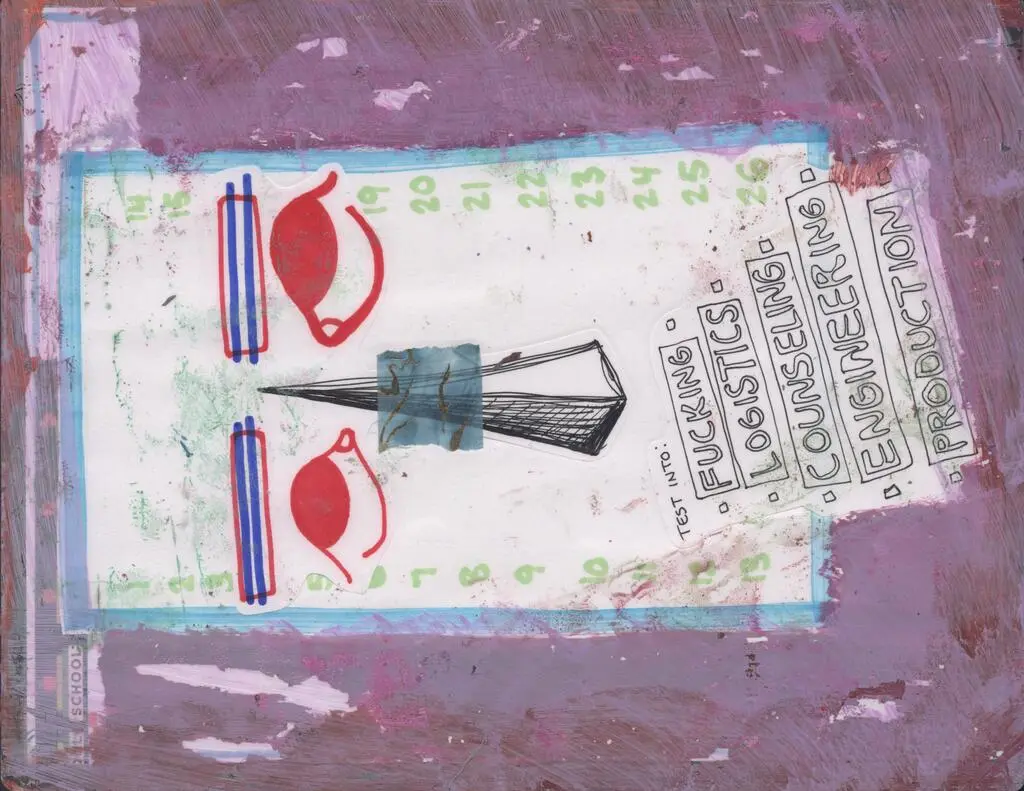
No. 14 Red eyes, calendar test
Shown as scanned: lettering runs sideways.
Two red eyes and a dark spike over a page of calendar numbers, with a column of labeled practices from logistics to production
Follow its thread:
-
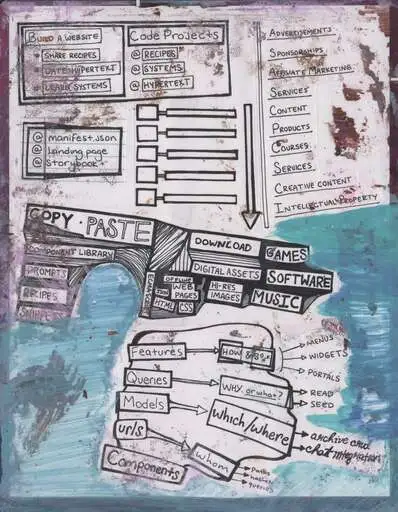
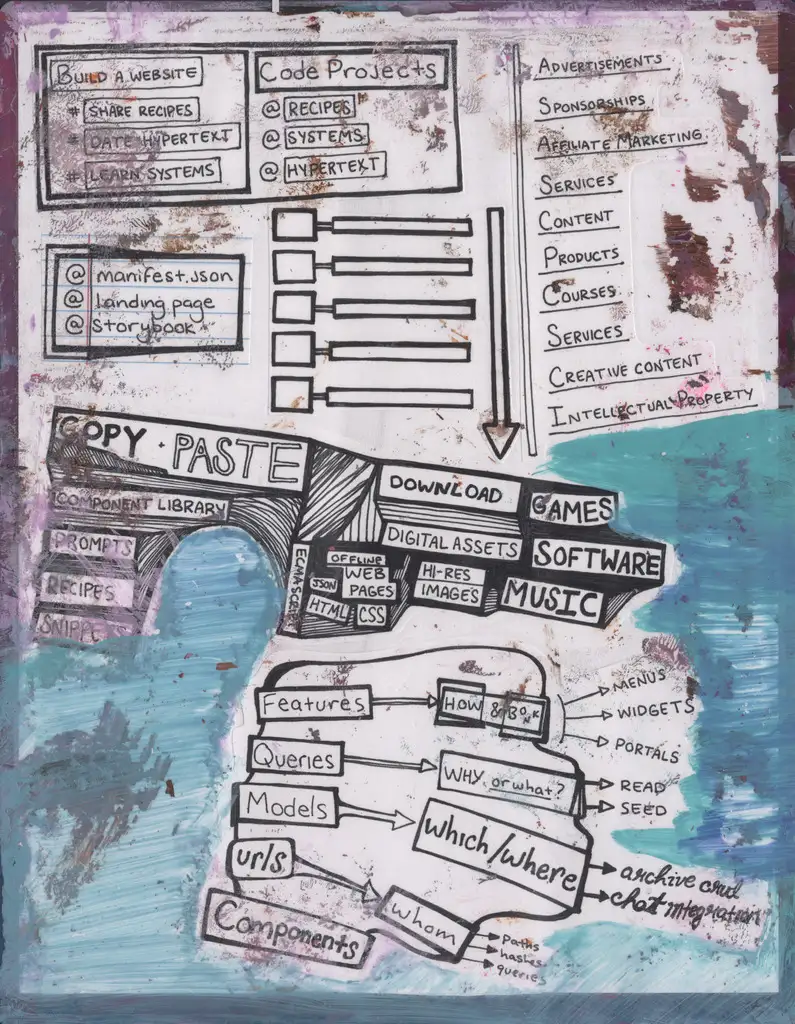
No. 15 Copy-paste component library
A dense ink map of a website practice: build a website, code projects, copy-paste, downloads, and features, queries, models, and components branching into archive and chat
Follow its thread:
-
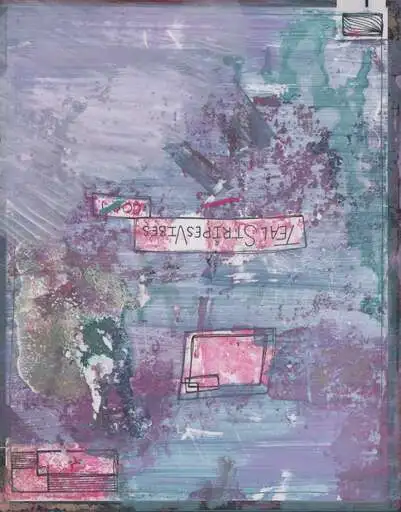
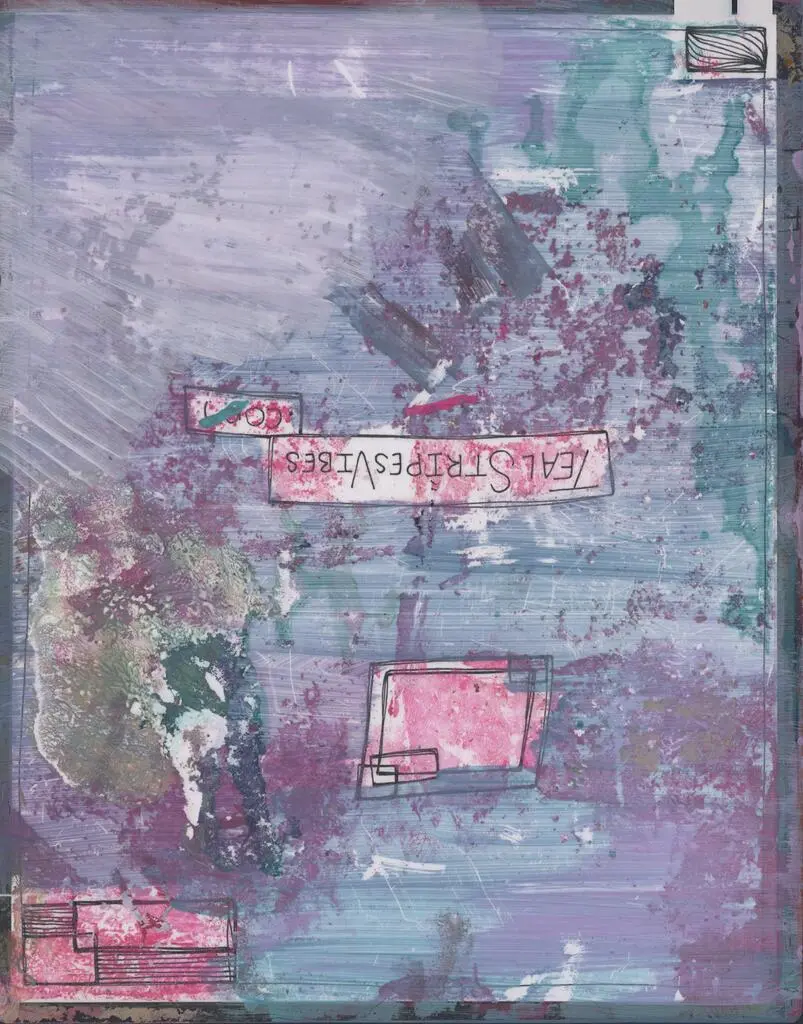
No. 16 Teal Stripes Vibes wash
Shown as scanned: lettering reads upside down.
Violet and teal wash over a small pink panel and a Teal Stripes Vibes label
Follow its thread:
-
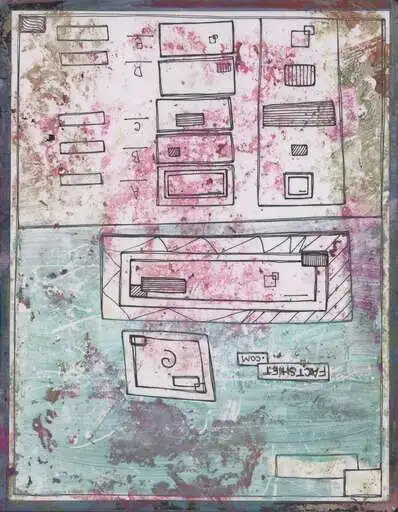
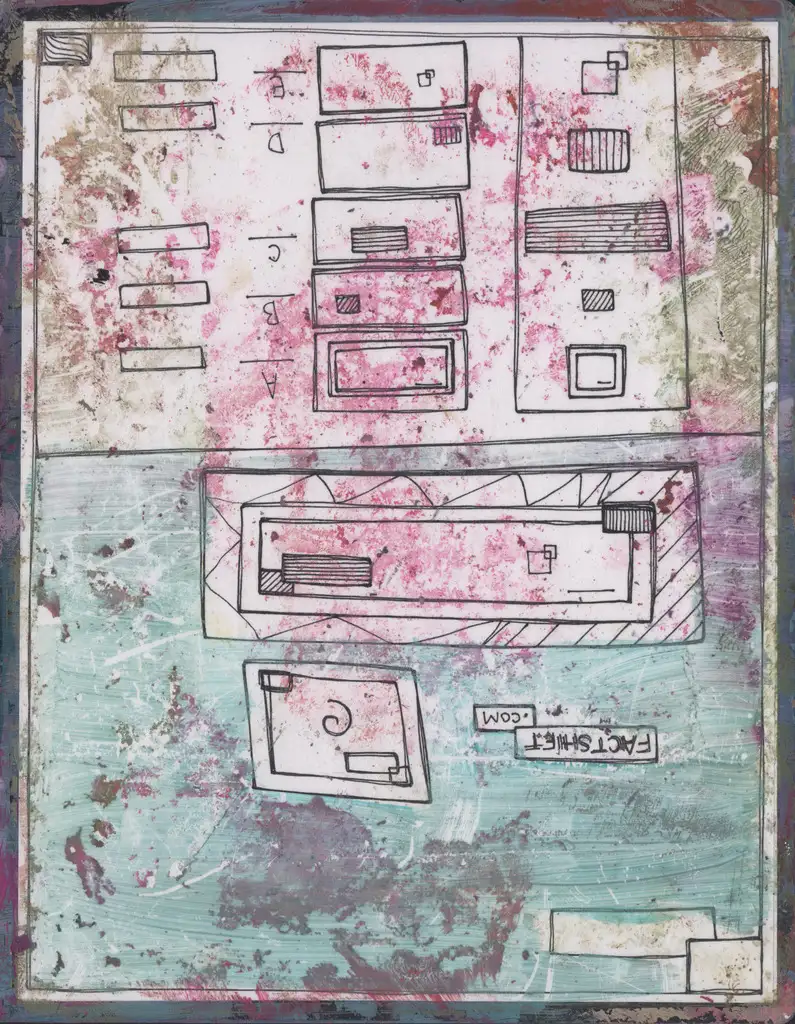
No. 17 factshift cabinet
Shown as scanned: lettering reads upside down.
A cabinet of ink drawers and slots washed in pink and sea green, with factshift.com lettered small
Follow its thread:
-
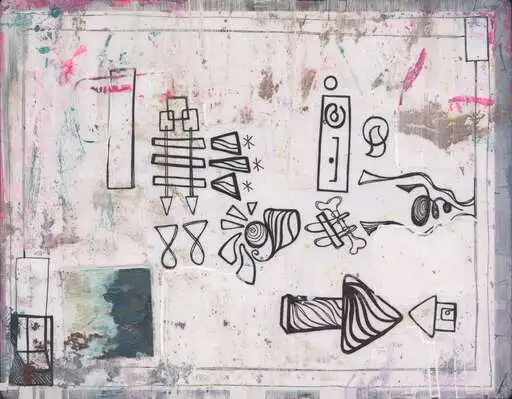
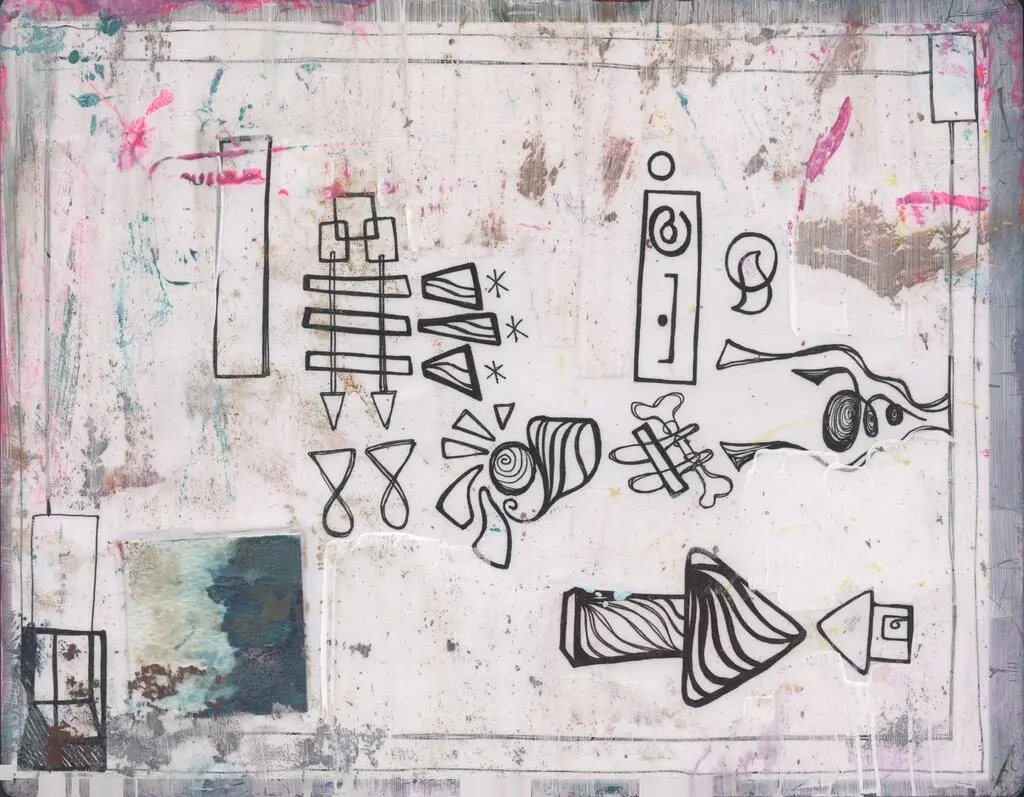
No. 18 Glyph arrows, pale
Loose ink glyphs on a pale page: a ladder, triangles, a hash knot, spirals, and a fat striped arrow pointing at a small house
Follow its thread:
-
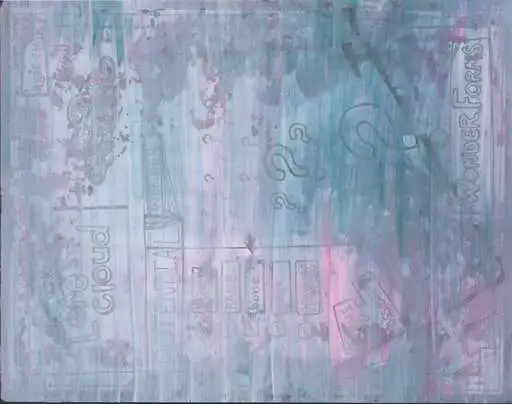
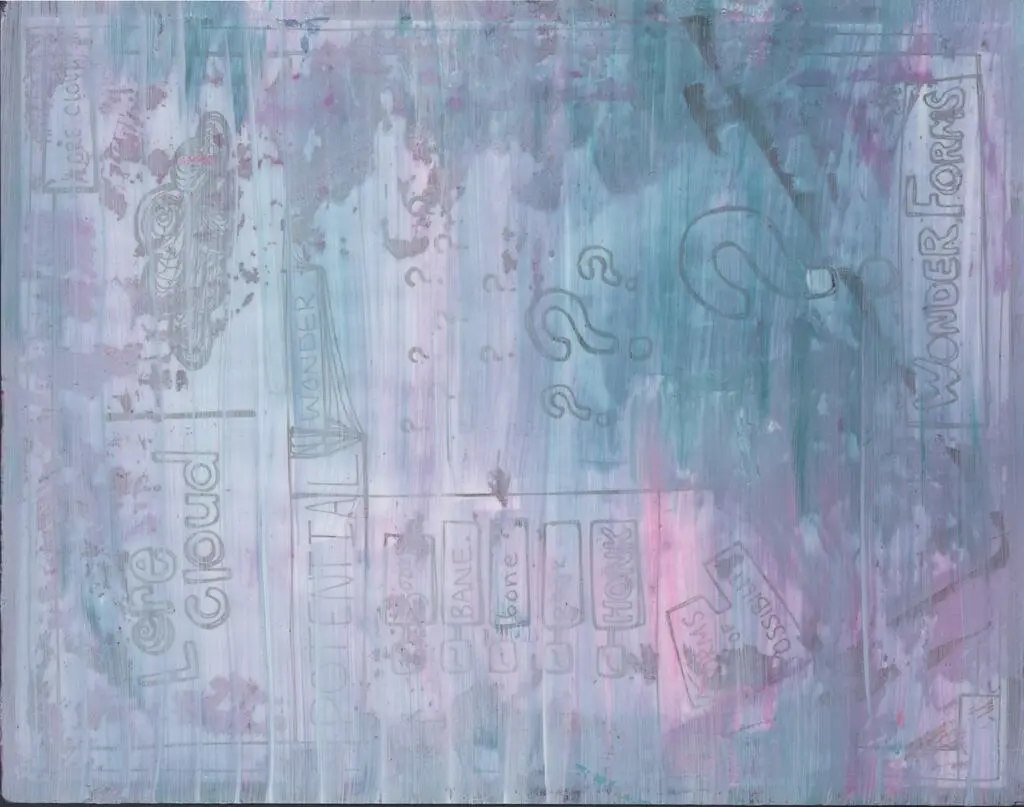
No. 19 Lore cloud, wonder forms
Shown as scanned: lettering runs sideways.
Blue and violet wash over faint pencil: a lore cloud, question marks, and wonder forms showing through
Follow its thread:
-
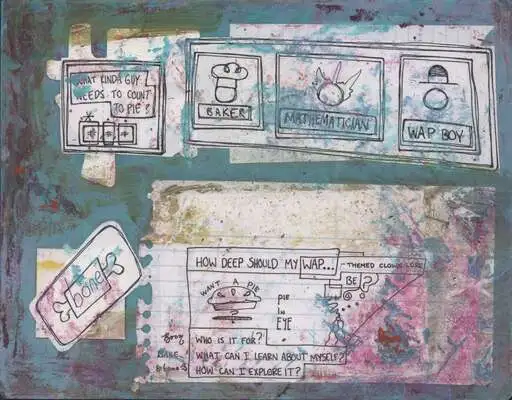
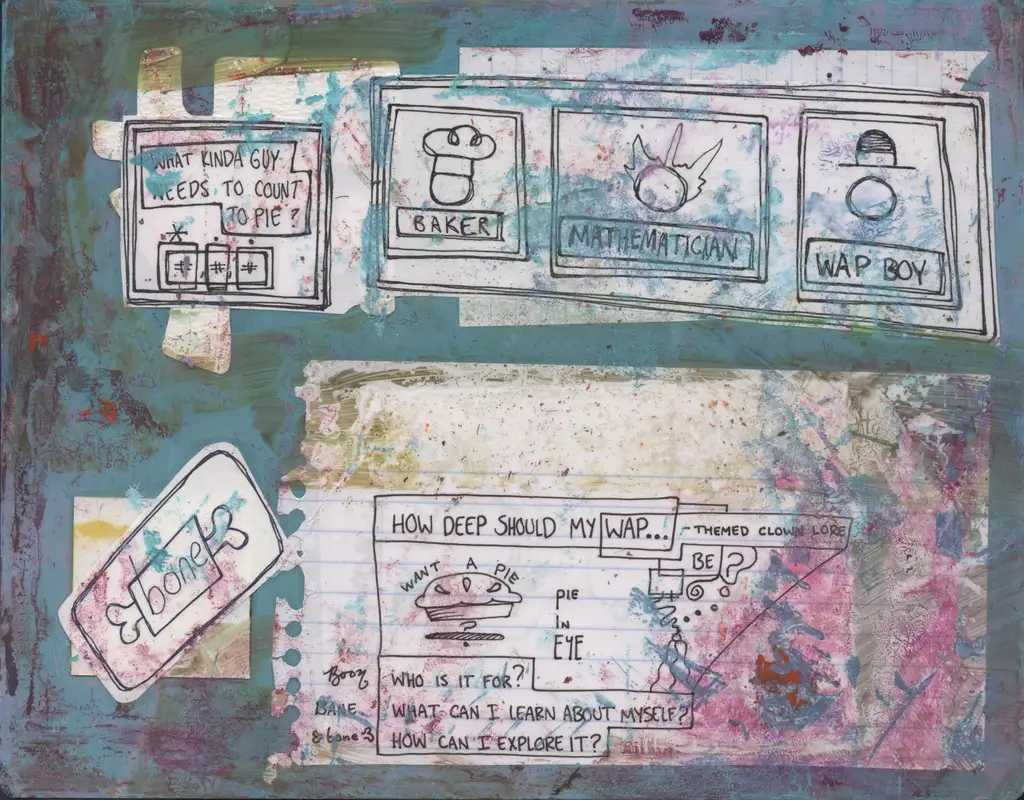
No. 20 What kind of guy counts to pie
Character cards for baker, mathematician, and WAP boy under the question what kind of guy needs to count to pie, above notes on how deep a WAP should be
Follow its thread:
-
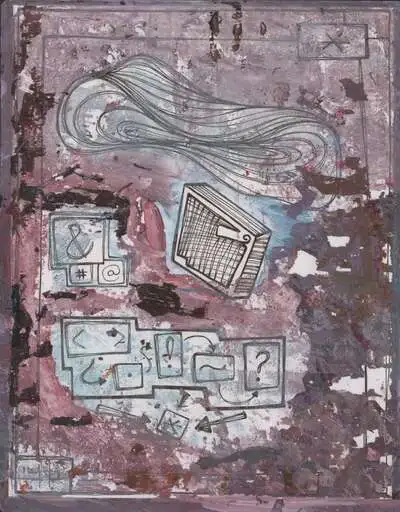
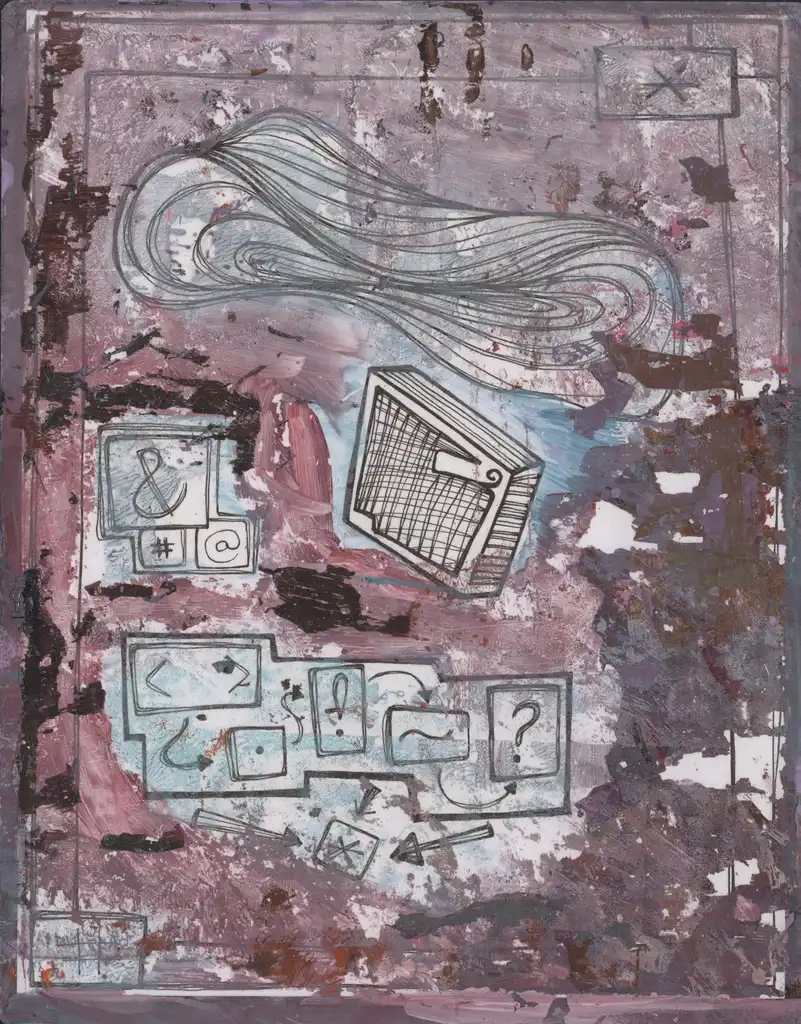
No. 21 Ampersand, hair, cube
A mauve page where a flowing plume of hair passes over a hatched cube, ampersand and at-sign cards, and a strip of operator glyphs
Follow its thread:
-
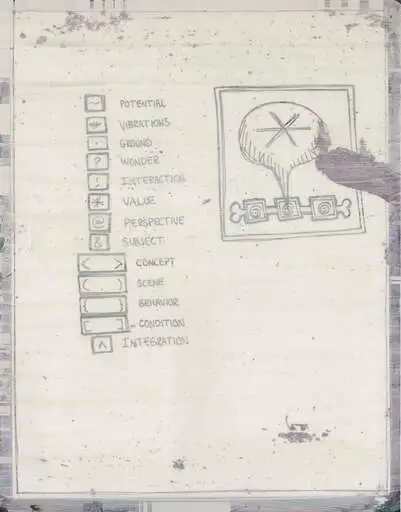
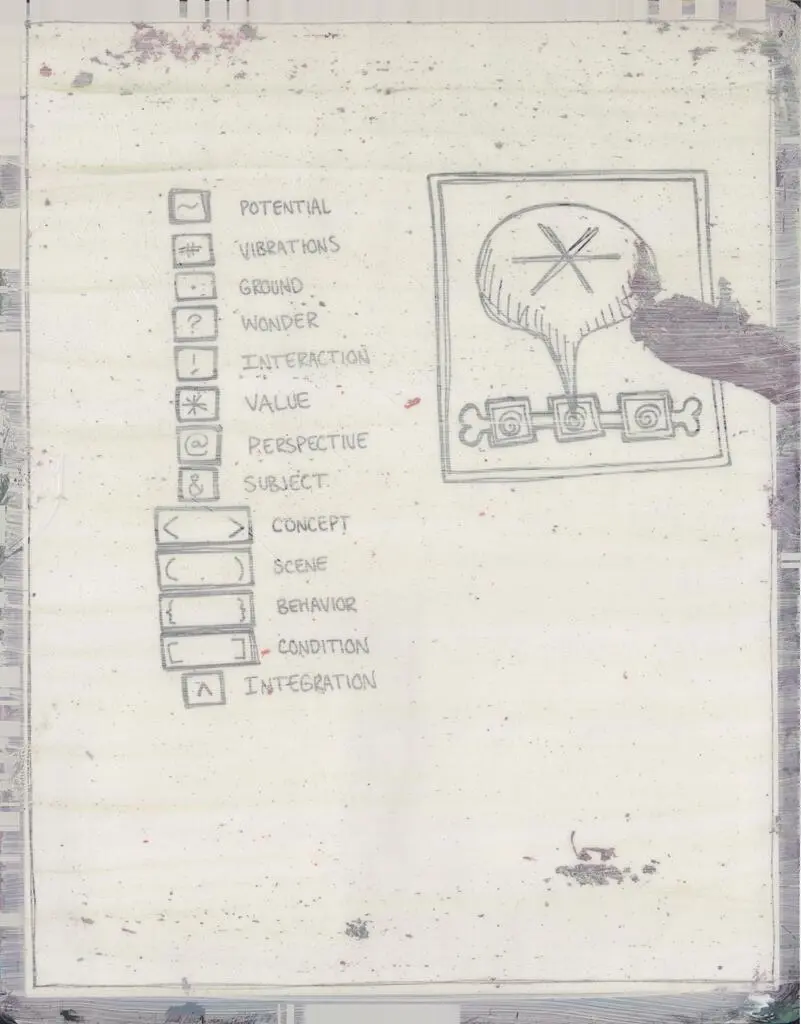
No. 22 Operator ladder, pencil
A pale pencil ladder of operator glyphs with their names, potential through integration, beside a framed balloon over three bones
Follow its thread:
-
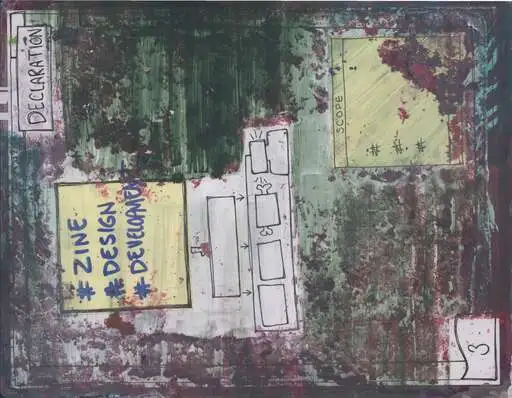
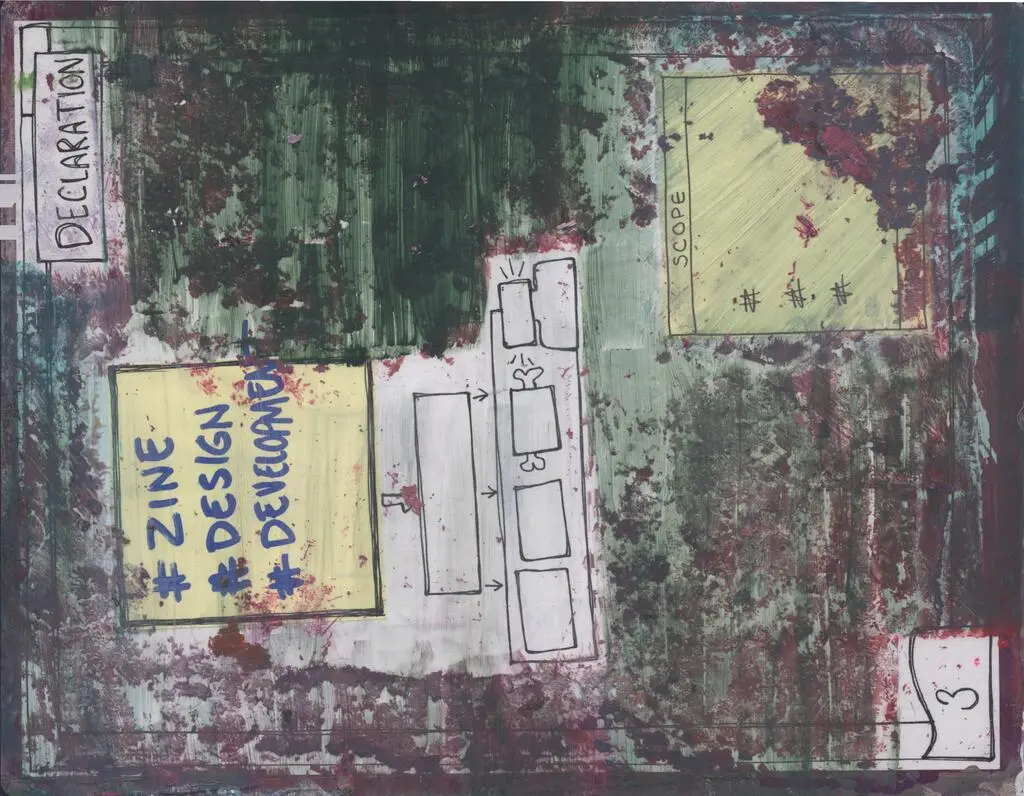
No. 23 Zine design declaration
A dark green page headed Declaration, with a yellow card reading zine, design, development and a lime panel labeled scope
Follow its thread:
-
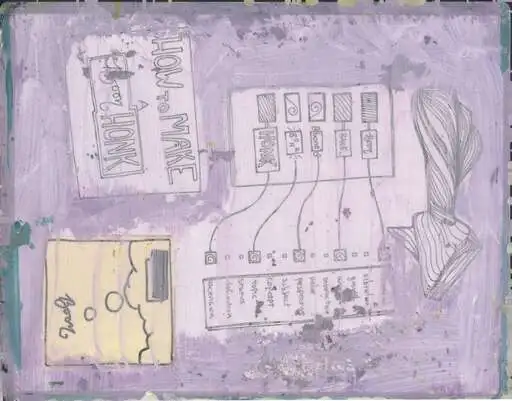
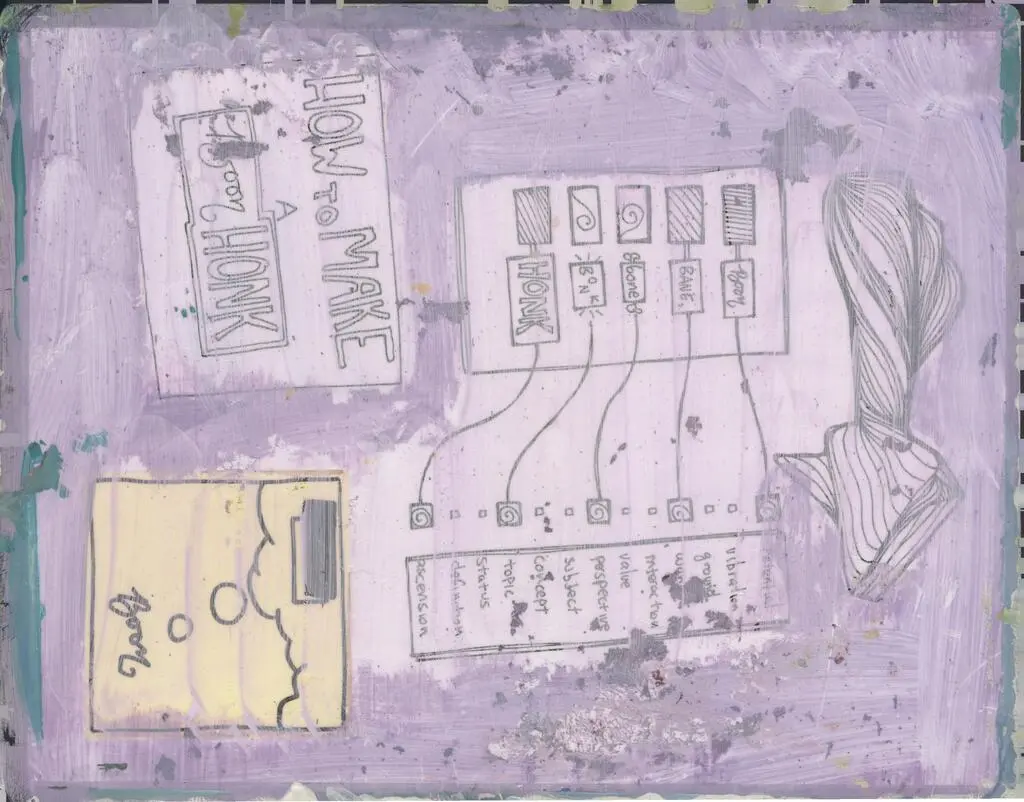
No. 24 How to make honk
Shown as scanned: lettering runs sideways.
A lavender page titled How to make honk, wiring five labeled boxes down to a list of operator words, with a plume and a small cloud card
Follow its thread:
-
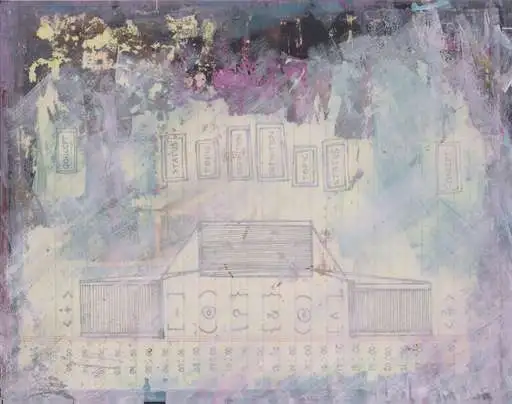
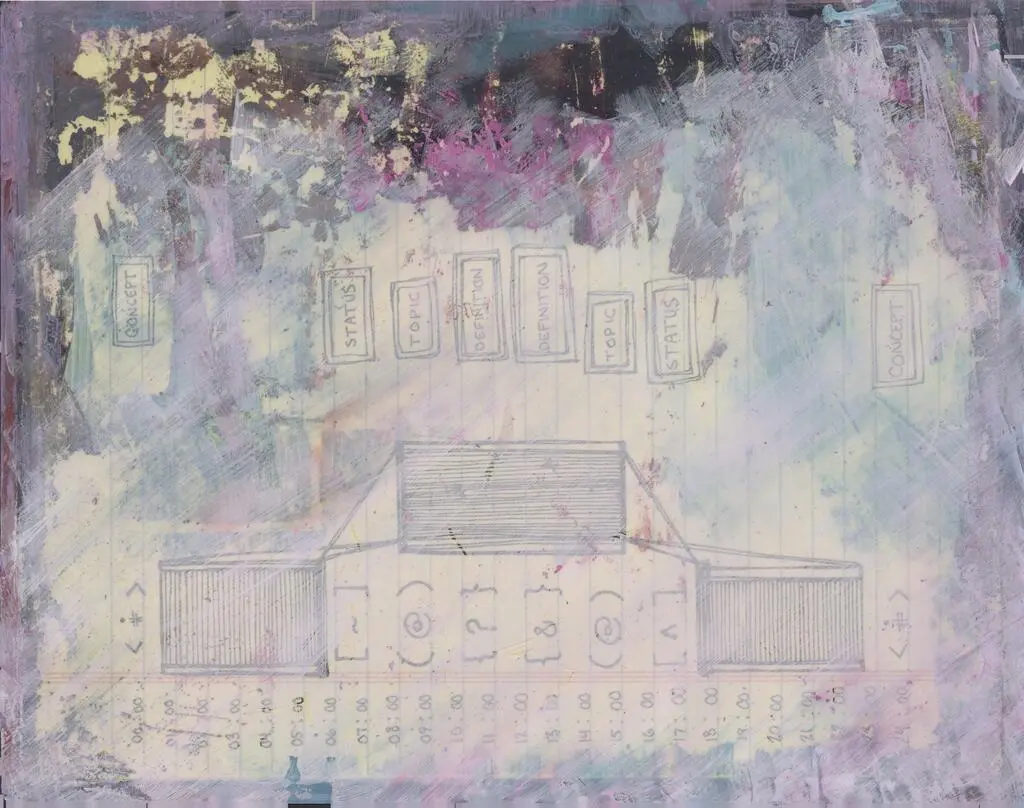
No. 25 Lined stage facade
Pale yellow and violet wash over lined paper, a row of faint pencil cards above a wide stage-like facade
Follow its thread:
-
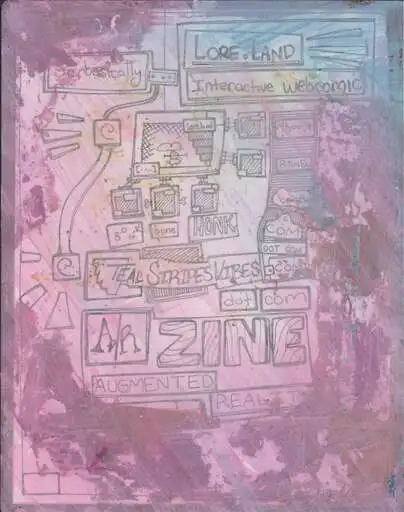
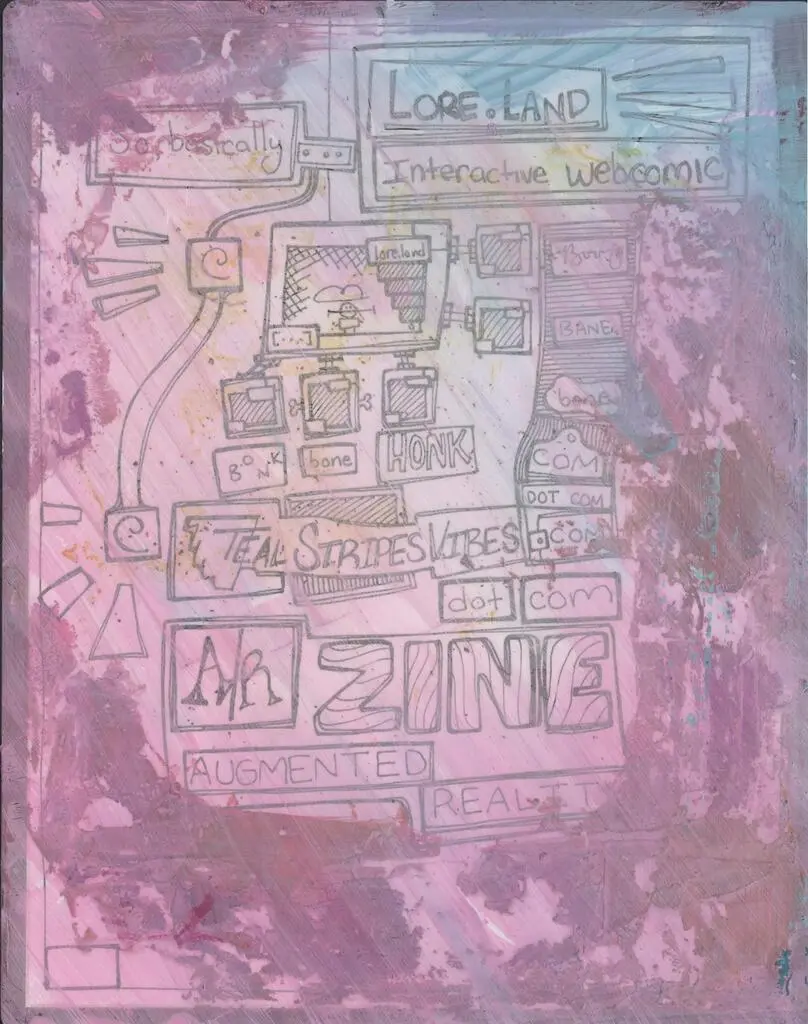
No. 26 Lore Land webcomic zine
A pink wash over a pencil plan for Lore Land as an interactive webcomic and an augmented-reality zine, with Teal Stripes Vibes dot com and boon, bone, and honk boxes
Follow its thread:
-
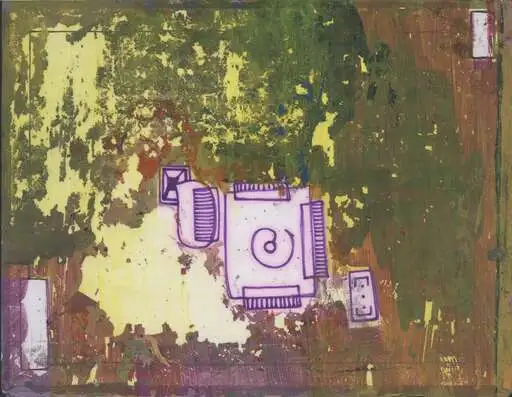
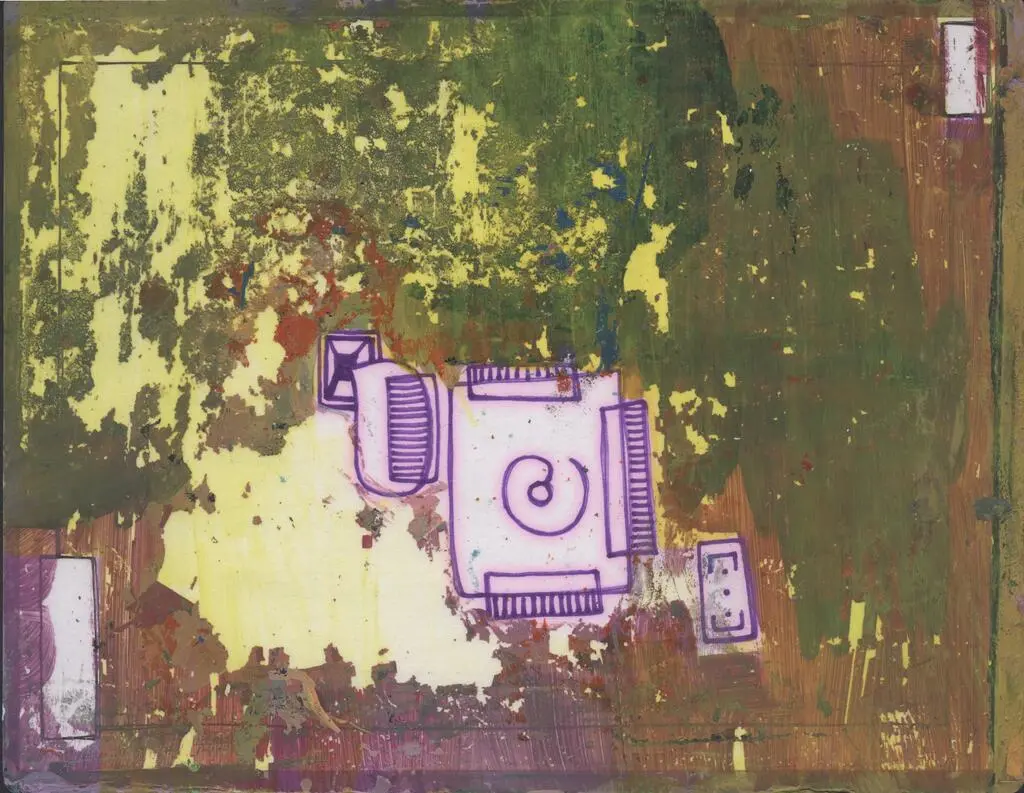
No. 27 Spiral chip, ochre
A violet-outlined chip with a spiral at its center, set in a clearing of ochre, olive, and brown paint
Follow its thread:
-
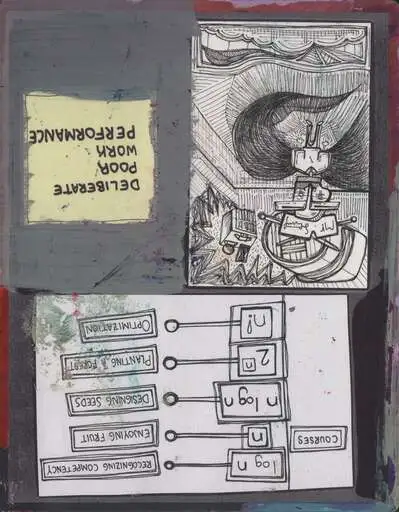
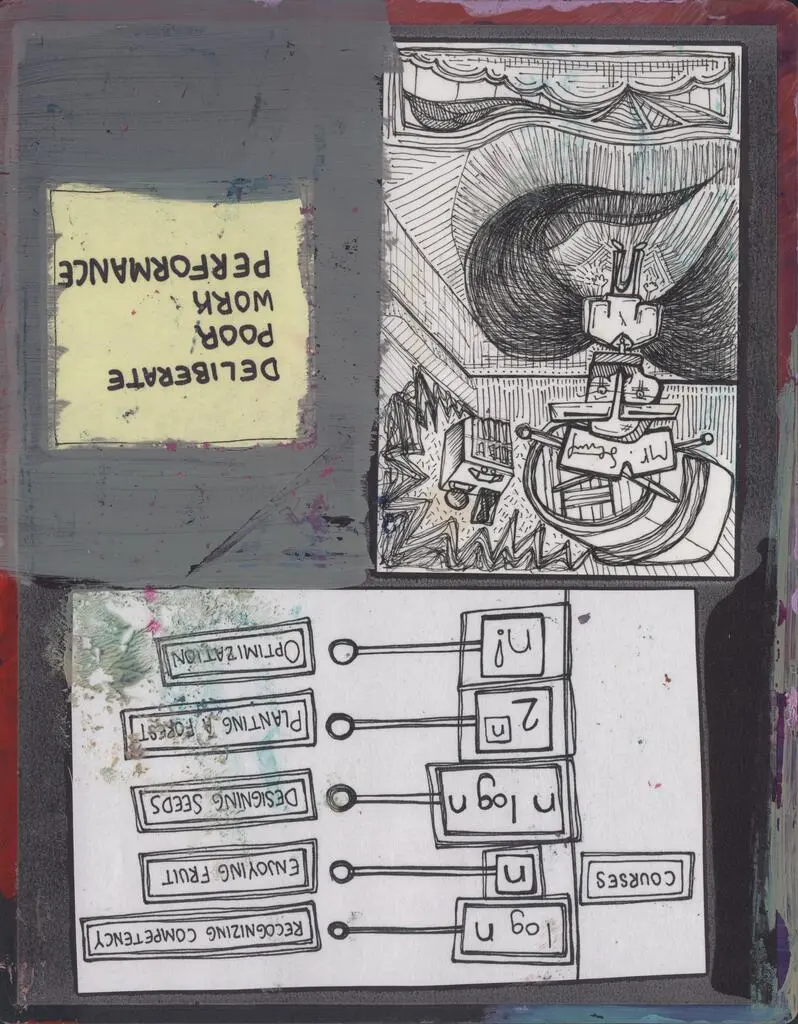
No. 28 Deliberate poor performance
Shown as scanned: lettering reads upside down.
A grey page with a yellow card reading deliberate poor work performance, a dense ink drawing of a figure under a sweeping wave, and a ladder of courses from n to log n
Follow its thread:
-
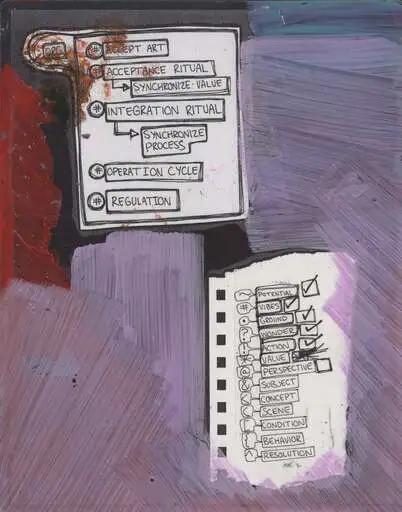
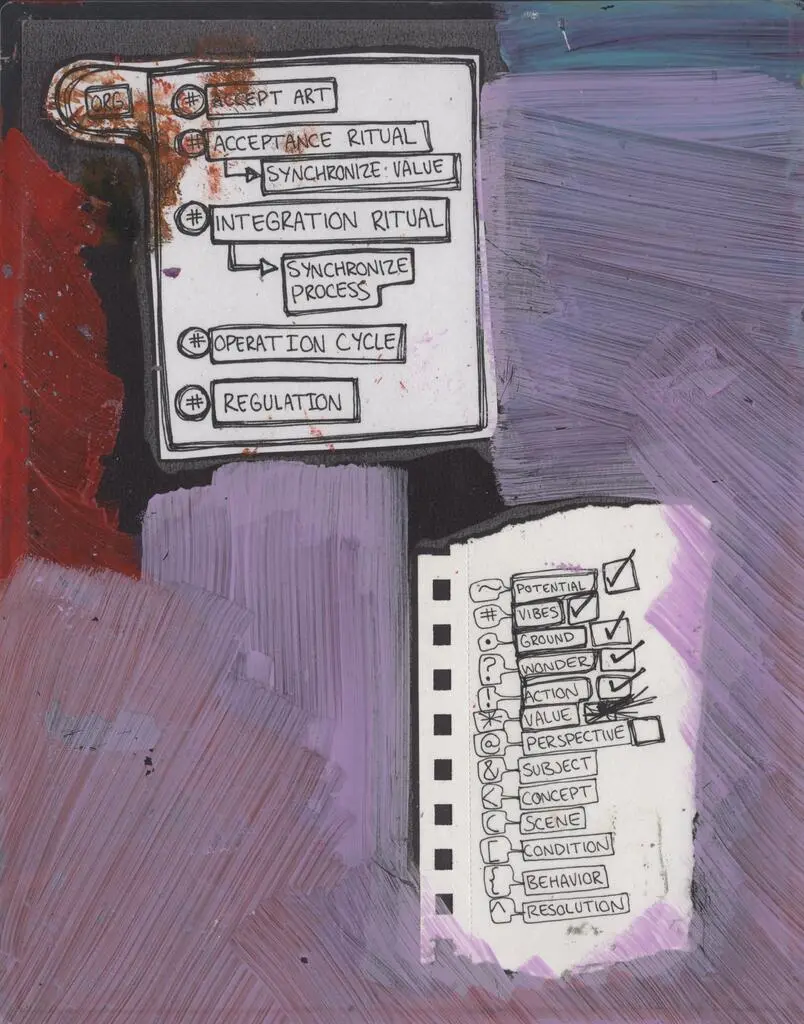
No. 29 Acceptance ritual checklist
Cut cards on red and violet listing accept art, acceptance ritual, integration ritual, operation cycle, and regulation, beside a torn checklist of operator words with ticks
Follow its thread:
-
No. 30 Mimes Against WAP, blue wash
A blue-grey wash nearly covering an earlier page, Mimes Against WAP and a spiral still visible beneath
Follow its thread:


Five open in high-res each week and wear a mark on the shelf. Pieces are shown as scanned; a few lie sideways. Form, price, and availability are settled in the reply to your card.
Twenty-seven more, scanned September 27
Twenty-seven more, scanned the next day. Each opens with a question it seemed to ask. A note you leave stays in this browser.
In scan order, the rest of that day's scan. Each opens with a question it seemed to ask.
Honk about pi and honk about a pie: the clown side of Wondering About Pi, on lavender and a legal pad.
Boon, bane, bone, bonk, and honk as a mnemonic, a map, a collage, and the lands with their tree.
boon.land, lore.land, and factshift.com: the other rooms, planned again.
Development, practice, style through subjective experience, and a site's shop, logo, vibe, menu, and time.
Later paint over an earlier page. Look for what shows through.
-
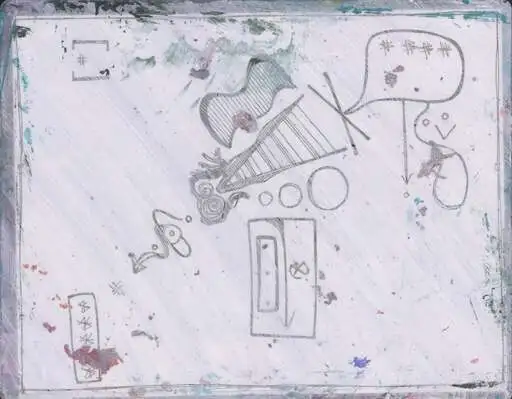
No. 00 Hash speech, cassette
Pencil on a white wash: a hatched fan shape, a cassette, three circles, and a speech bubble full of hash marks.
?what does a speech bubble full of hash marks say out loud?
-
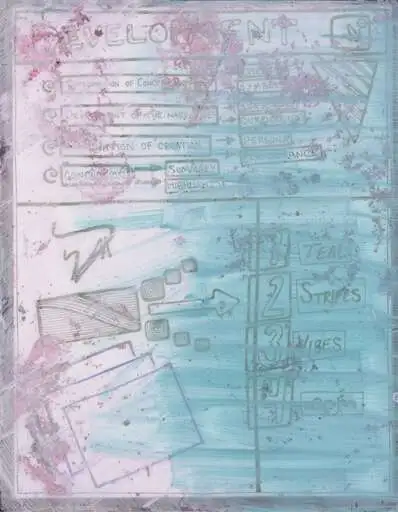
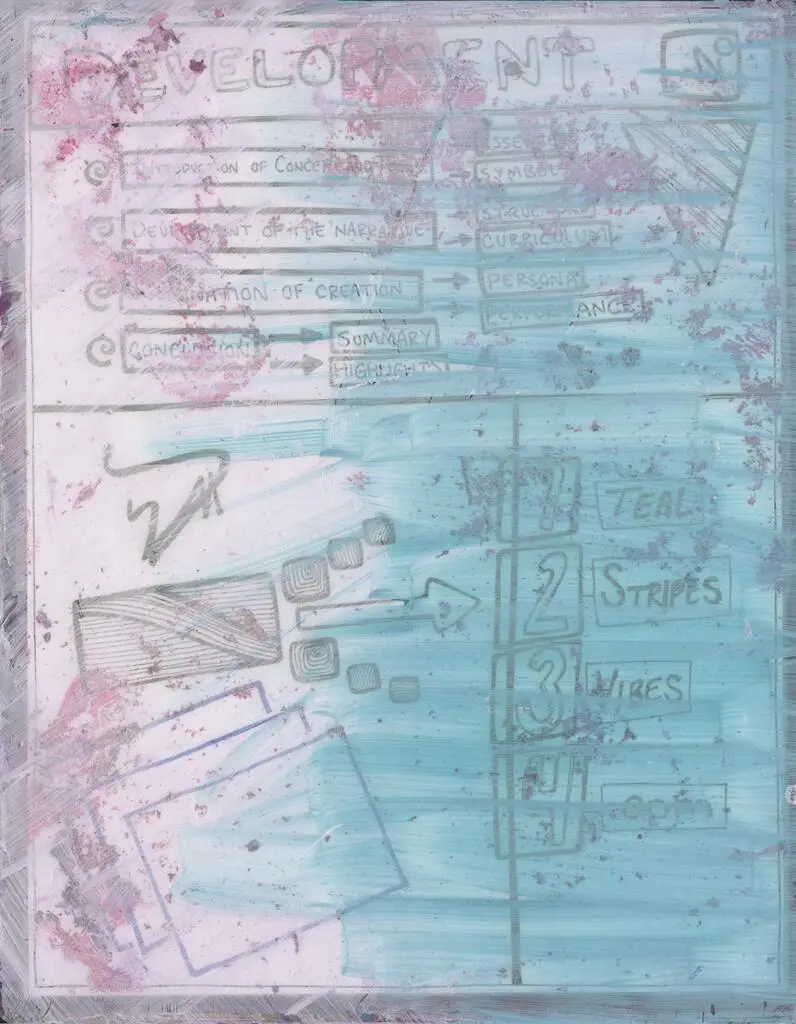
No. 01 Development, teal stripes vibes
A development chart in pencil over white and teal: concepts, narrative, creation, and conclusion lead to symbols, curriculum, personas, and resonance, beside a numbered list reading teal, stripes, vibes.
?which step of development is this folio standing on?
Follow its thread:
-
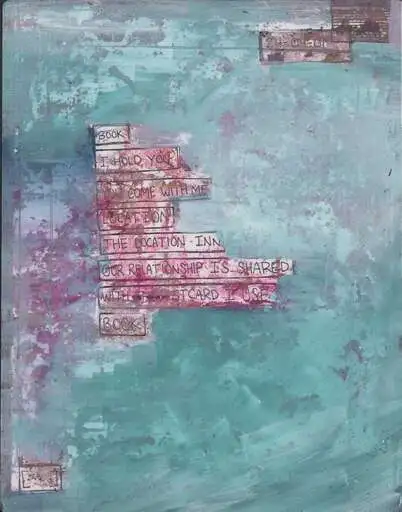
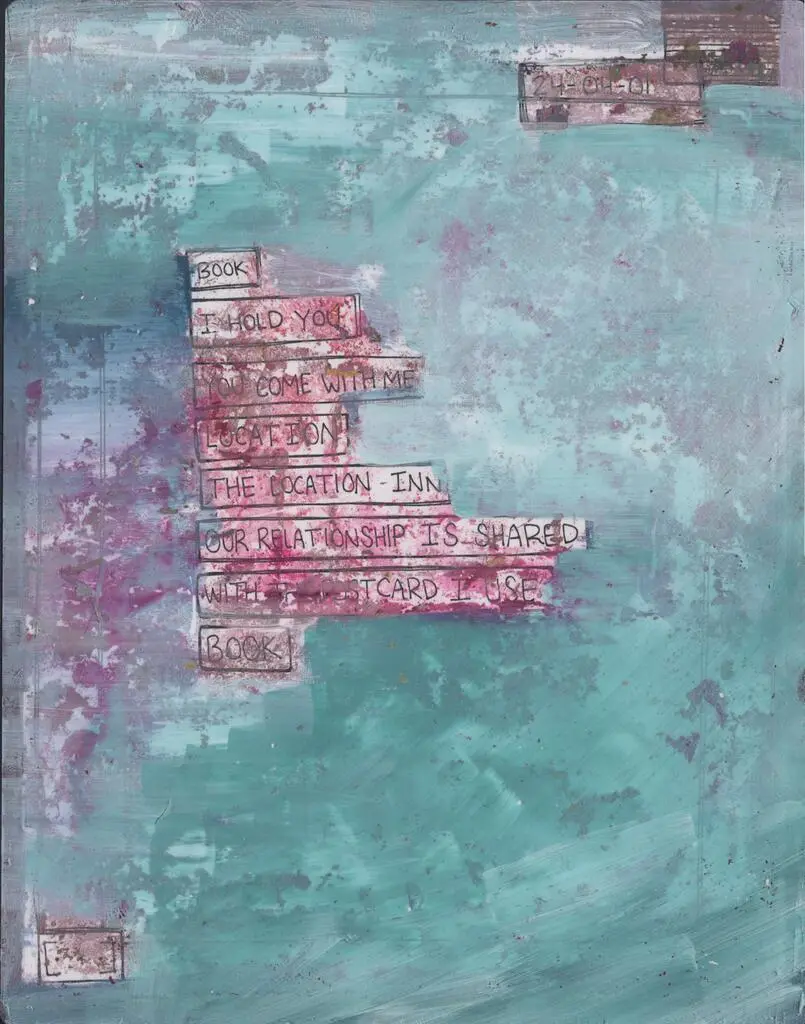
No. 02 Book, I hold you
Torn pink strips on teal read: book, I hold you, you come with me, location, the location inn, our relationship is shared with a postcard I use, book.
?who is the book holding, and where is the location inn?
-
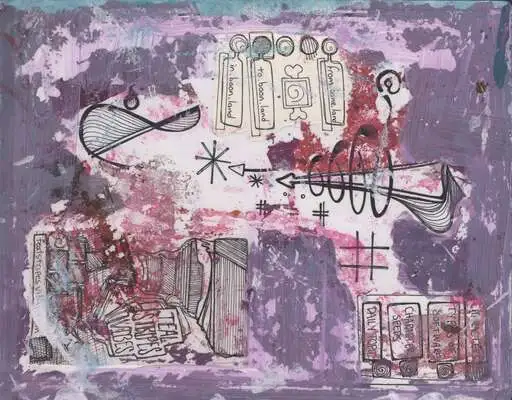
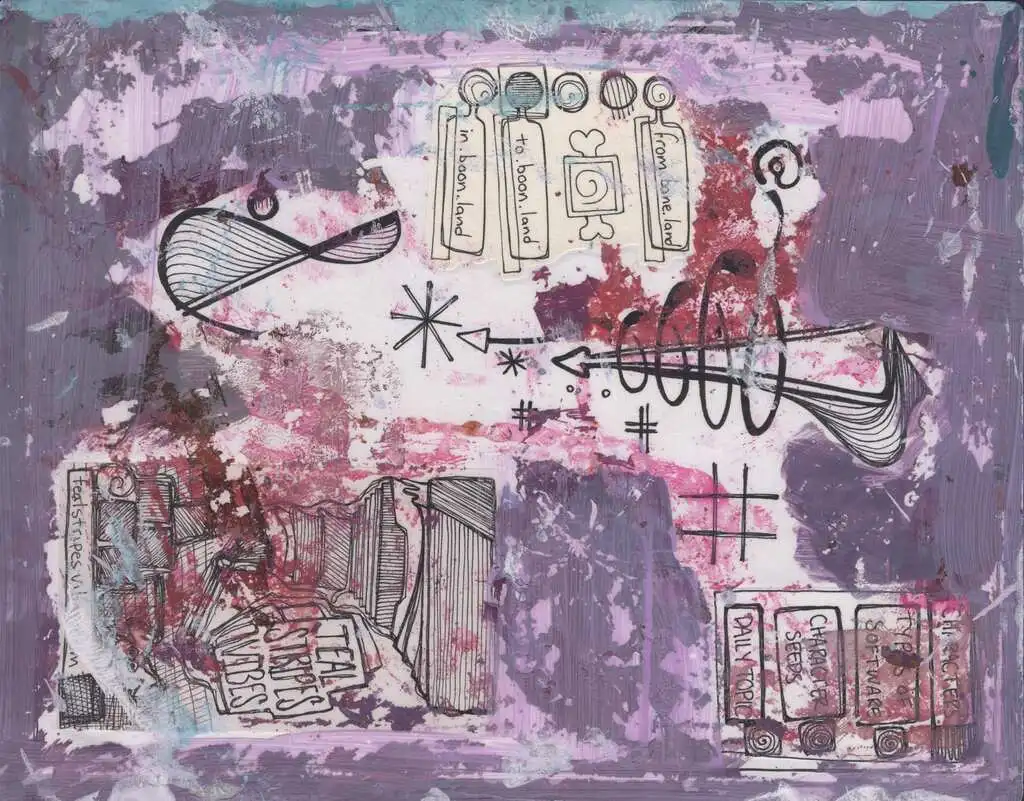
No. 03 Boon.land arrows, teal stripes
Ink on violet: tags reading in boon.land, to boon.land, and from bane.land above an arrow through coiled rings, with Teal Stripes Vibes lettered on a torn corner.
?is the arrow leaving boon.land or arriving?
Follow its thread:
-
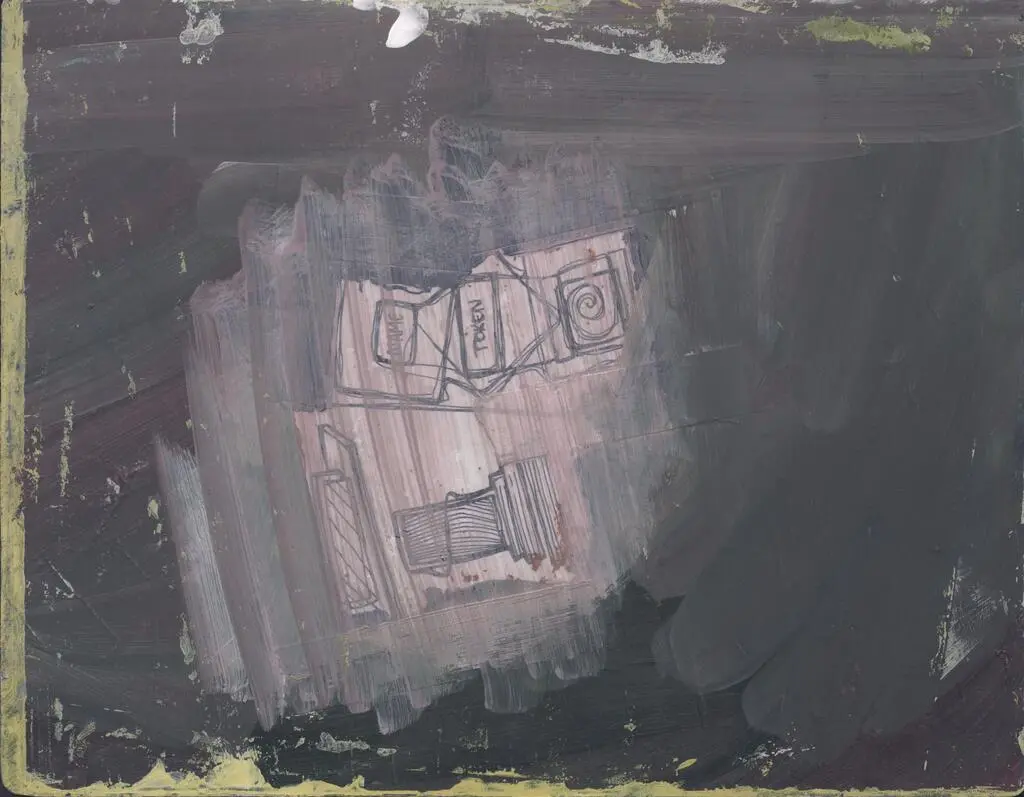
No. 04 Token column, grey wash
A grey wash over a pale stepped block, through which boxes, a token label, a spiral, and a fluted column show faintly.
?what was the token for, before the grey came over it?
Follow its thread:
-
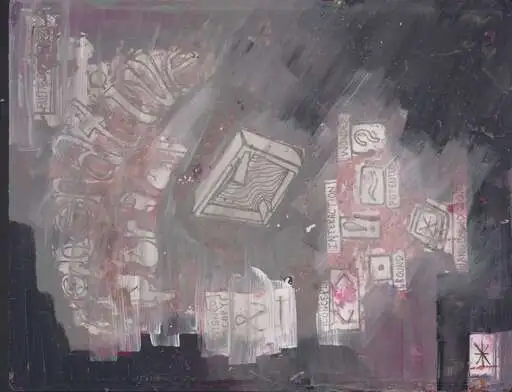
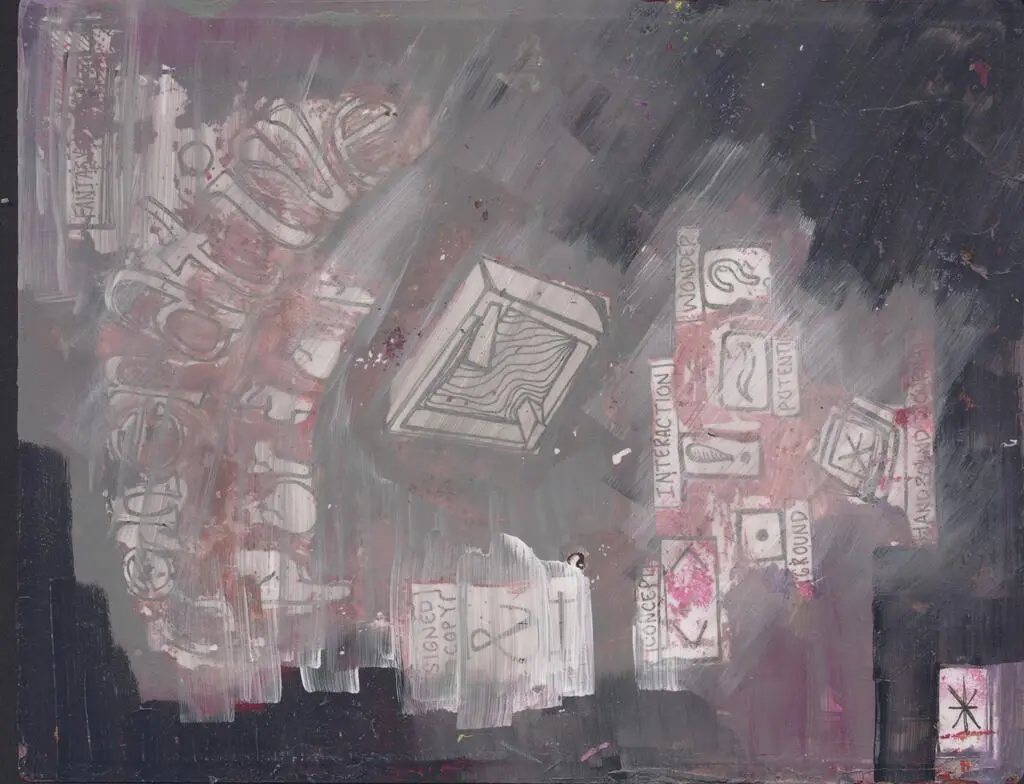
No. 05 Operator tiles, signed copy
On dark grey, pale ribbons of lettering beside a drawn book and operator tiles labeled interaction, wonder, potential, ground, concept, and signed copy.
?which tile would you sign?
-
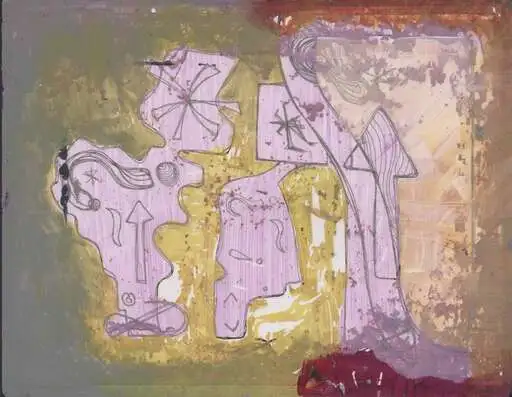
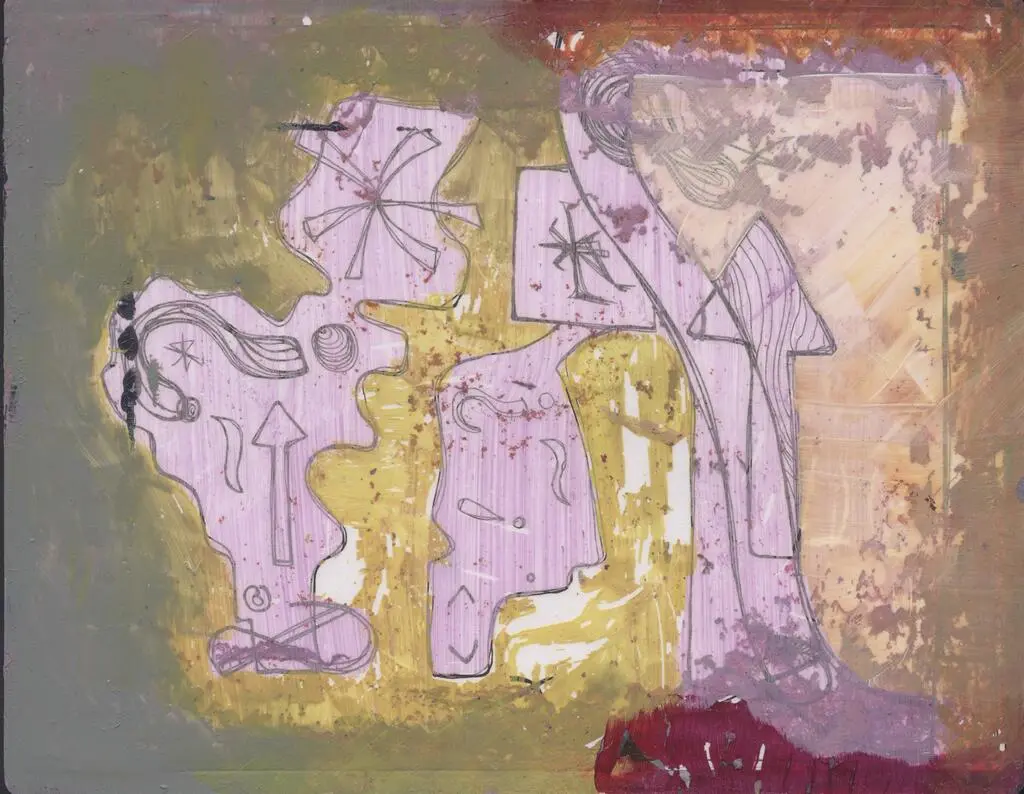
No. 06 Violet cutouts, ochre arrows
Pale violet cut shapes on ochre and olive, drawn with asterisks, an upward arrow, a cone, and an infinity loop.
?where does the upward arrow land?
-
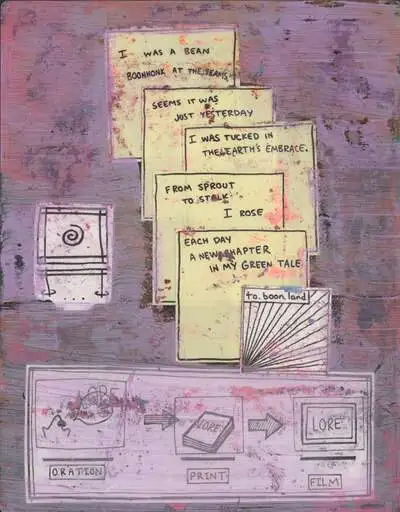
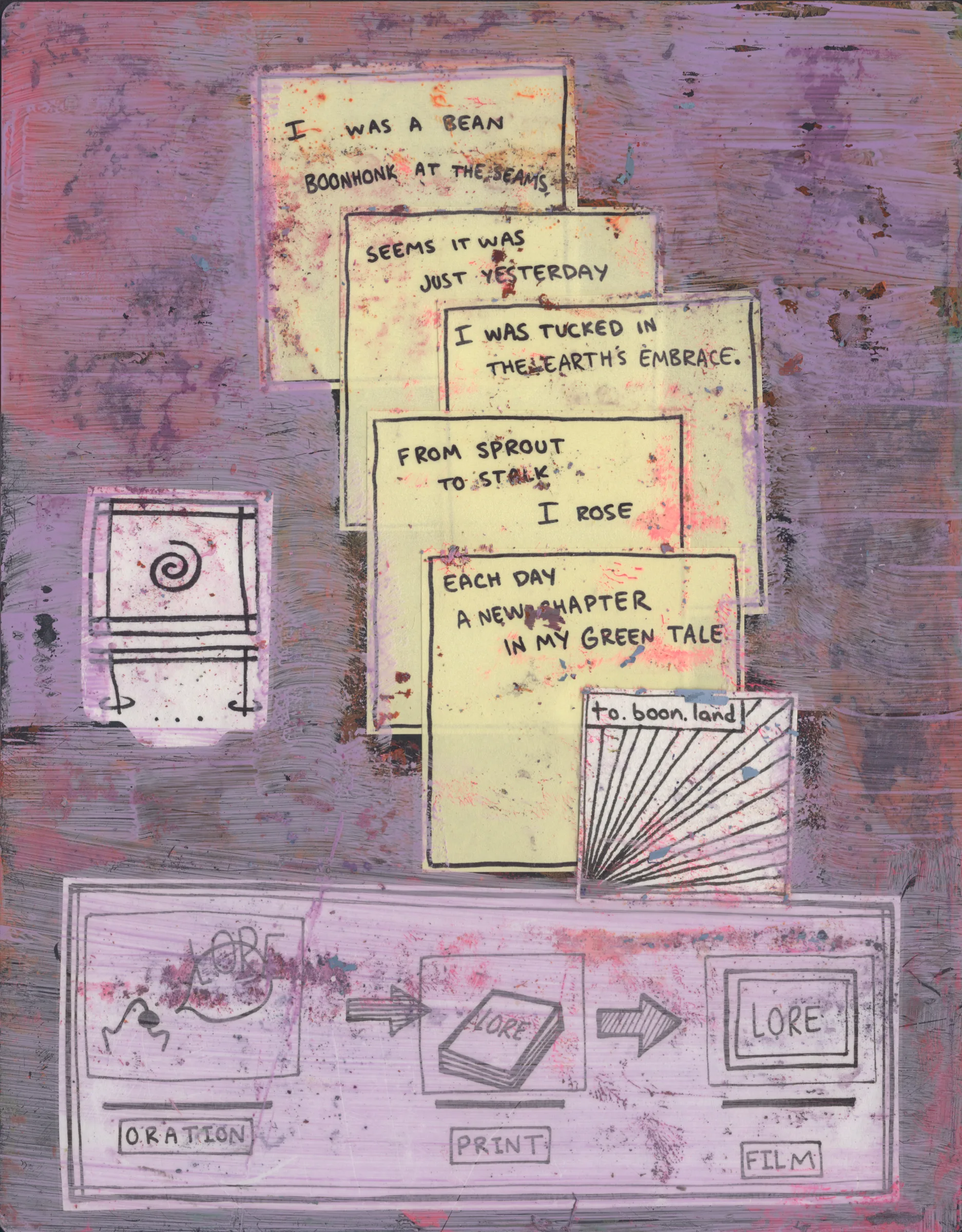
No. 07 Bean, green tale, lore
Yellow cards on violet hold a poem: I was a bean, boonhonk at the seams, seems it was just yesterday I was tucked in the earth's embrace; from sprout to stalk I rose, each day a new chapter in my green tale. Below, lore moves from oration to print to film.
?what chapter of the green tale is today?
Follow its thread:
-
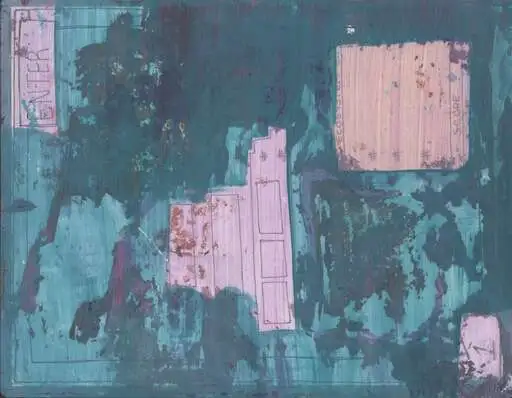
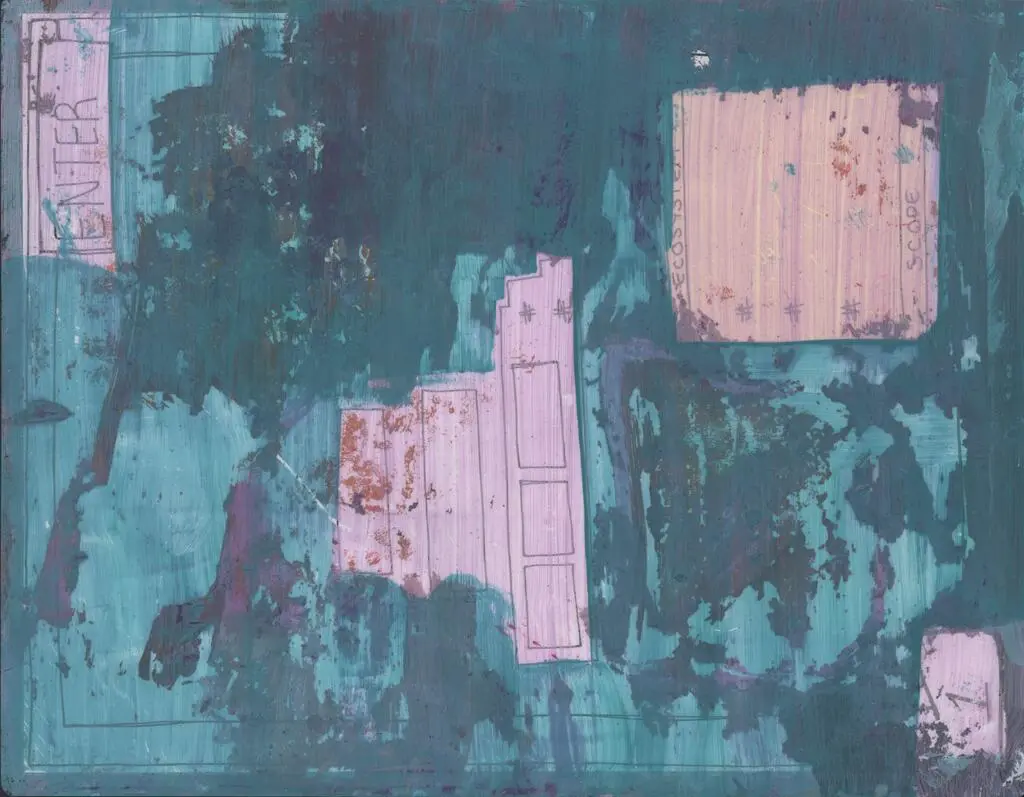
No. 08 Enter, scope, teal blocks
Teal and slate with pink and peach cut panels, one tab reading enter and another scope.
?what is inside the scope once you enter?
-
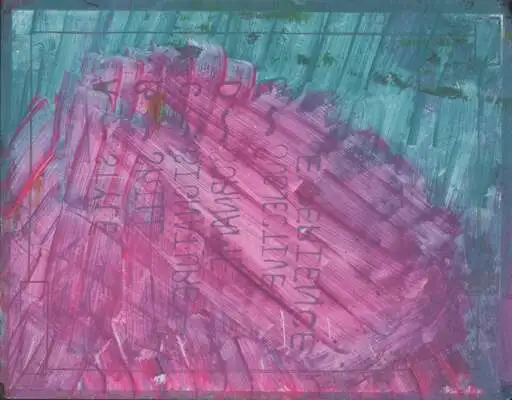
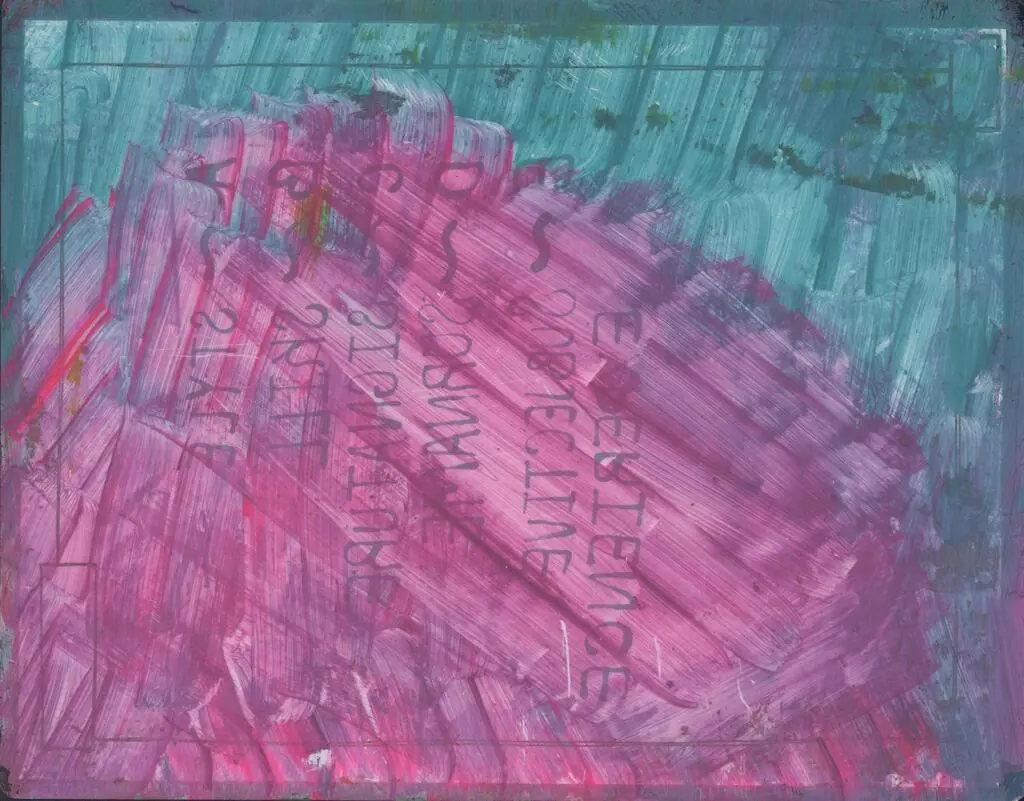
No. 09 Style, skill, signature, magenta
Magenta scrubbed over teal, with the list style, skill, signature, surname, subjective experience lettered sideways beneath. Lettering runs sideways and mirrored; kept as scanned.
?what did the magenta cover, and what shows through?
Follow its thread:
-
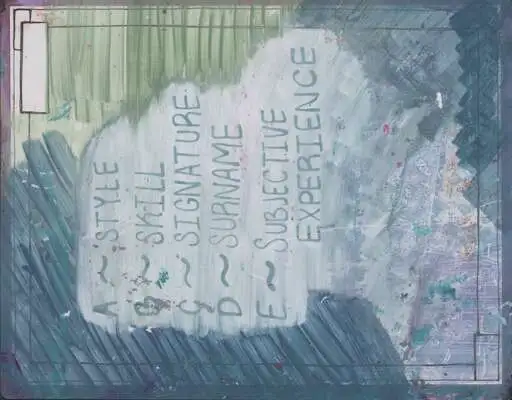
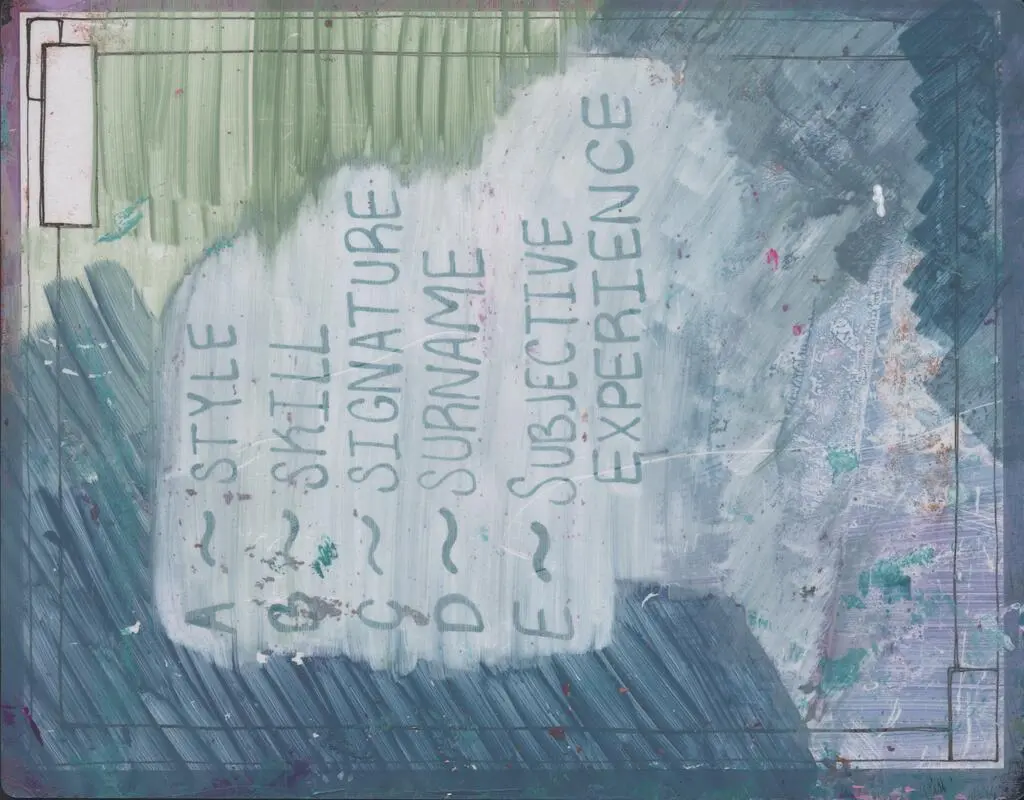
No. 10 Style, skill, signature, surname
Letters A through E on a pale cloud over slate and sage: style, skill, signature, surname, subjective experience. Lettering runs sideways; kept as scanned.
?which comes first for you: style, skill, signature, surname, or experience?
Follow its thread:
-
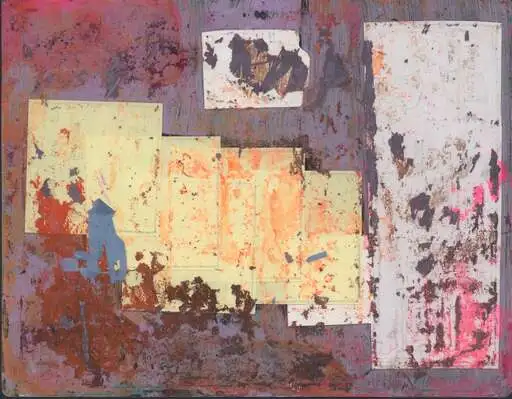
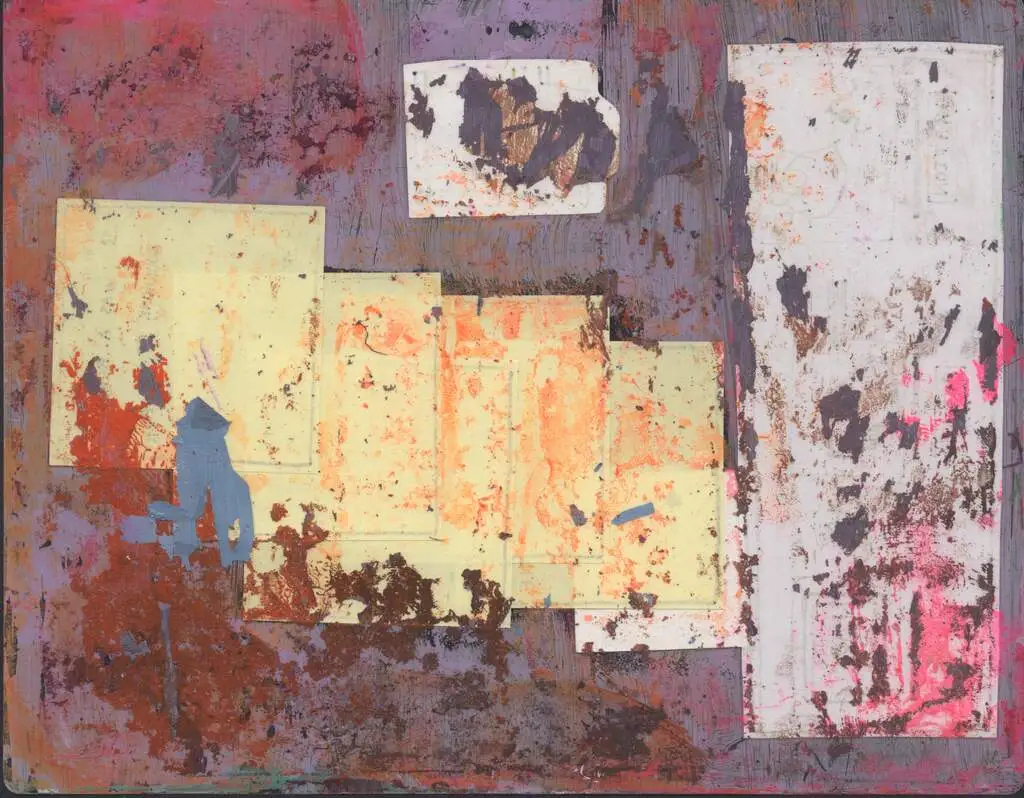
No. 11 Rust, yellow blocks, weathered
Pale yellow and white blocks on violet, weathered with rust, orange, and pink.
?what weathered these blocks?
Follow its thread:
-
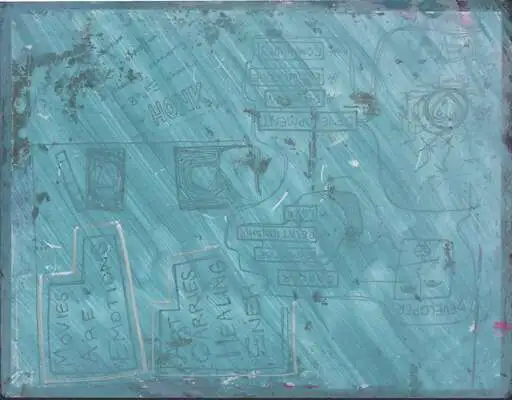
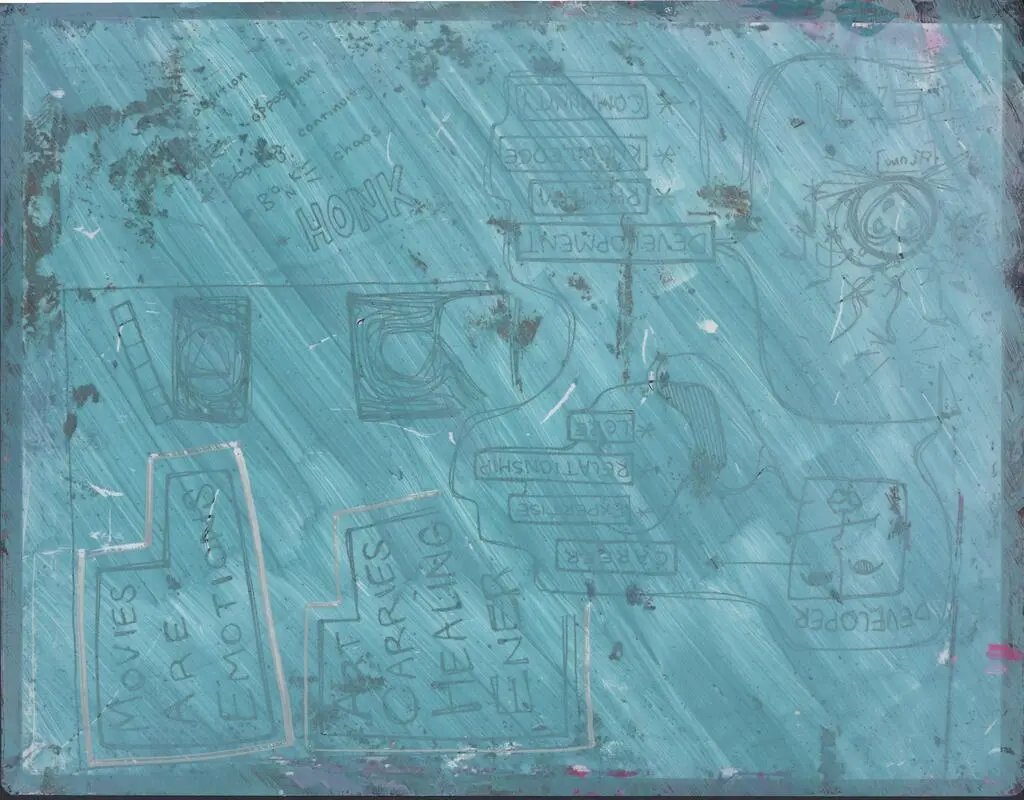
No. 12 Movies are emotions, art carries healing
Pencil under teal: movies are emotions, art carries healing, honk, development, developer, and a portrait with swirling hair. Some labels read upside down; kept as scanned.
?what does art carry for you?
Follow its thread:
-
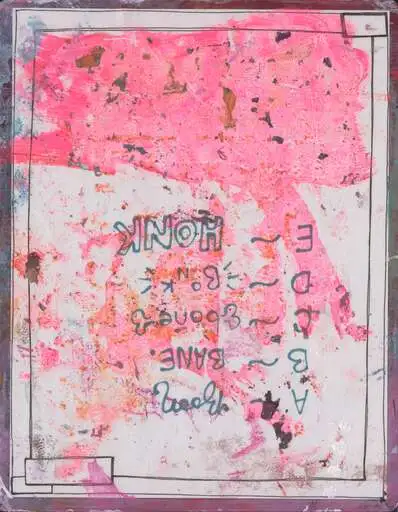
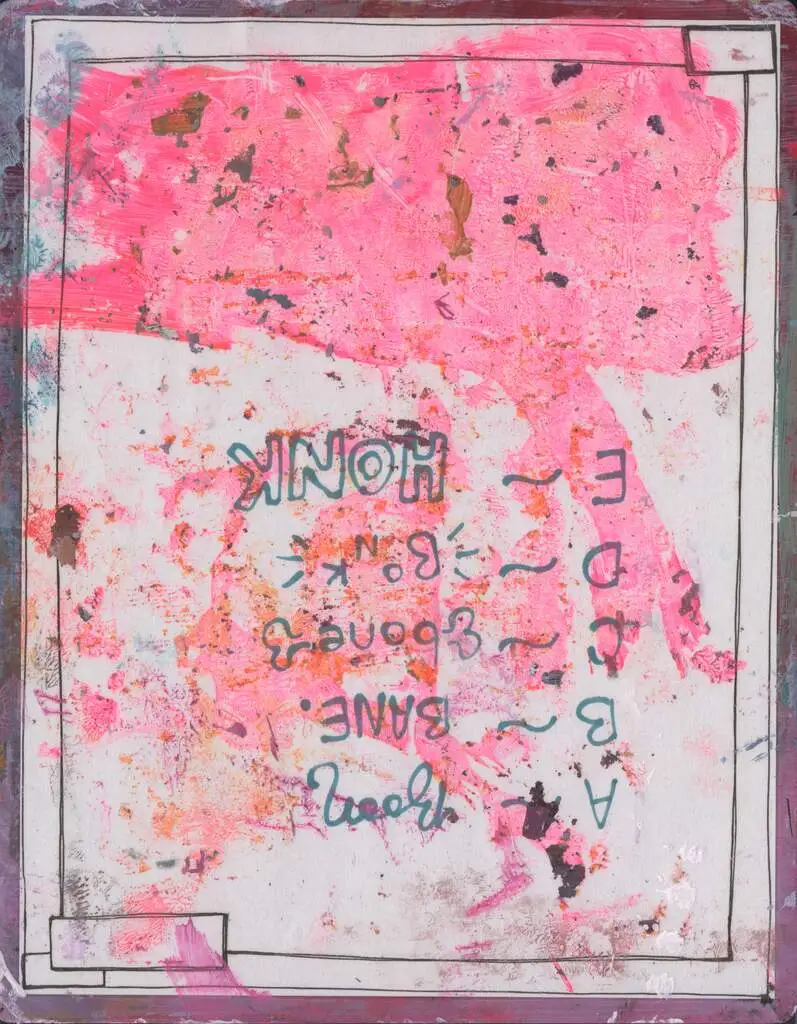
No. 13 Boon, bane, honk, pink
Pink paint over white, with a list from A to E beginning boon and bane and ending honk, lettered upside down. Lettering reads upside down; kept as scanned.
?which letter of the mnemonic do you need today?
Follow its thread:
-
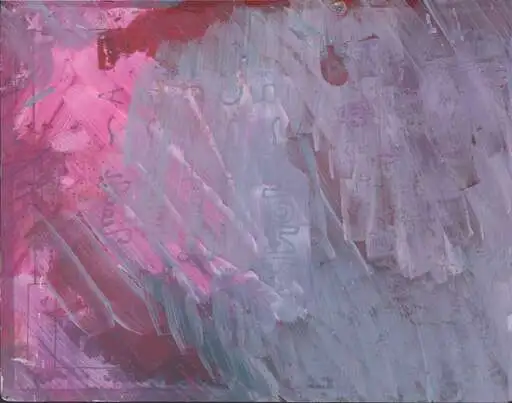
No. 14 Lavender scumble, faint letters
Pink and lavender brushwork scumbled over faint lettering.
?what were the faint letters saying?
Follow its thread:
-
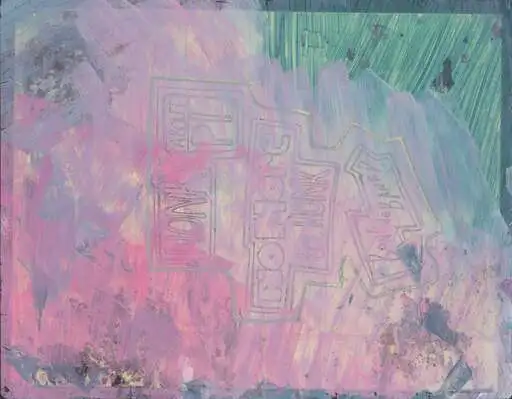
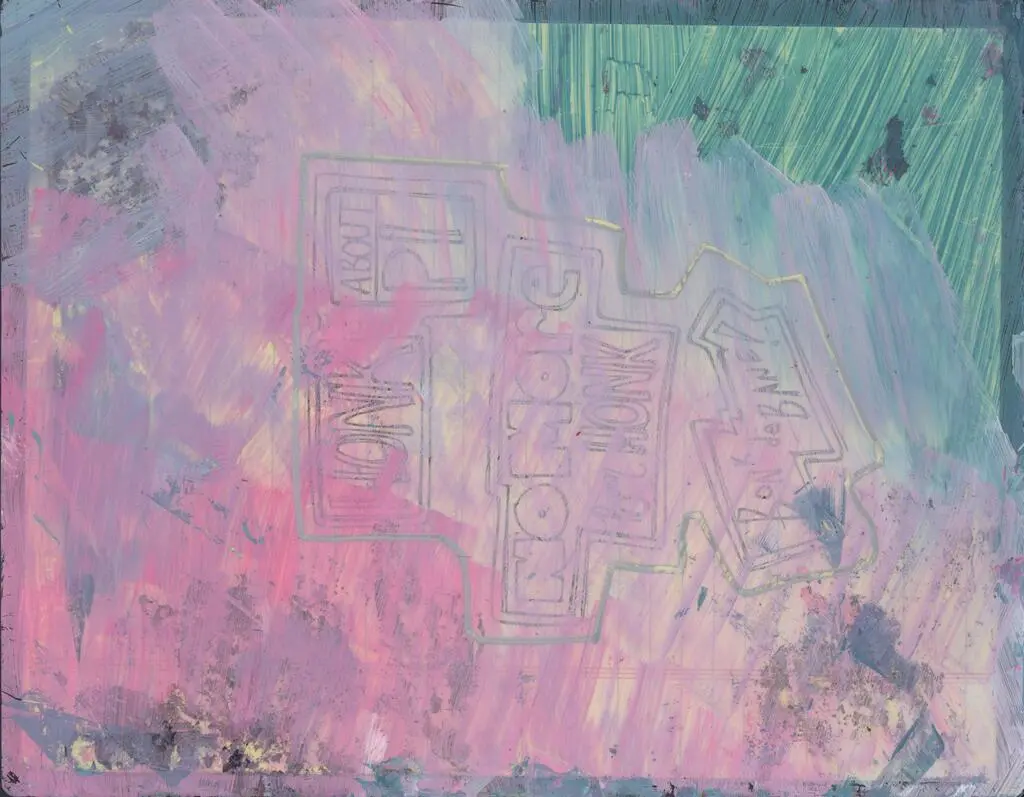
No. 15 Honk about pi, lavender
Stamped outlines on pink and lavender with a teal corner: honk about pi, honk, and a speech tag, turned on their side. Lettering runs sideways; kept as scanned.
?what would you honk about pi?
Follow its thread:
-
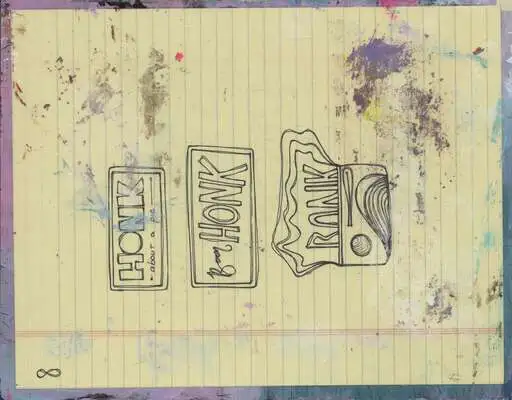
No. 16 Honk about a pie, legal pad
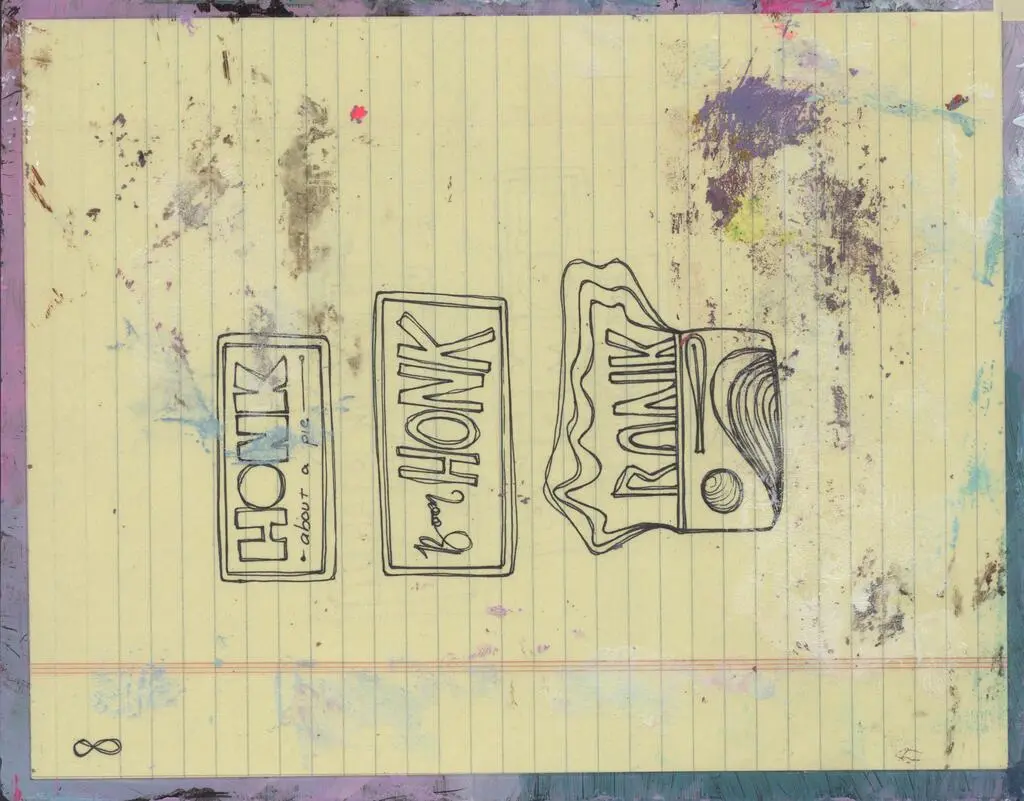
A yellow legal pad drawn with honk about a pie, boon honk, and rank, an infinity sign in the corner. Lettering runs sideways; kept as scanned.
?what goes on the next line of the legal pad?
Follow its thread:
-
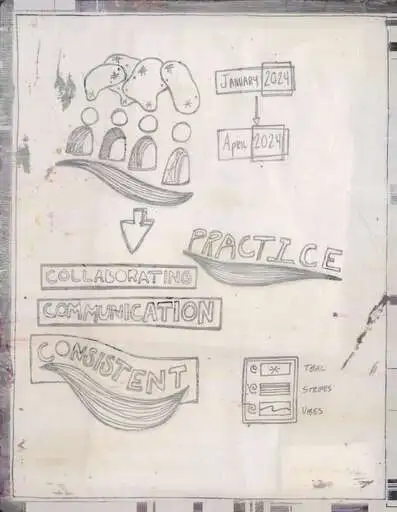
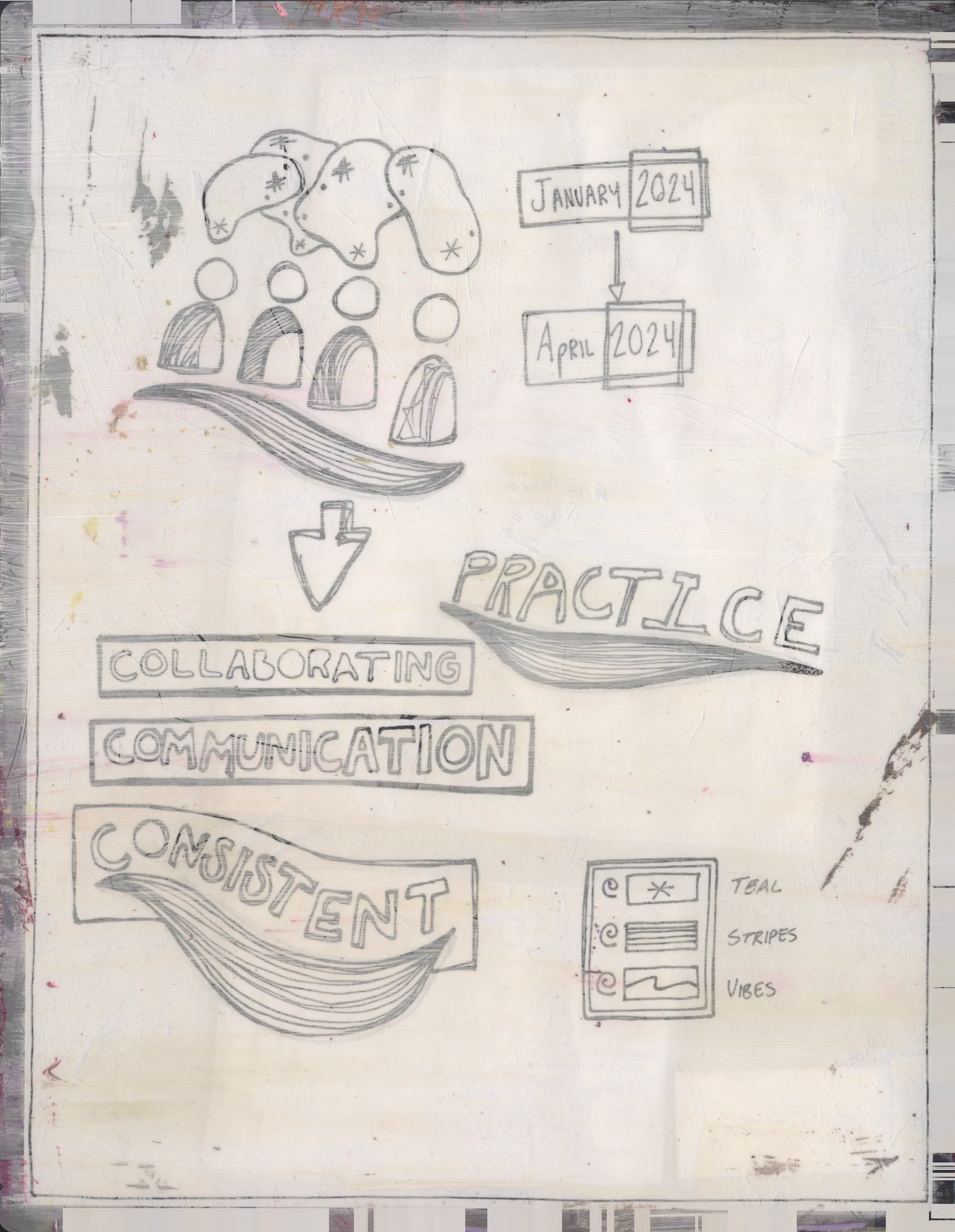
No. 17 Practice, collaborating, communication
Pencil on white: January 2024 to April 2024, figures under clouds, and banners reading practice, collaborating, communication, consistent, with teal, stripes, vibes in a key.
?what happened between January and April 2024?
Follow its thread:
-
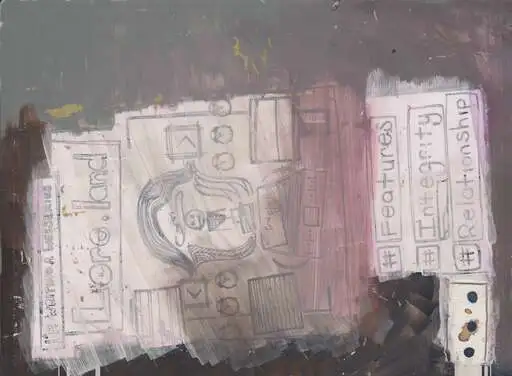
No. 18 Lore.land, features, integrity, relationship
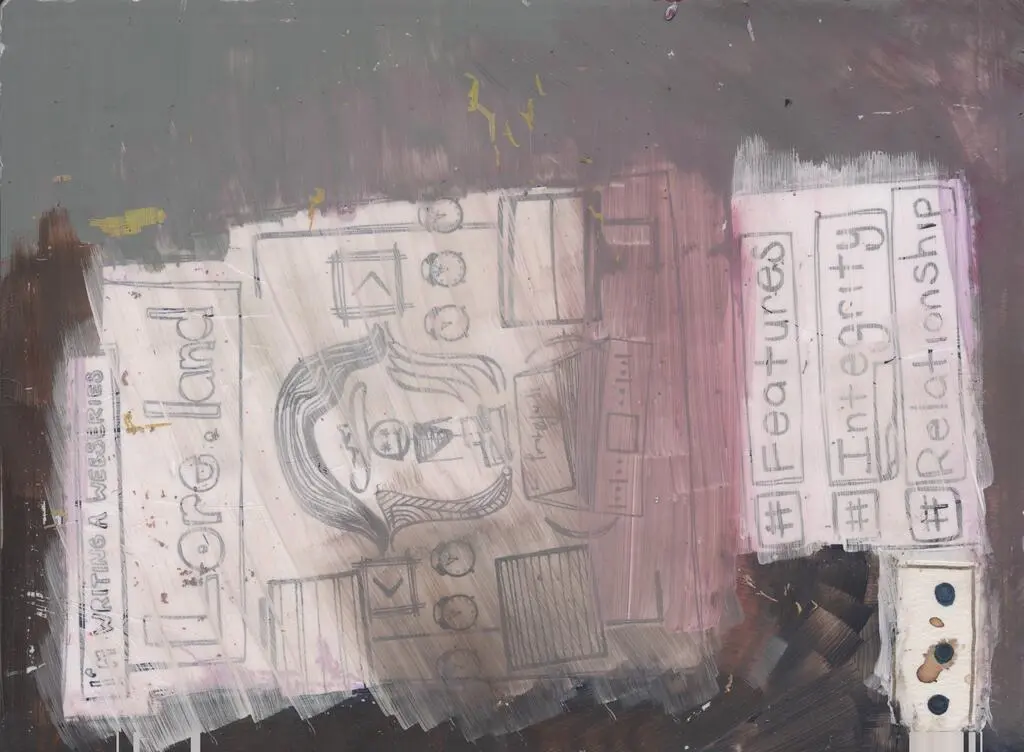
Lore.land lettered beside a drawn face and screens, with hashtags for features, integrity, and relationship. Lettering runs sideways; kept as scanned.
?which hashtag holds the other two?
Follow its thread:
-
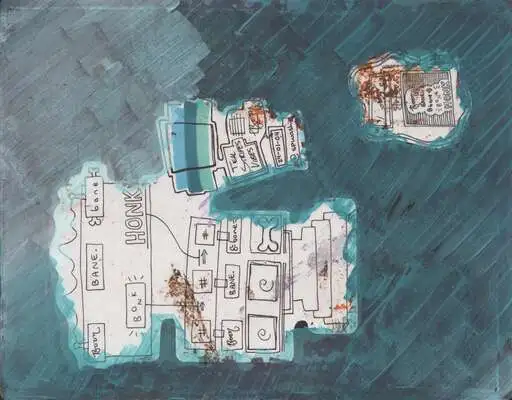
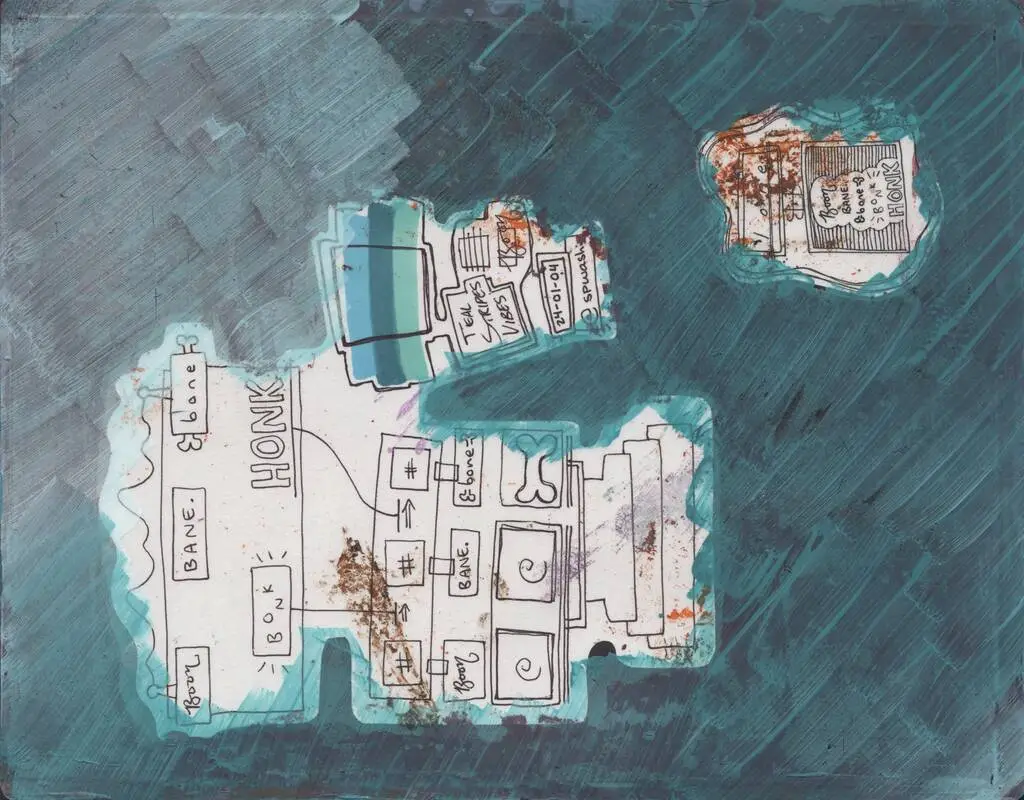
No. 19 Honk, bane, bonk, boon map
A drawn map on teal: rooms labeled honk, bane, bonk, and boon, a bone, spirals, and a tag reading teal stripes vibes.
?which room on the map would you enter first?
Follow its thread:
-
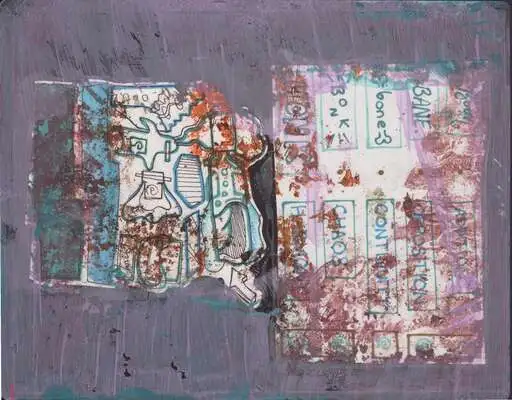
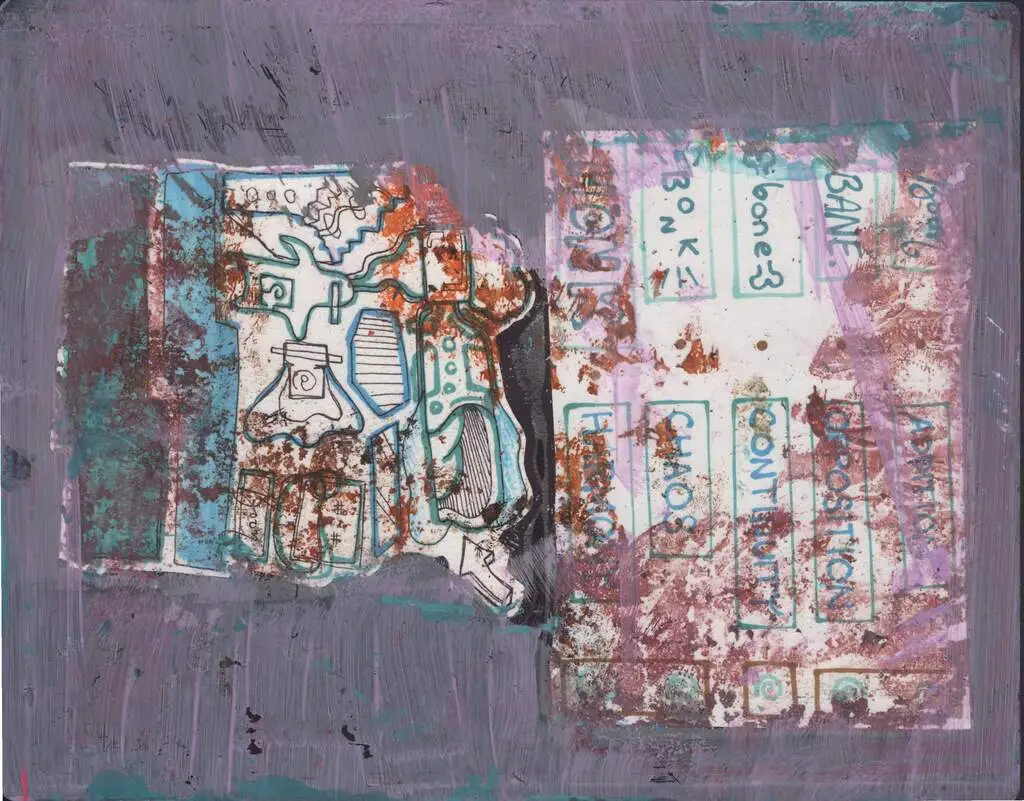
No. 20 Composition, continuity, chaos
A rust-stained collage on violet listing boon, bane, bone, bonk, honk beside composition, continuity, chaos, and adaptation. Lettering runs sideways; kept as scanned.
?is this collage composition, continuity, or chaos?
Follow its thread:
-
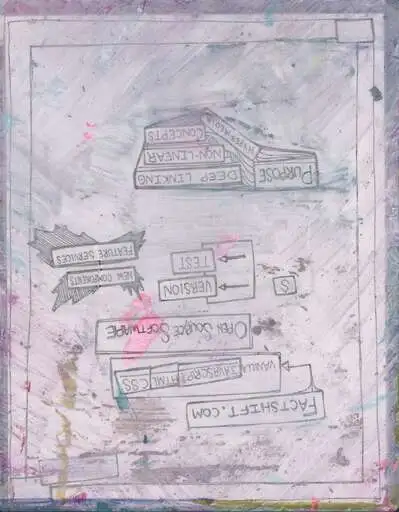
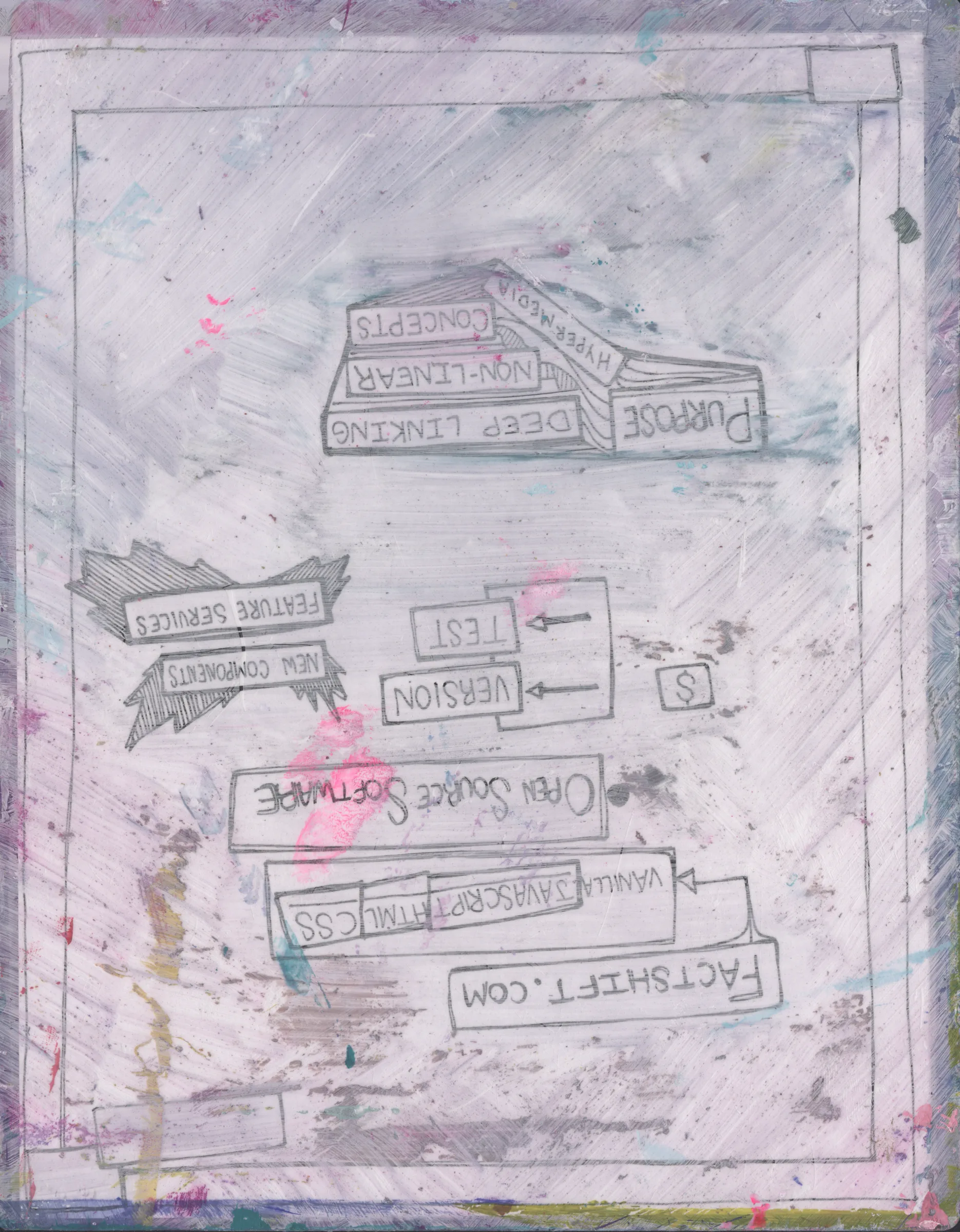
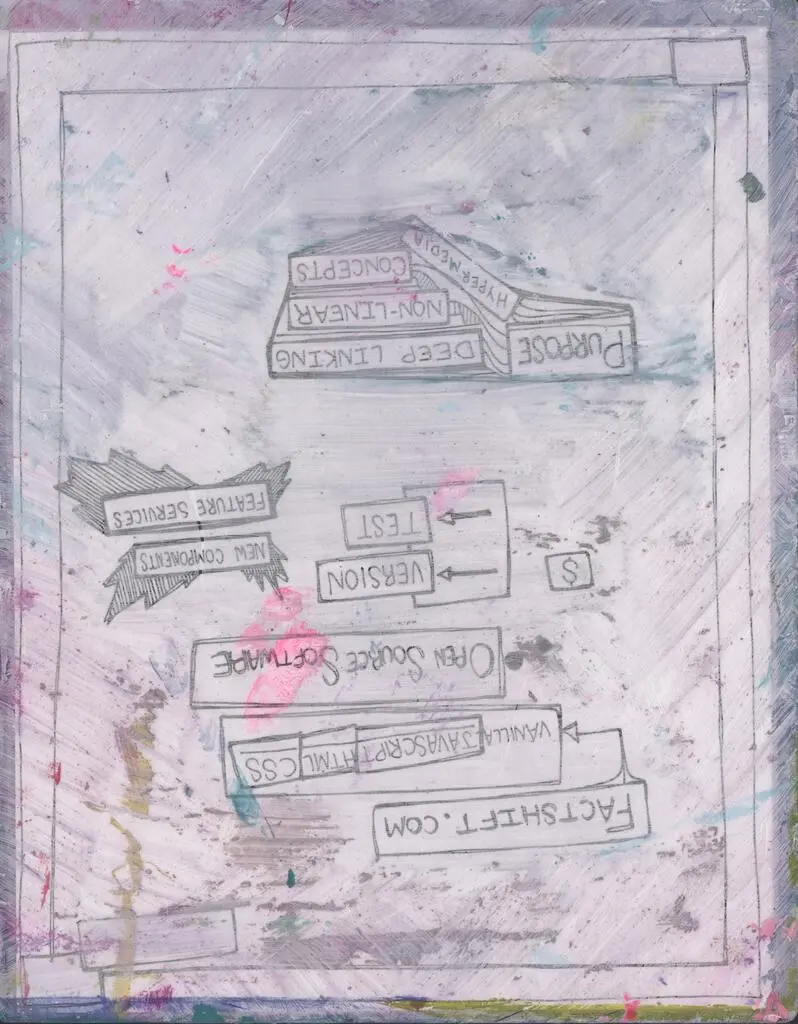
No. 21 factshift, open source, version, test
Pencil on pale lilac: factshift.com, vanilla JavaScript, HTML, CSS, open source software, version, test, new components, feature services, and a book of purpose, deep linking, non-linear, hypermedia concepts. Lettering reads upside down; kept as scanned.
?what gets tested before the next version?
Follow its thread:
-
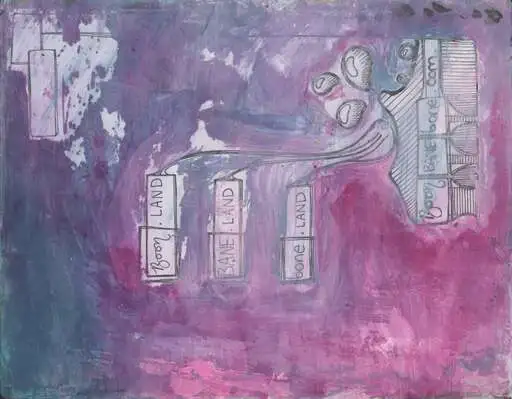
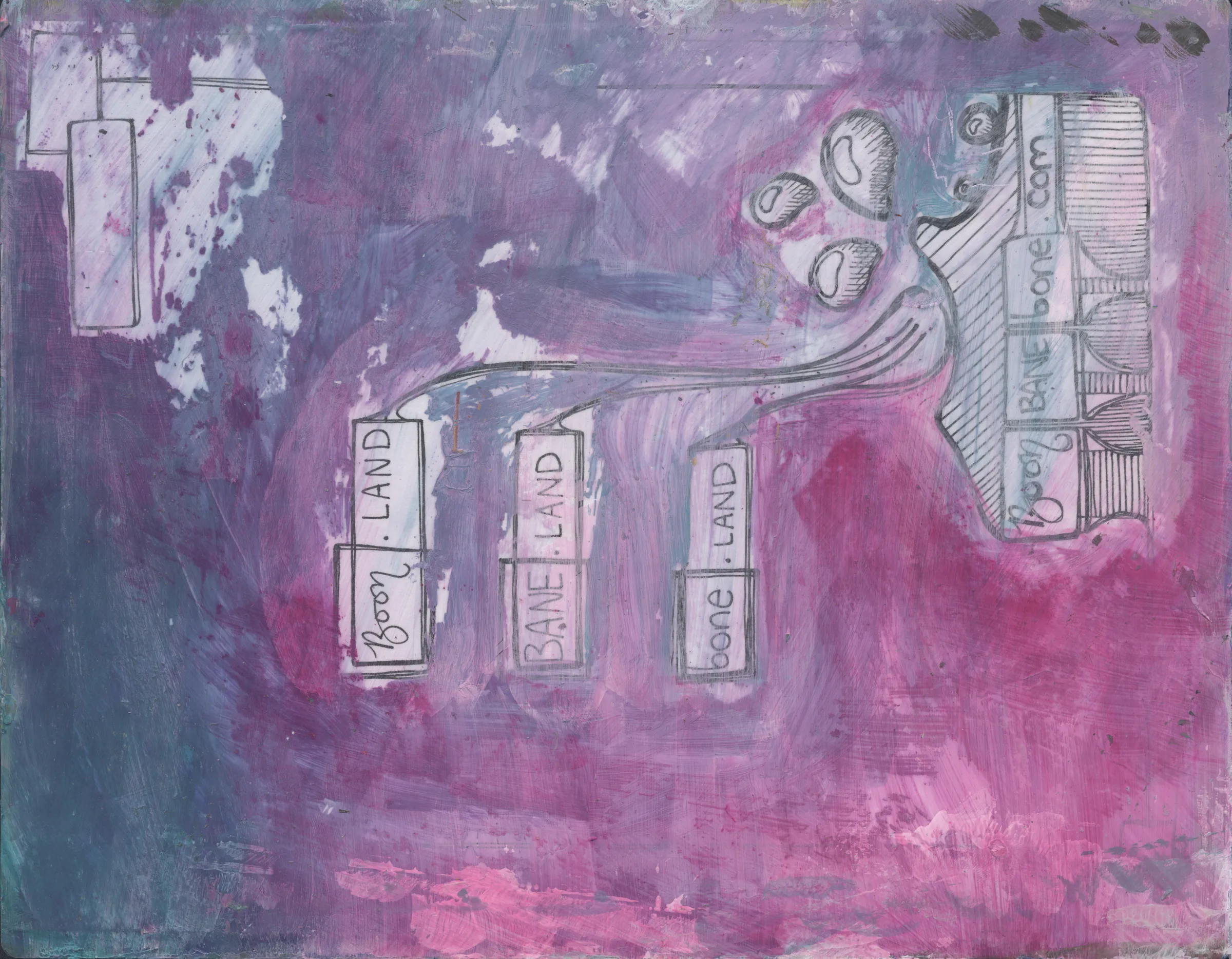
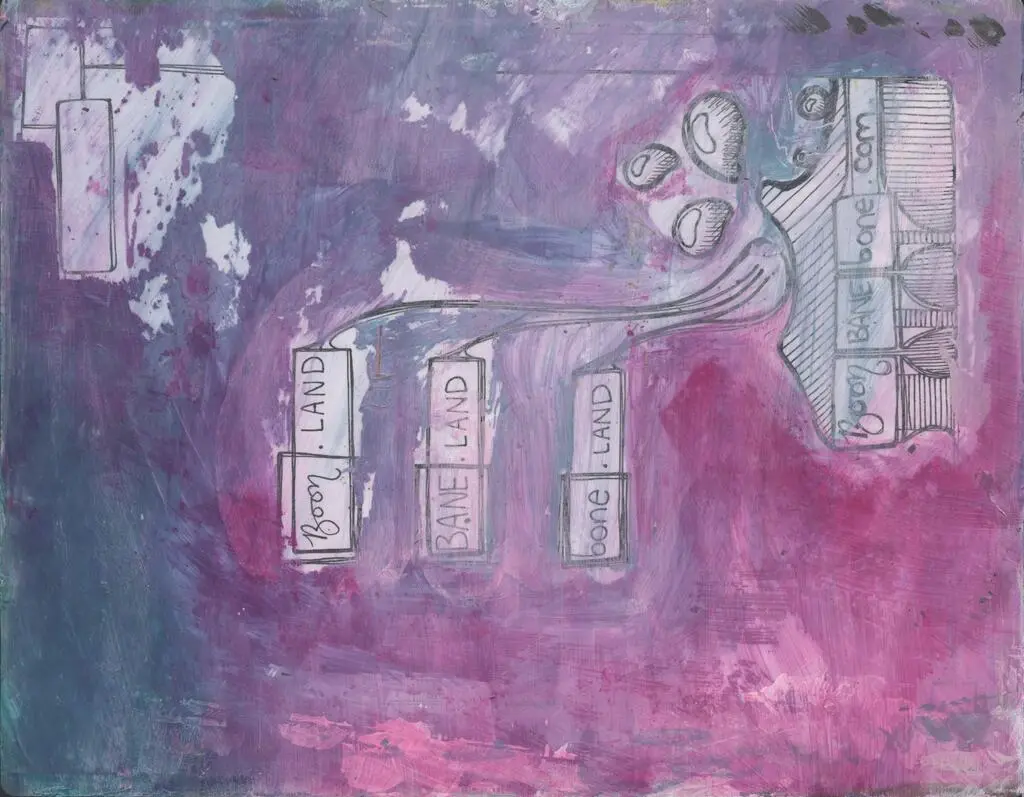
No. 22 Boon, bane, bone land tree
On violet and magenta, tags for boon.land, bane.land, and bone.land branch from a tree whose trunk reads boon bane bone.com.
?which branch of the tree would you climb?
Follow its thread:
-
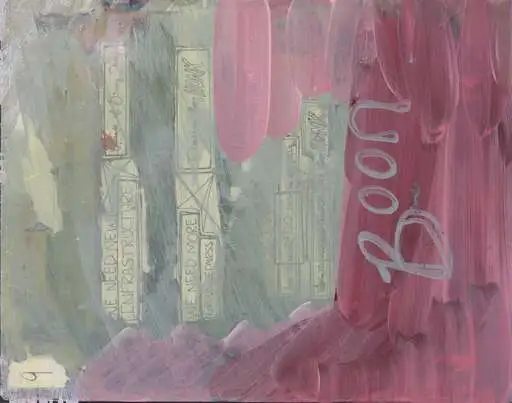
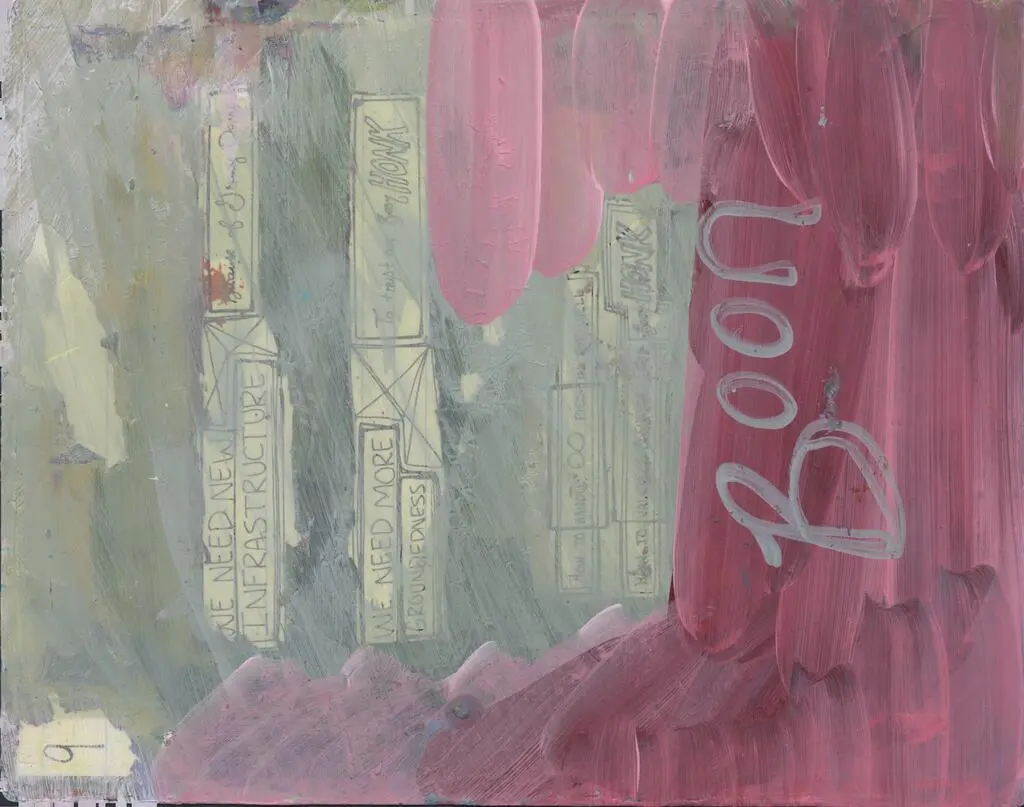
No. 23 We need new infrastructure, boon
Sage and pink with boon lettered large; tags read we need new infrastructure and we need more groundedness. Tags run sideways; kept as scanned.
?what infrastructure would make you more grounded?
Follow its thread:
-
No. 24 Grey cloud over drawings
A pale grey cloud brushed over drawings and lettering on a dark navy ground.
?what is the cloud keeping?
Follow its thread:
-
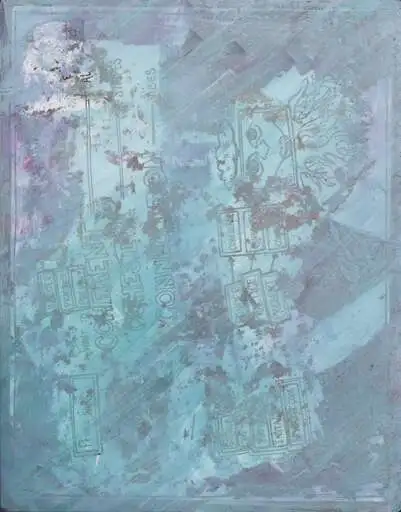
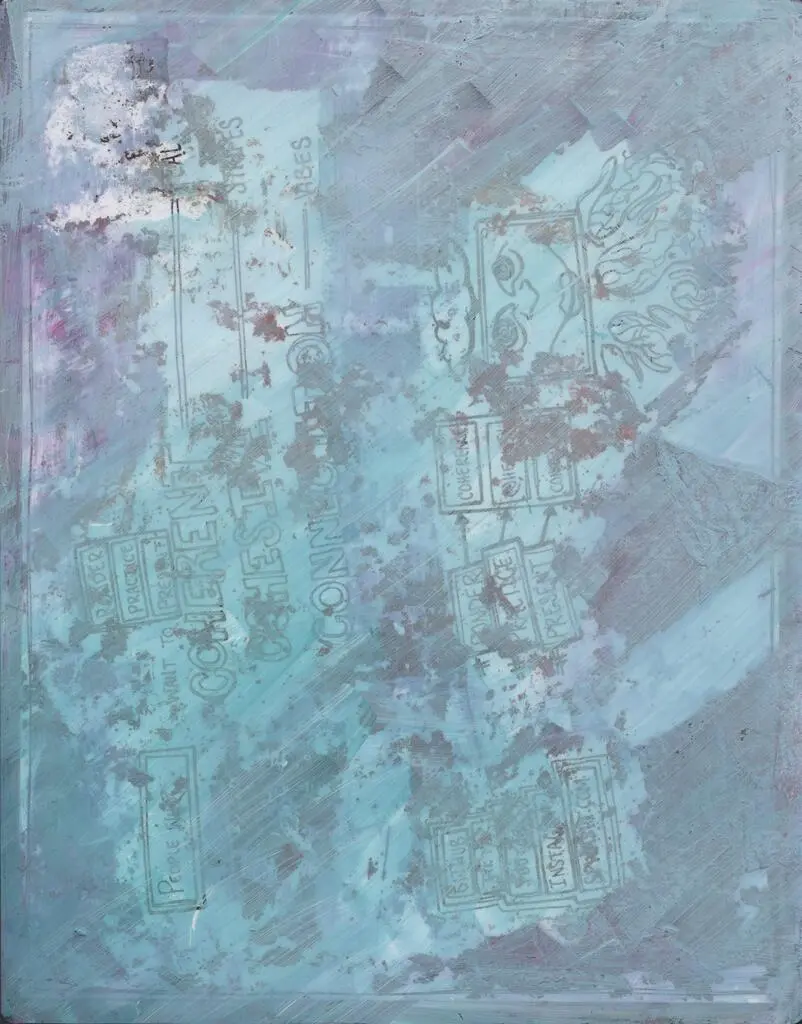
No. 25 Coherent, cohesion, connection
Pale teal over pencil: coherent, cohesion, connection, and teal stripes vibes, with small drawn panels. Lettering runs sideways; kept as scanned.
?where do coherent and connected part ways?
Follow its thread:
-
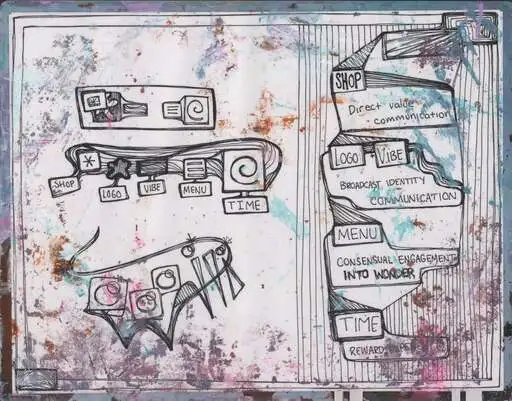
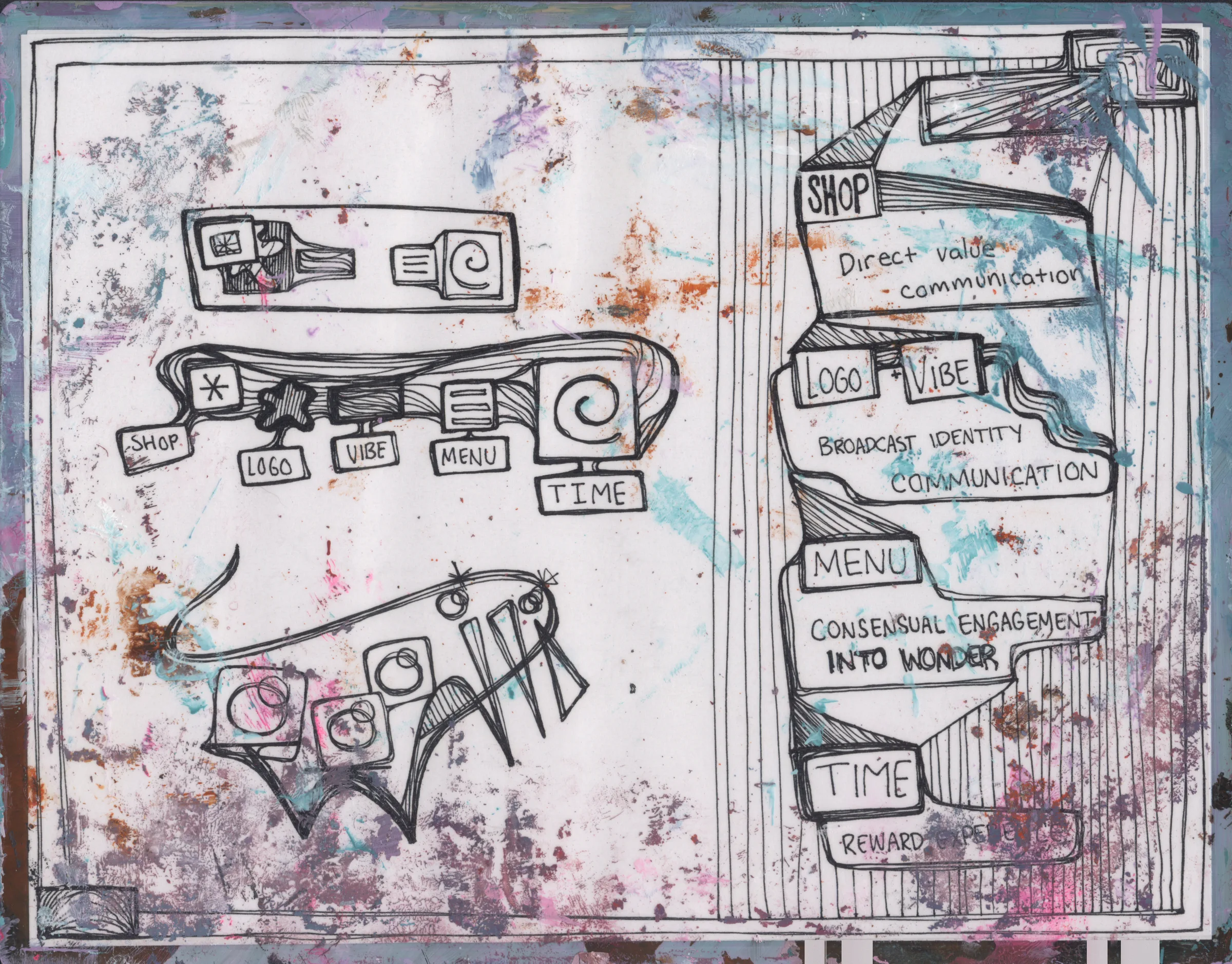
No. 26 Shop, logo, vibe, menu, time
Ink on white: shop, logo, vibe, menu, time, with notes reading direct value communication, broadcast identity communication, and consensual engagement into wonder.
?what does consensual engagement into wonder look like here?
Follow its thread:


Shown as scanned: several lie sideways or upside down, and each view says so. Notes are kept by this browser alone; paste one into a DM with your card if you want me to read it.
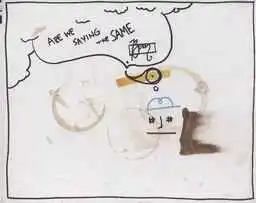
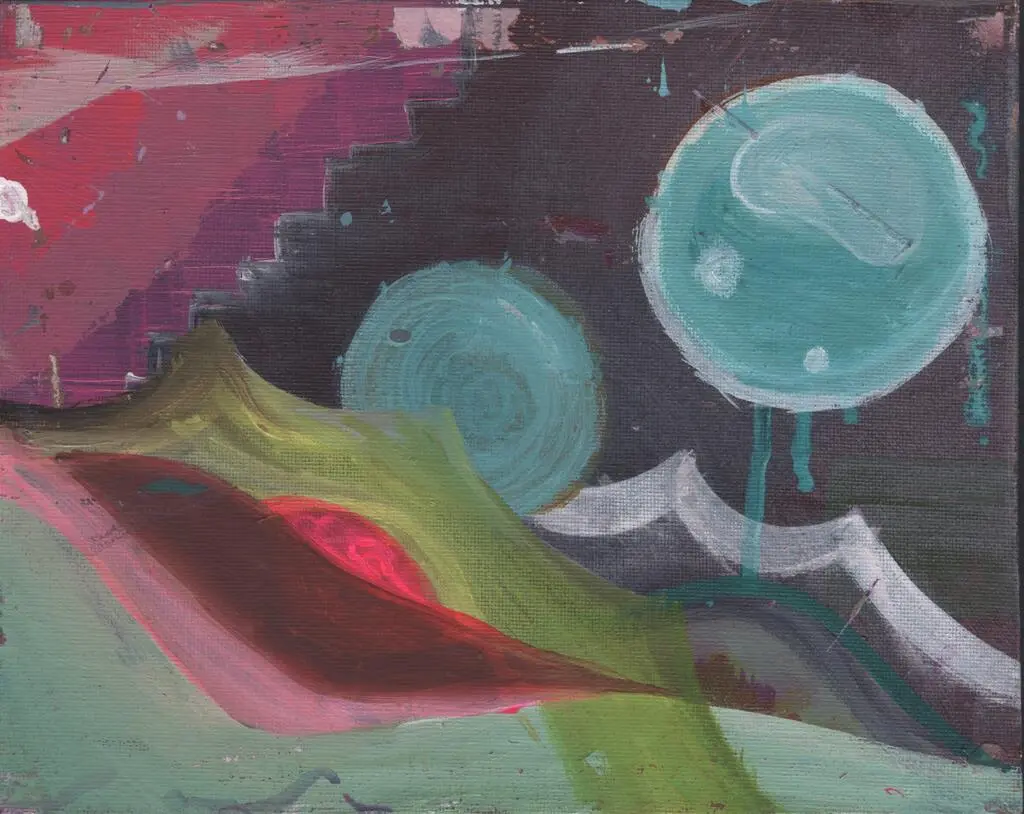
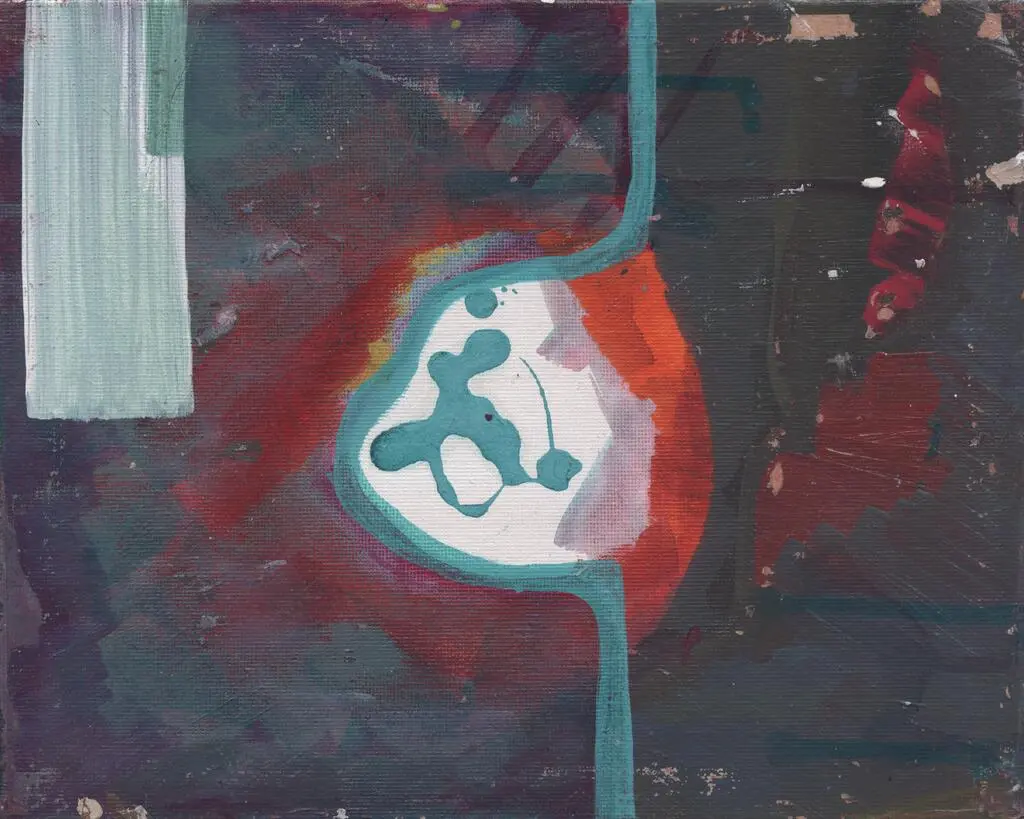
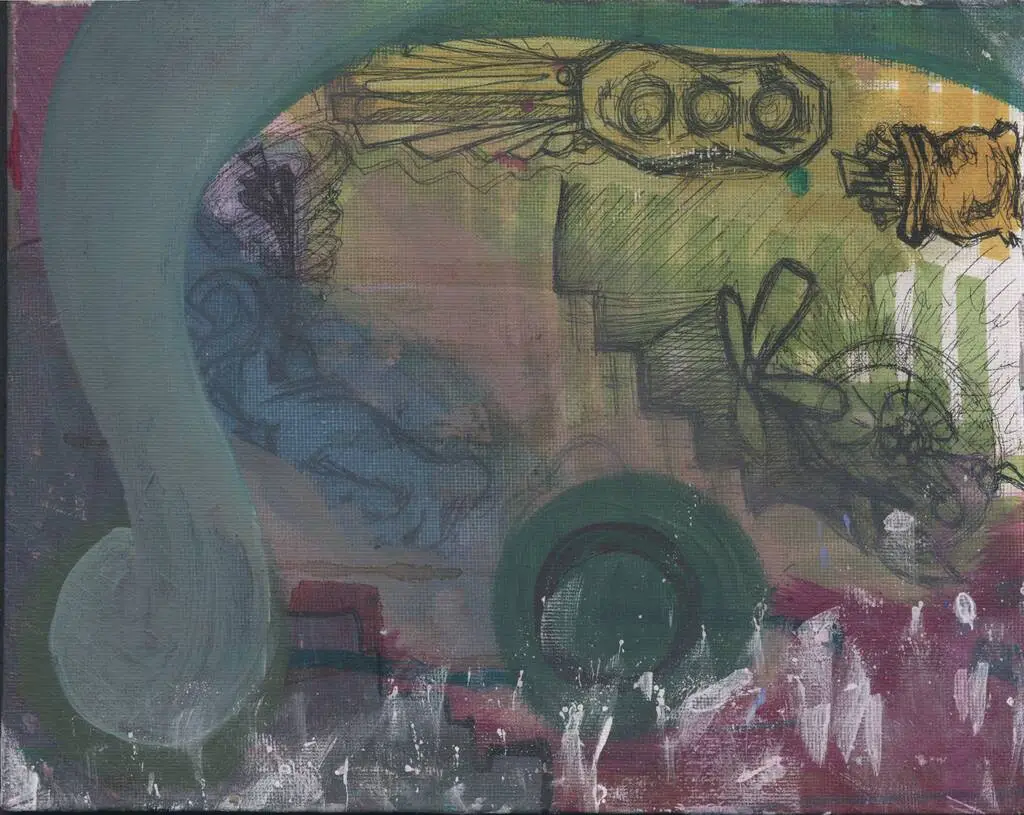
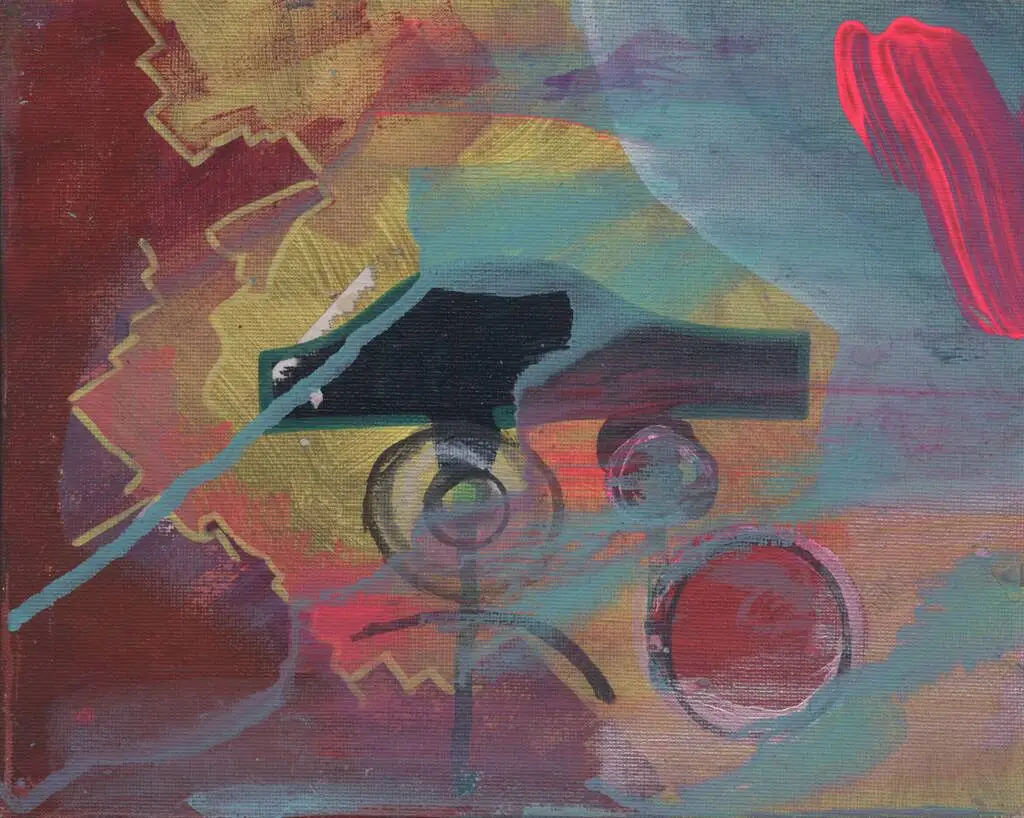
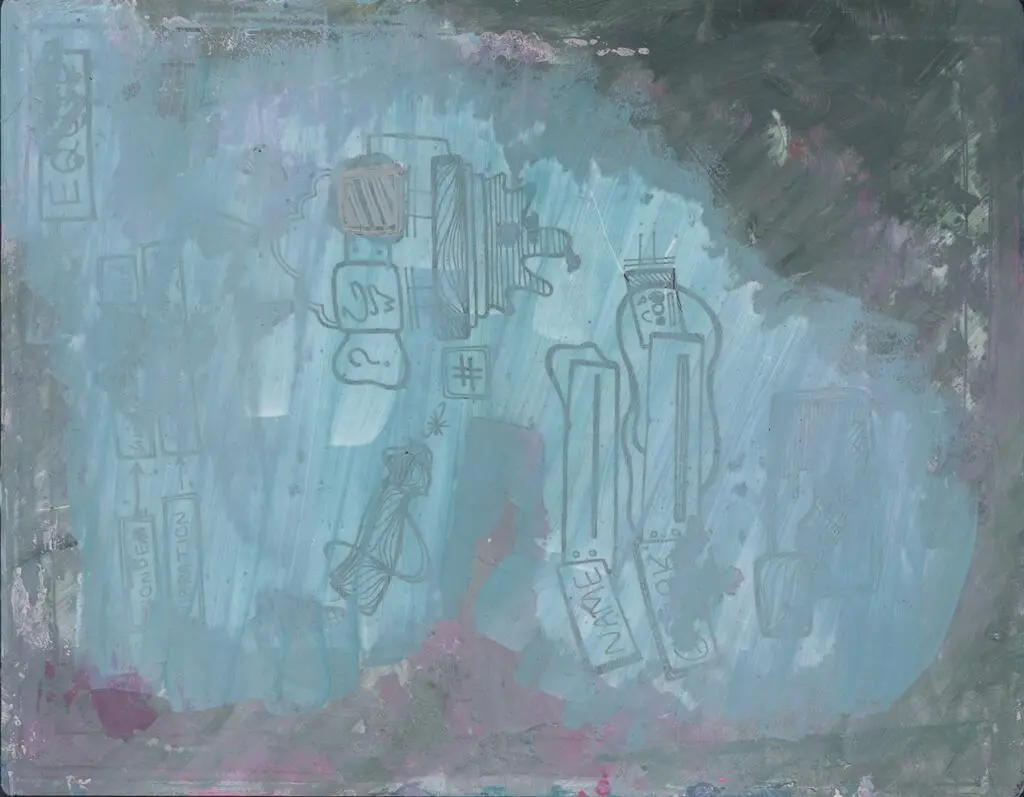
Twenty-five faces of panel canvases
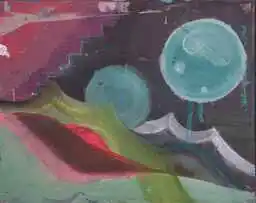
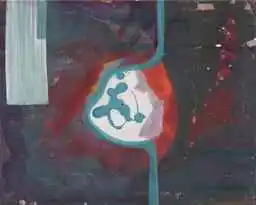
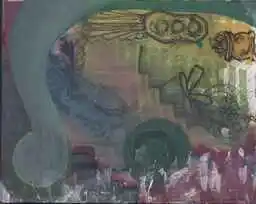
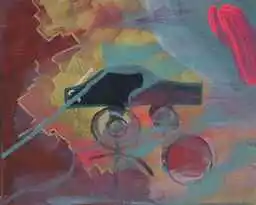
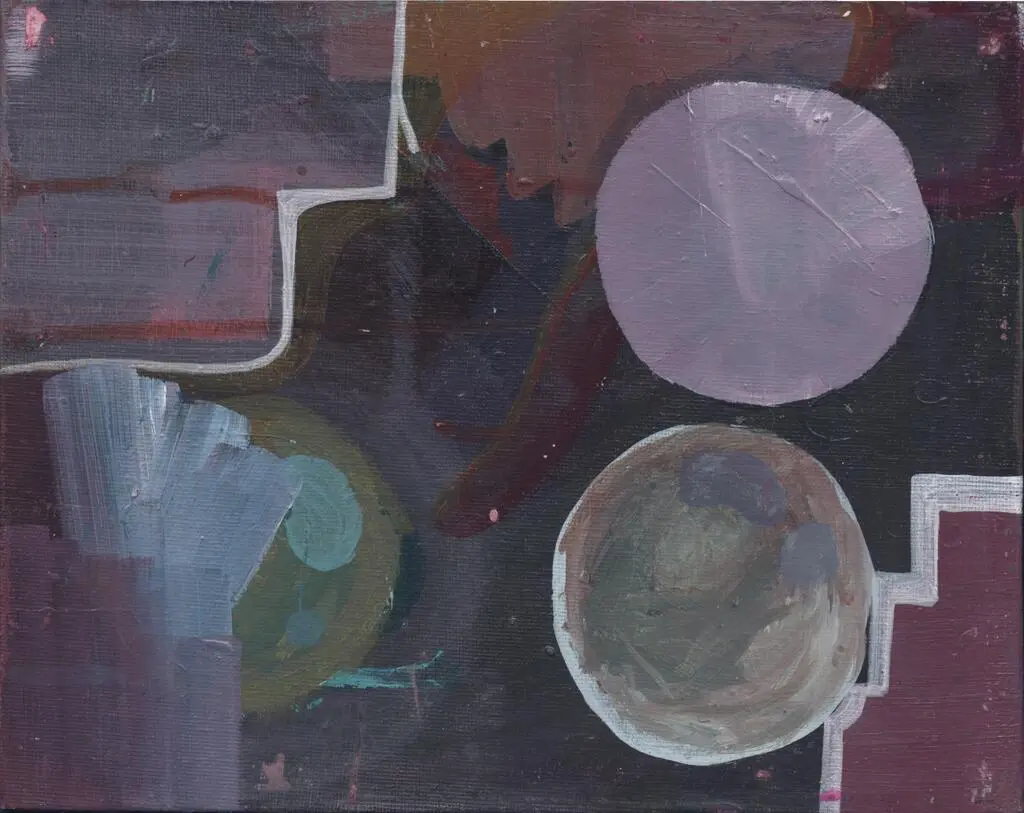
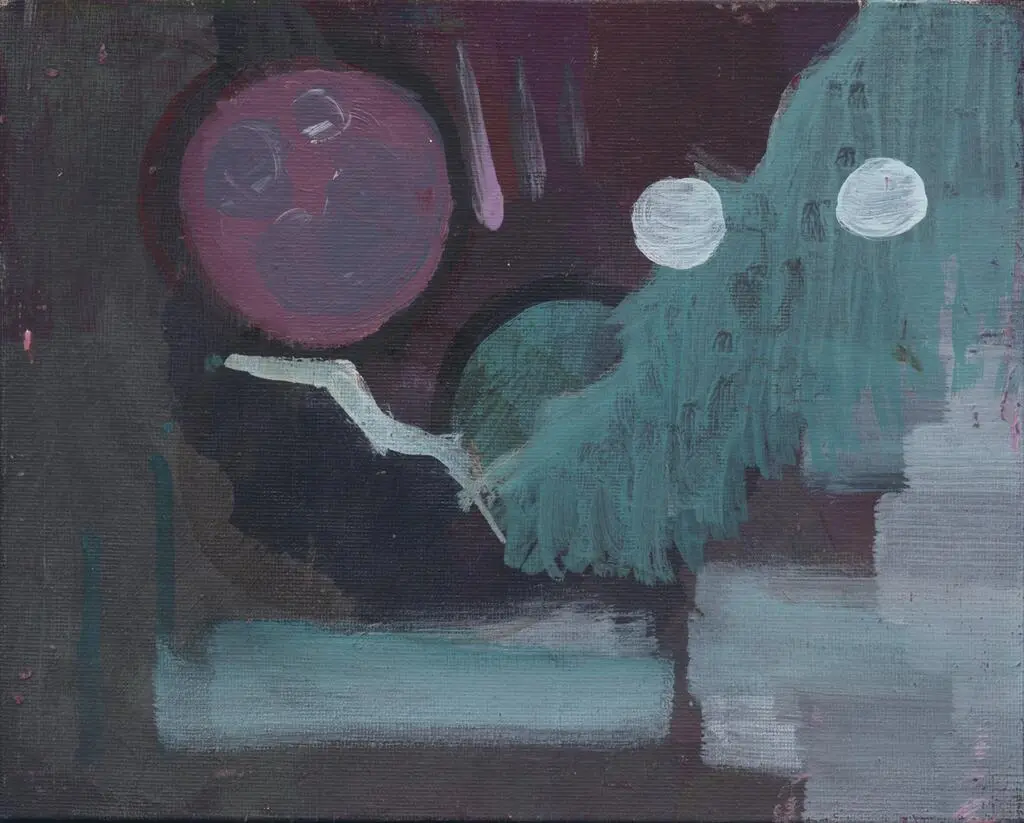
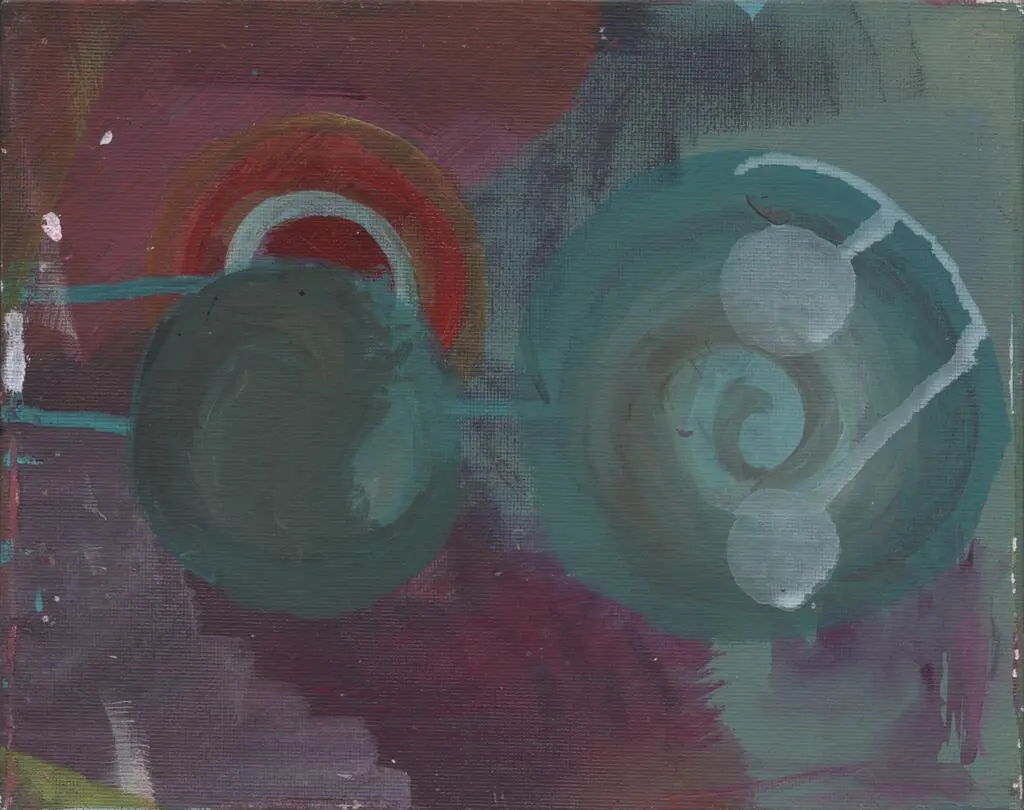
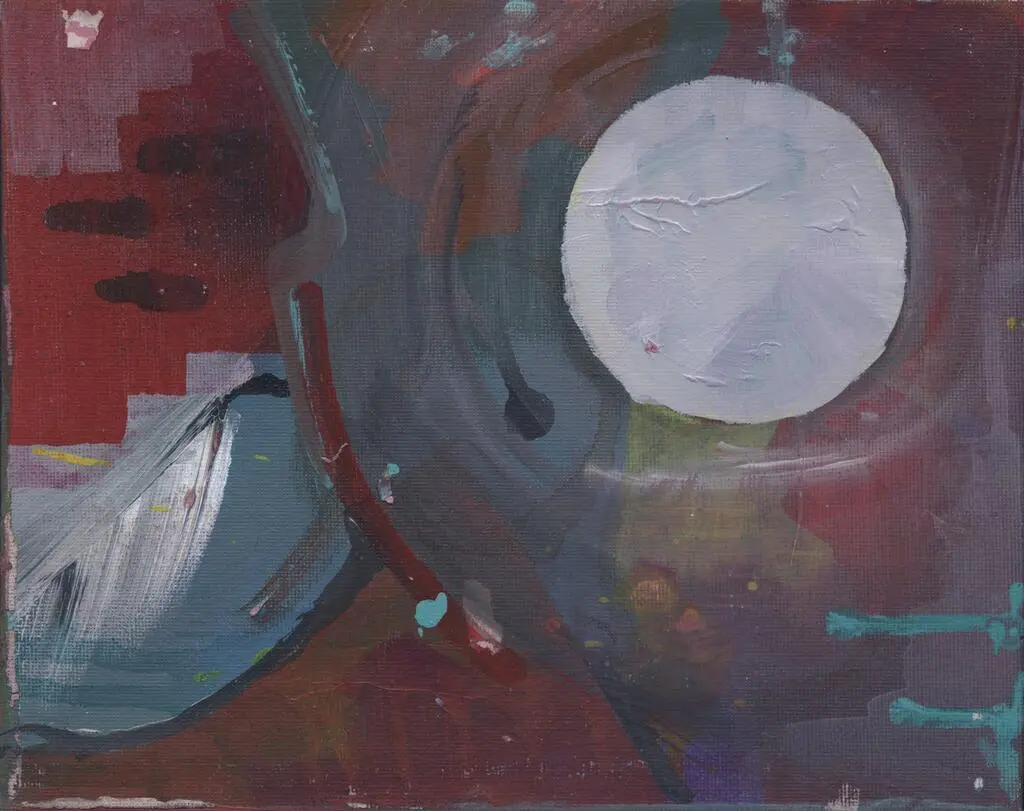
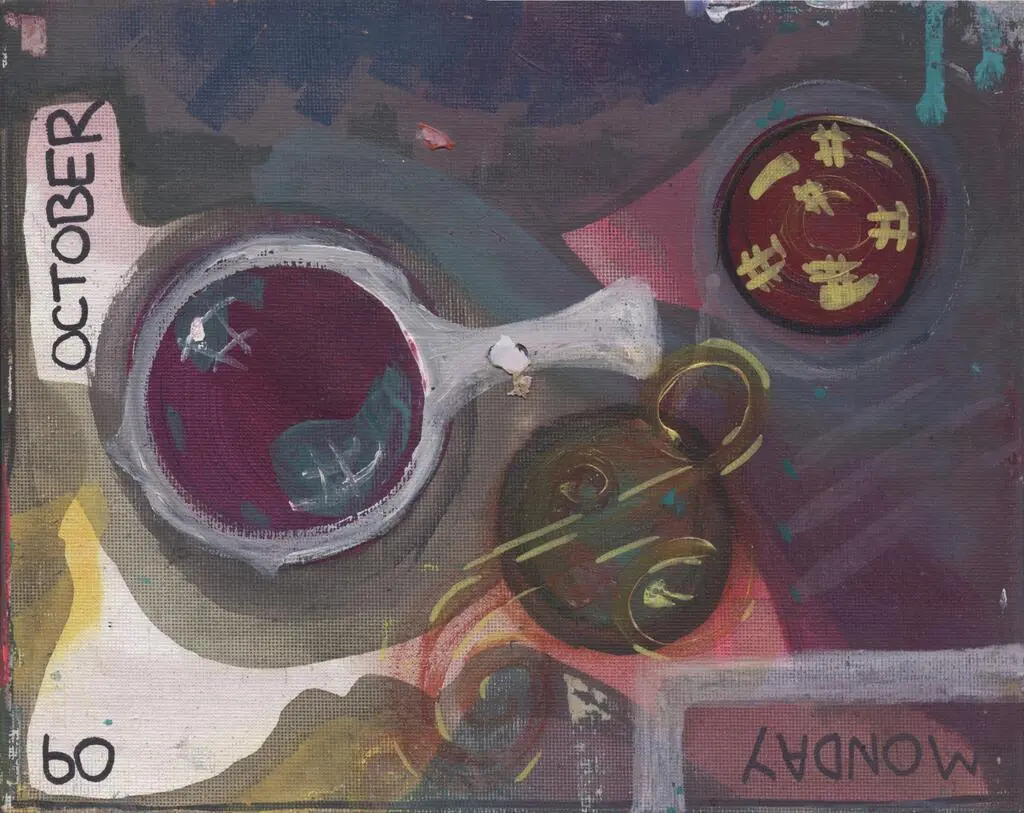
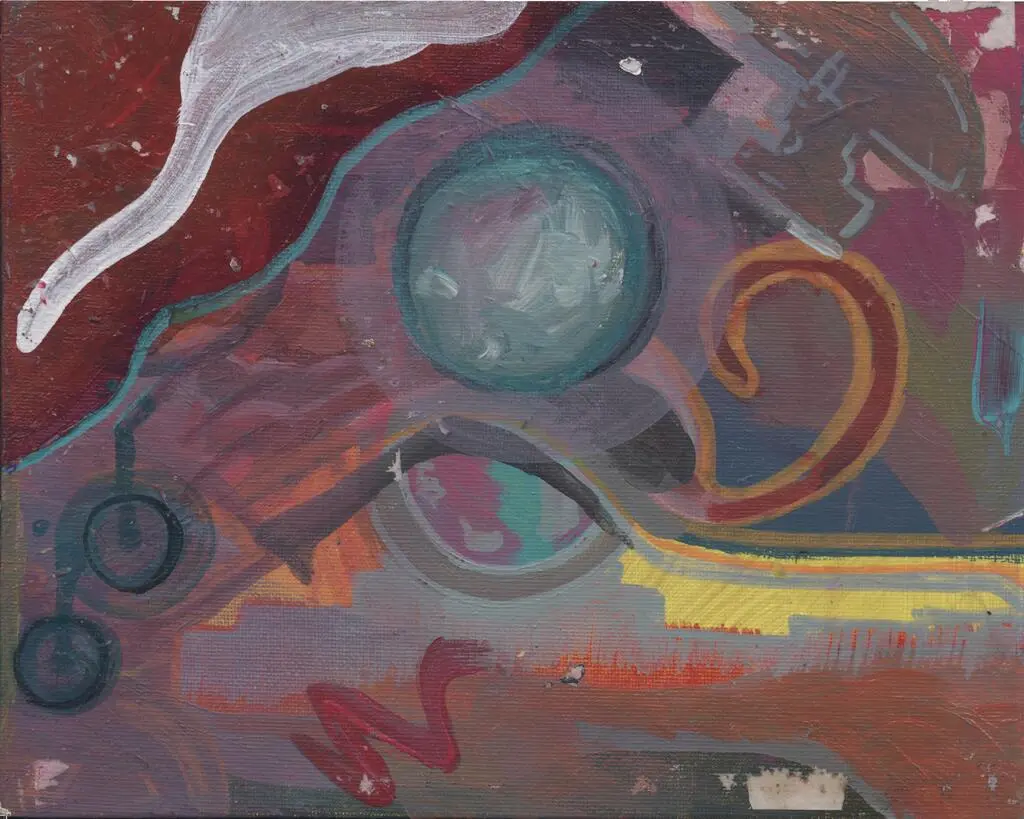
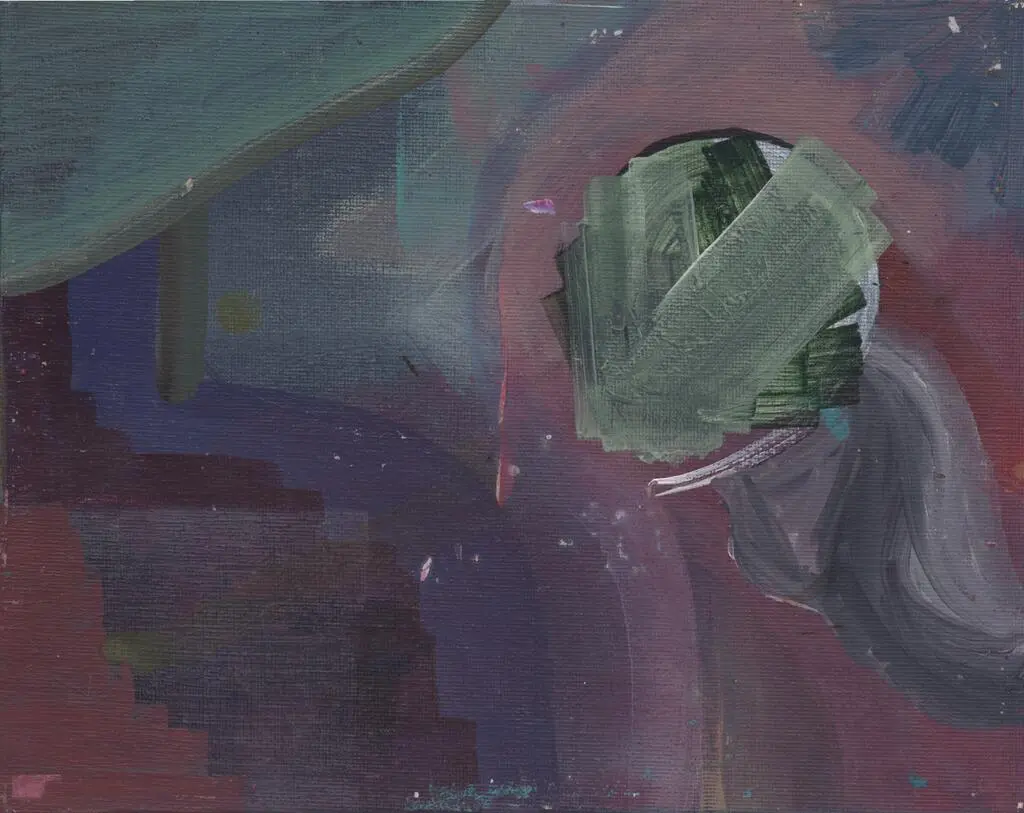
The panels are painted on both sides and laminated like the folios. Fronts and backs were scanned in two passes, not in pairs, so which front meets which back is still held open.
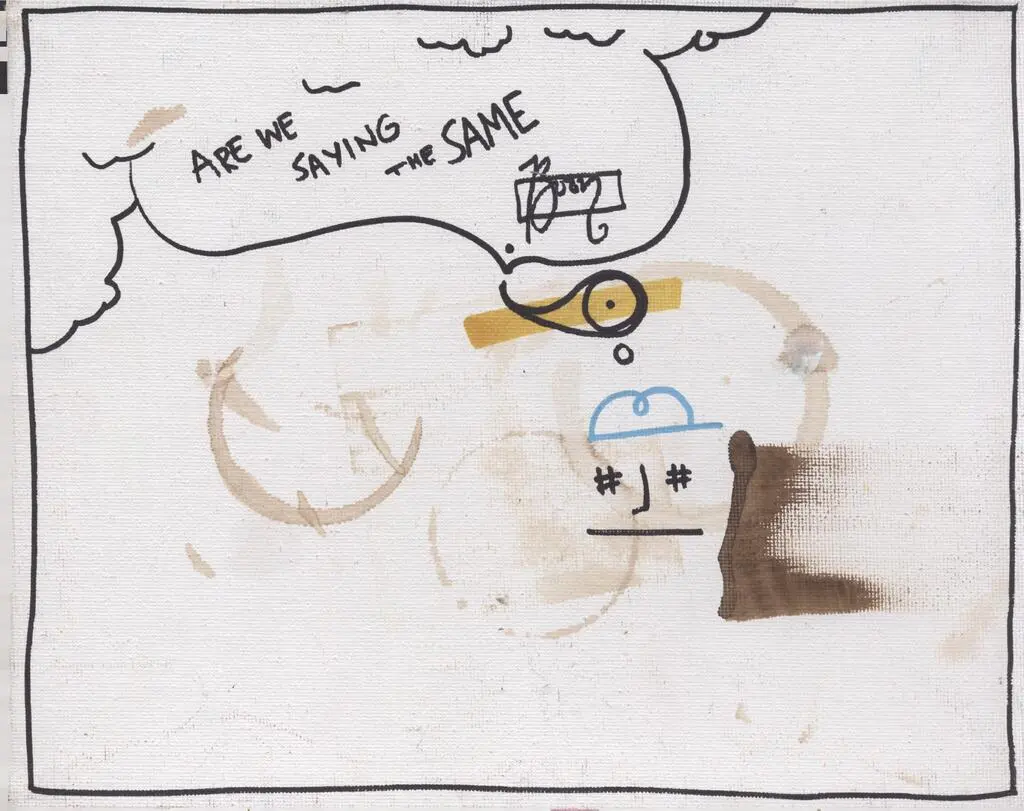
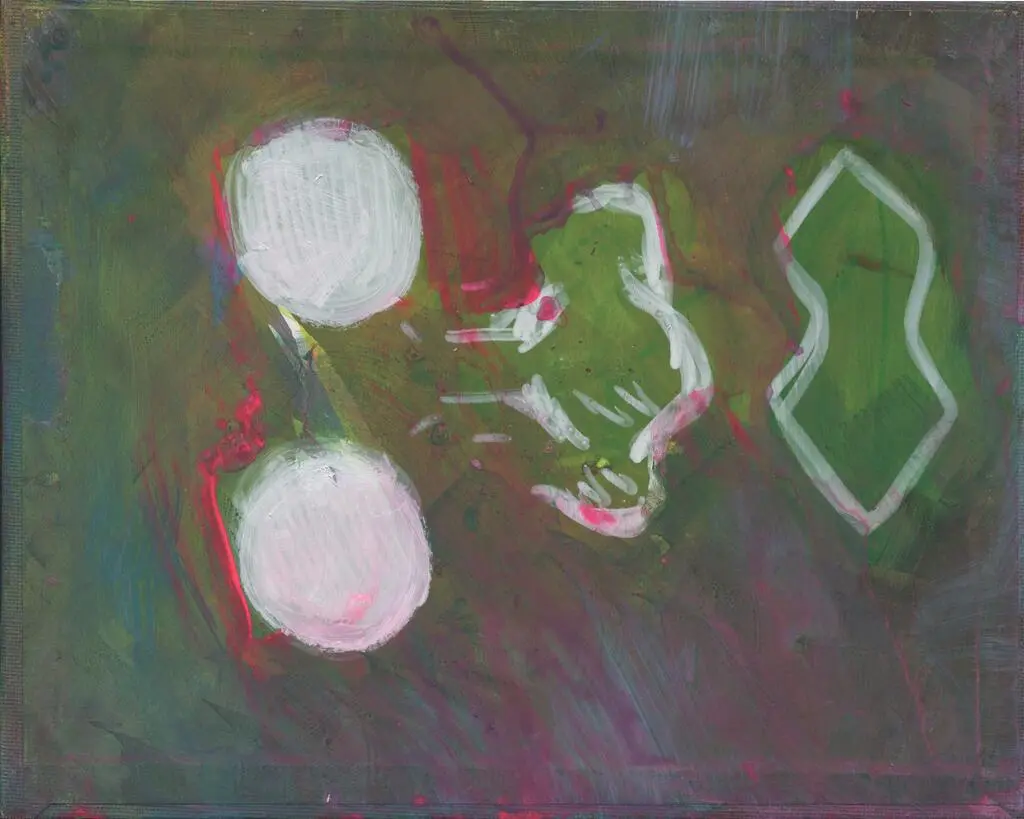
Fronts, in scan order
-
-
-
-
-
-
-
-
-
-
-
-
-
Backs, in scan order
-
-
-
-
-
-
-
-
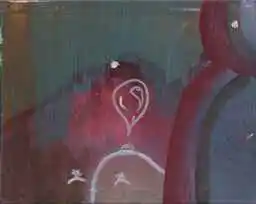
-
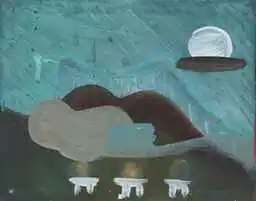
-
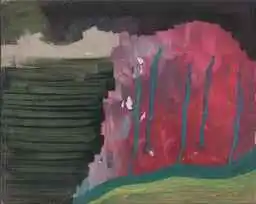
-
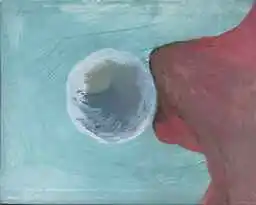
-
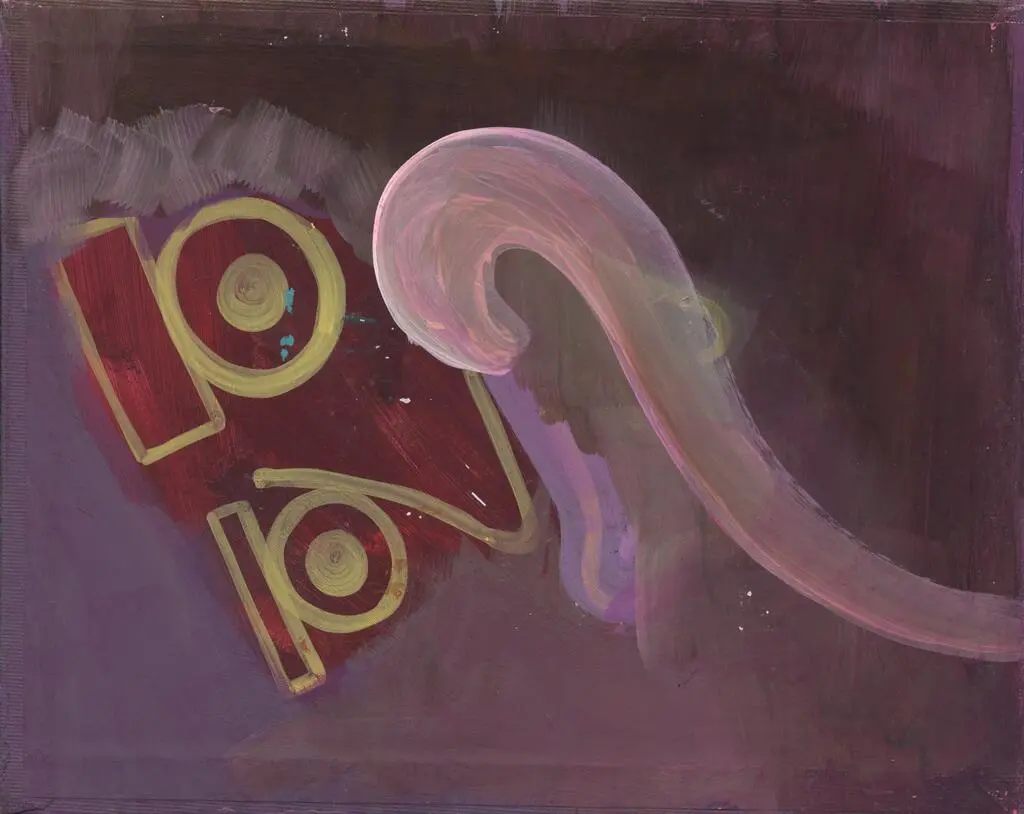
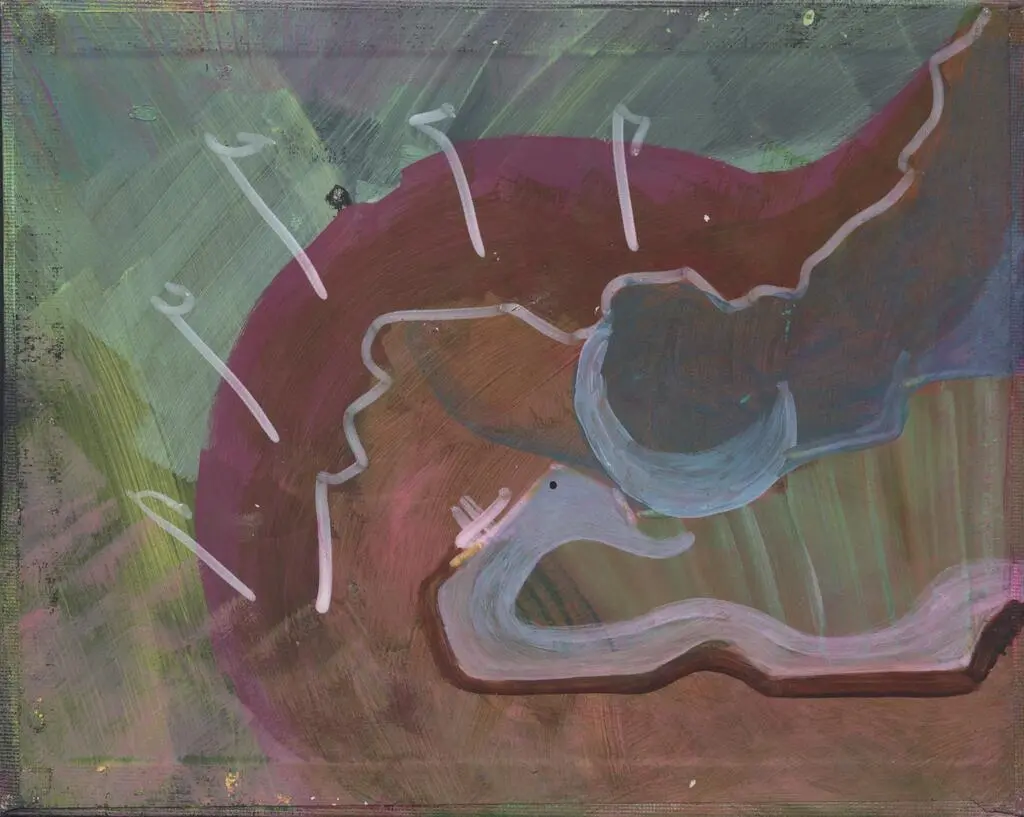
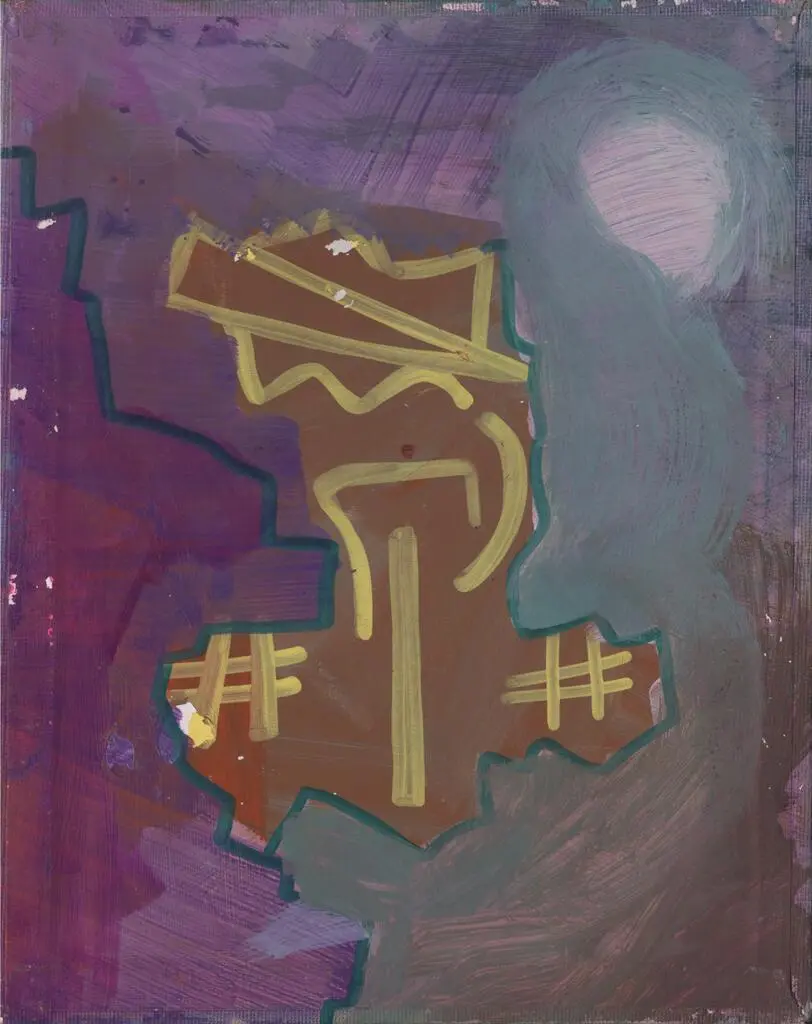
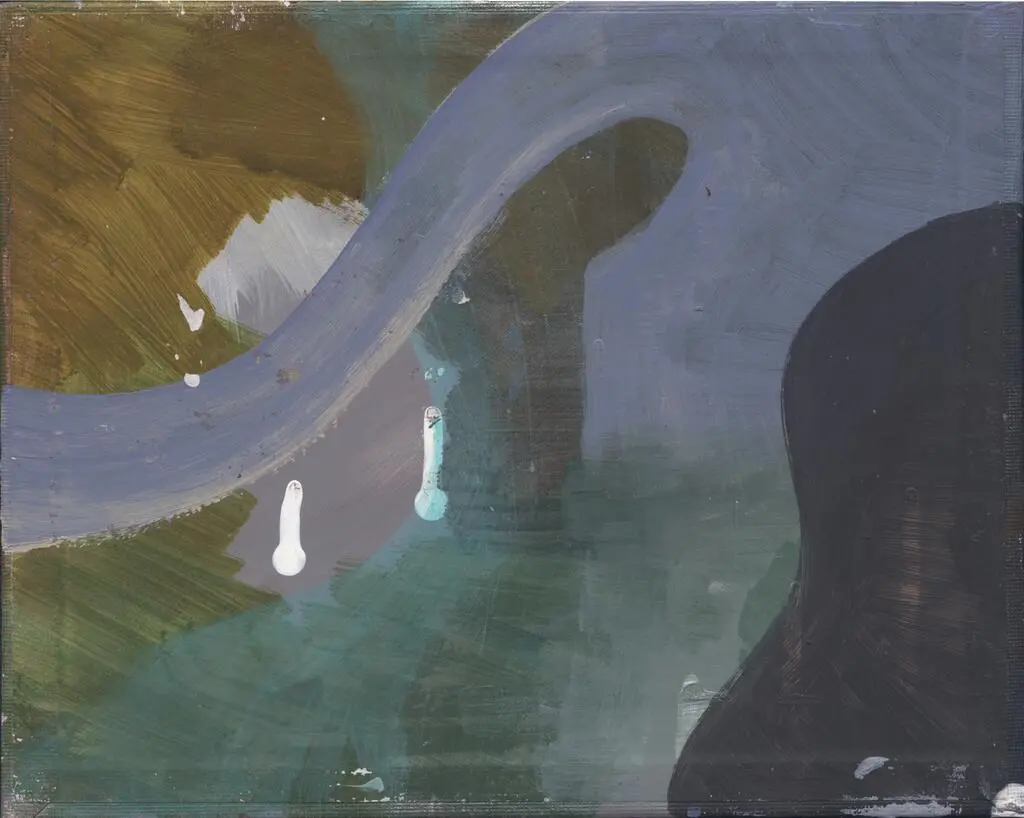
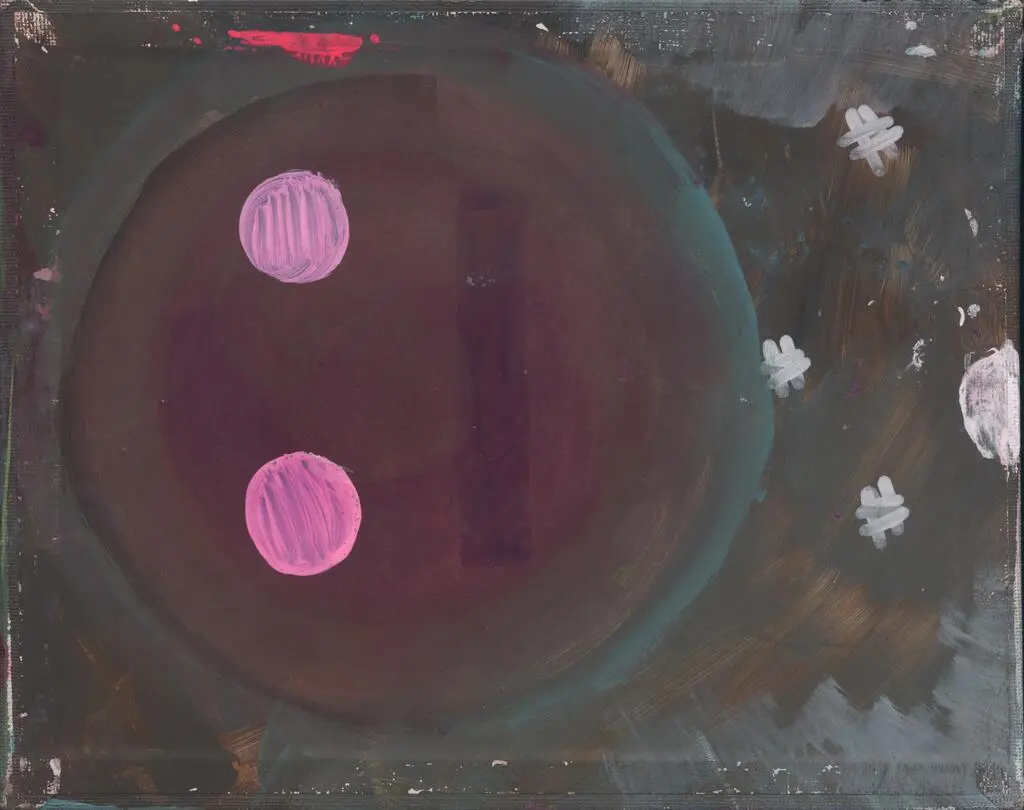
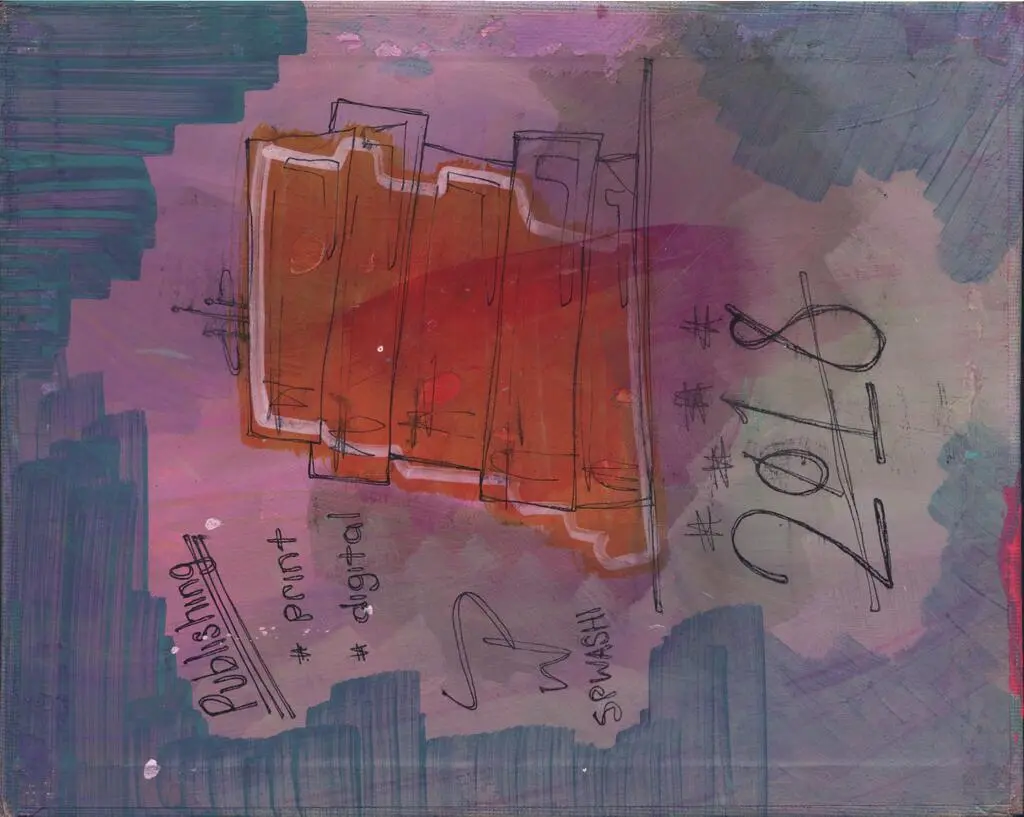
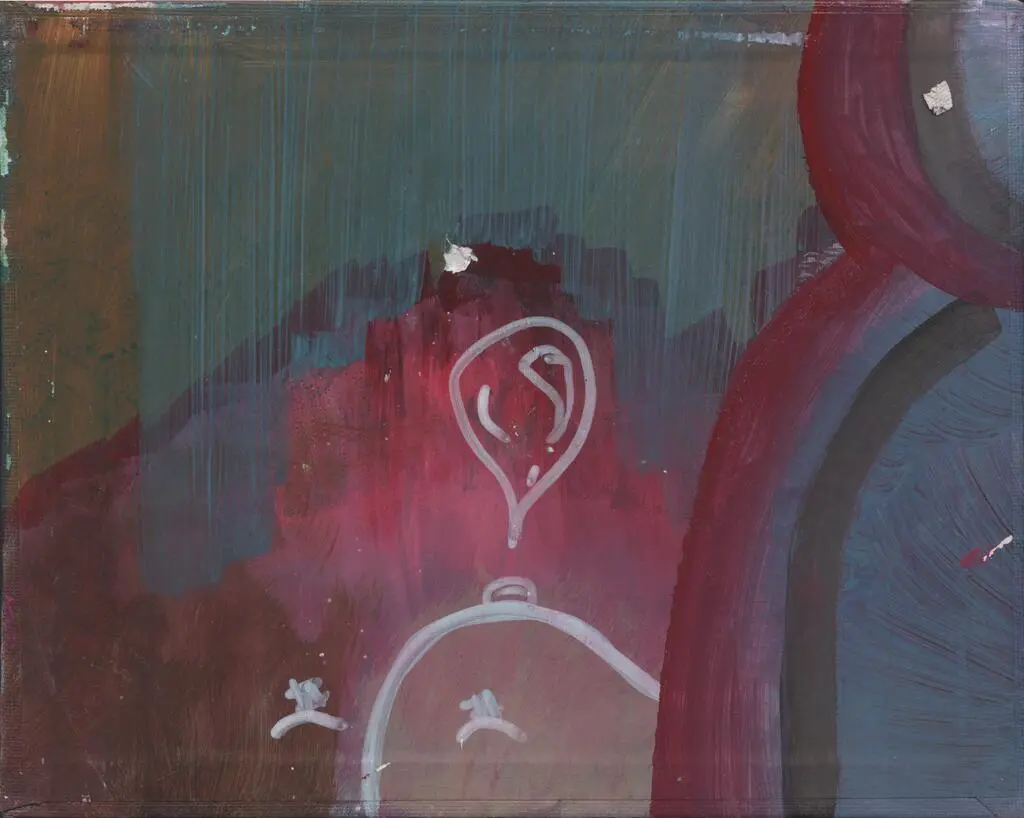
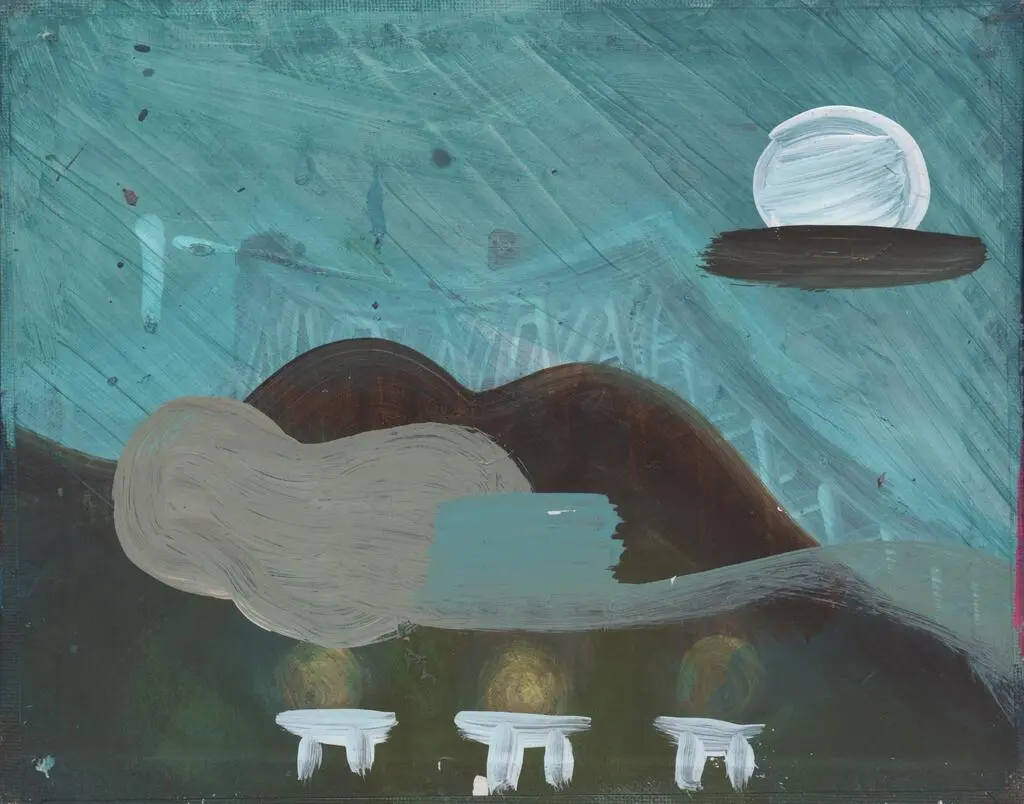
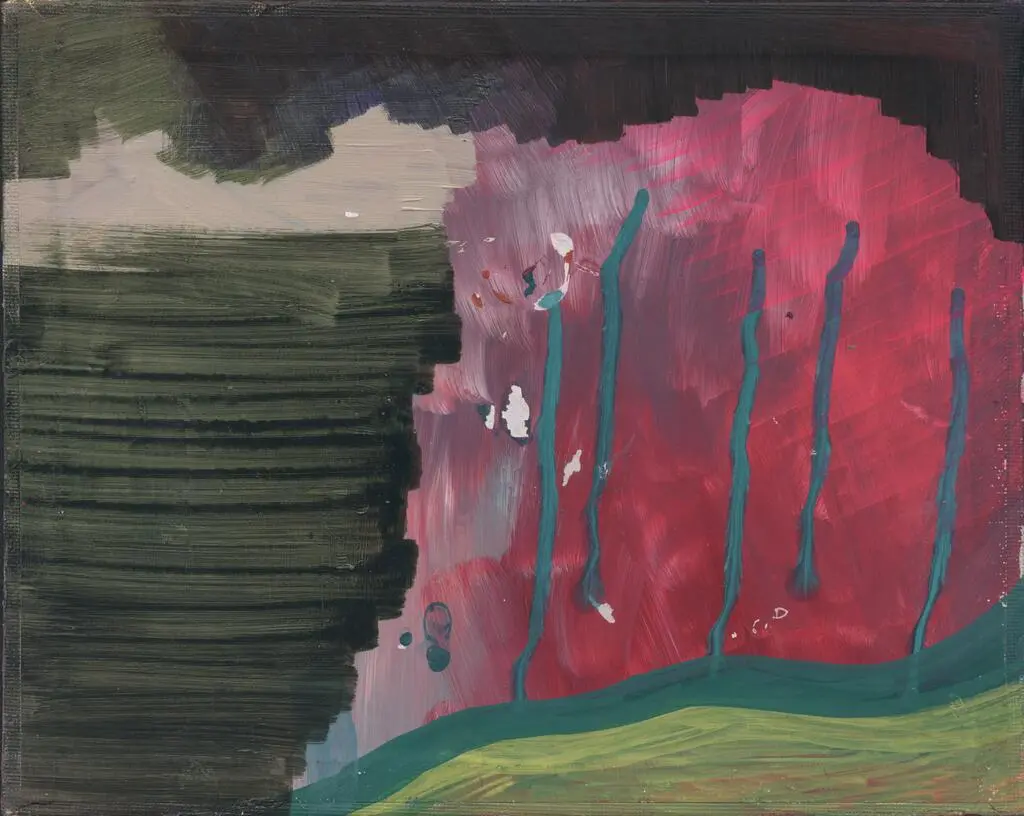
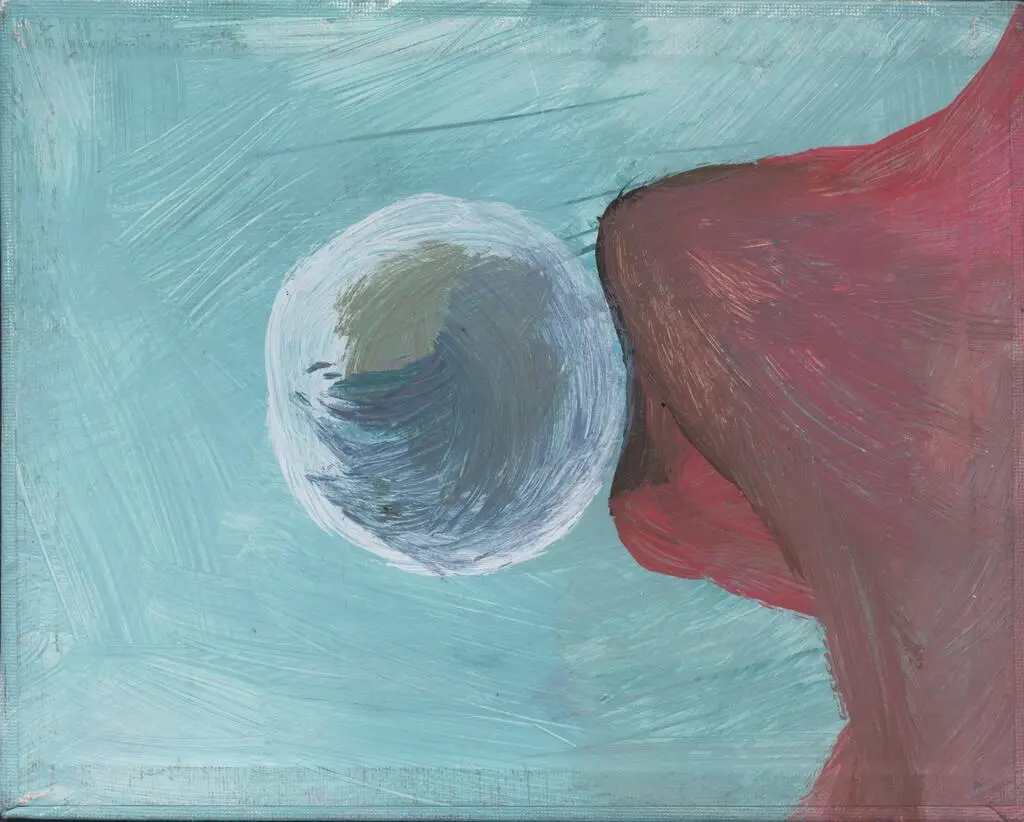
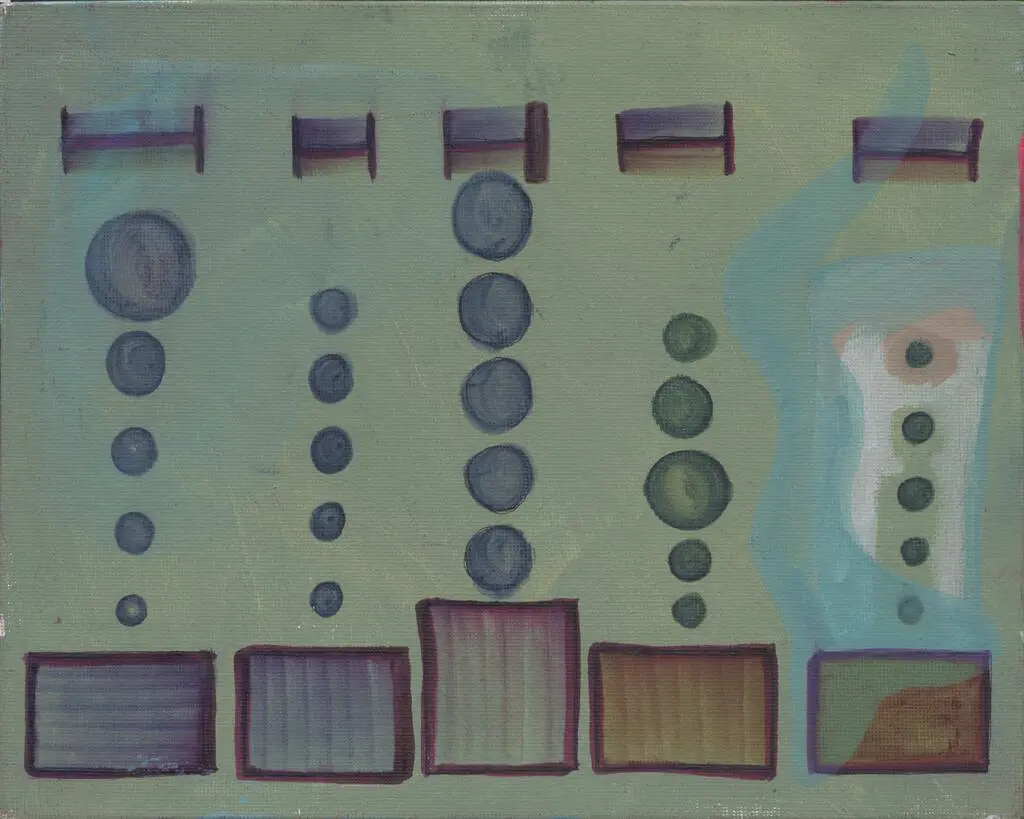
A stack I return to
A folio is not a one-sitting picture. It is a surface I can restack, so the same object can carry this year’s collage, this year’s laminate, and next year’s paint.
Collage, current
I collage what is in the room now: scraps, prints, marks, stills from play. Printer paper keeps the piece ordinary enough to handle and to stack.
Lamination, current
Lamination closes a layer so I can keep working without destroying it. The folio becomes a durable page in a stack I can pick up again.
Paint this year, paint next year
I paint on the laminated surface, then return a year later and paint again. The earlier season stays in the object; the new marks have to meet it.
Paint seasons
A trend of color or gesture can run across several folios in the same season, so the stack reads as a year, not only as isolated pictures.
Stackable materials
Tempera already kept layers from welding the stack together. Matte varnish is going on the acrylic so those surfaces can restack without sticking to themselves.
Review, since 2024
I have been iterating on the process and its review since 2024. Family members read the folios as they develop: people who work for school boards, former teachers, licensed counselors, and early childhood specialists. Their questions about who a page is for, and whether it would hold up in a room with children or families, change what I paint next.
Where their fields meet the rest of the site: teaching, counseling, human development.
What the return produces
A process I can trust, pictures that come from the stack instead of a blank sheet, and social posts that are receipts of the work. Orders are open by card; formats and working prices live below.
Seed Studies for the Folio Archive
These are digital seed studies, not the scans above or items offered for sale. They are a place to try ways of looking while the physical archive is still being collaged, laminated, and painted.
Choose Art, Design, Skill, or Community beneath a study to change its reading. On the kinetic and botanical studies, rest/open and growth radios work with JavaScript off.
Folio Study 01 • seed study
Kinetic folding study

- Art reading
- Faceted shadows, crisp paper creases, dynamic lighting balance.
- Design reading
- Structural repeat grid, modular component alignment.
- Skill reading
- Practice rhythm: translate 3D physical depth into 2D interface layering.
- Community reading
- Seed specimen for testing how dimensional paper studies become design-system references.
Try it: find one fold that could become a card edge, a divider, or an opening gesture.
Quiet at rest. The fold is only an edge.
Opened: the same edge reveals a rule — keep the content, change the gesture.
Folio Study 02 • seed study
Botanical structure study

- Art reading
- Organic curves blended with mechanical folding constraints.
- Design reading
- Concentric radial grid, progressive scale scaling.
- Skill reading
- Practice rhythm: design responsive layouts using biological scaling ratios.
- Community reading
- Seed specimen for connecting organic form, layout rhythm, and future curriculum notes.
Try it: follow a repeated form from the center outward. Where does repetition begin to feel like growth?
A repeated unit, still. This is an artistic prompt, not a biological simulation.
New rings take space. Branches appear only where there is room.
Room runs out, so the form folds inward instead of claiming more field.
Growth stops. The outer ring holds; no new branch is added.
Folio Study 03 • seed study
Cubes & perspective study
- Art reading
- Isometric projection, stark high-contrast angles, geometric density.
- Design reading
- Three-axis coordinate alignment, structured visual containment.
- Skill reading
- Practice rhythm: translate spatial coordinate projections to canvas rendering.
- Community reading
- Seed specimen for translating perspective studies into rendering and SVG experiments.
Try it: imagine removing one cube. Does the structure still read as a whole?
From my worktable to yours.
One painted surface can have several lives. I’m developing a minting process that gives each source folio a record, then traces the originals, prints, and derivative collages released from it.
Orders are open by card. Fill the order card below, then DM me a screenshot, the copied seed, or the downloaded text on Discord, X, TikTok, or Bluesky; I reply with the piece, its price from the working ranges, and shipping once I know where it goes. Minting means documenting and releasing a piece: its identity, physical form, provenance, and connection to the world.
The original
The painted original on standard printer paper, protected by lamination, with its accumulated marks and material history. Some originals may be offered; others may stay in my archive.
Its record will distinguish the physical original from any prints or collages made from its scan.
A print
A reproduction made from the scanned folio. Each release will specify its dimensions, paper, finish, and whether it is an open or numbered edition.
A way to take the image home while the original continues its own story.
A derivative collage
A new composition made from fragments of one or more folios. I’m also open to custom collages. Each piece’s record will link back to its sources and identify whether the offered piece is handmade or printed.
The lineage stays visible even when the image becomes something new.
Art from a story still unfolding
The folio canon is my own and continuous; lore.land is a second source for new pieces, not the origin of the archive. I also make new art from the developing stories of lore.land—a pantry for homebrew RPG campaigns. Characters, places, motifs, and scenes become ingredients for play, and sometimes become a new artwork, print, or collage.
Some TikTok group chats with streaks take part in RPG Wednesday — 314 days on September 17, the pet in outfits — making art and telling stories around the canon on lore.land. My own art grows alongside that shared play. A small, otherwise inconsequential wonder is enough to share.
For a custom collage or a story-led piece, bring me the scene or motif you have in mind — a Wednesday doodle is enough of a brief. We agree on format, scope, and price before I begin. A Seed original is the periodical door; Landmark and Relic are the objects that can sit on a show table.
What travels with a minted piece?
A source ID, an image of the work, dimensions and materials, known painting dates and later changes, and a short provenance note. Where a piece belongs to a lore.land chapter or appears in a public process record, its record can lead you there.
Every offer will name the exact object or edition, what is included, its price, and delivery details. Owning an original and owning a numbered print will remain distinct.
Seed original $35
Quieter entry pieces. Working range $28–45.
Chapter original $75
Stronger painting, a named motif, or a clear year-layer. Working range $65–95.
Landmark original $150
Multi-year history, or a piece tied to a public lore.land chapter. Working range $125–180.
Relic original $200–275
The few I would miss. Some stay in the archive instead of being offered.
Three Seed originals $95
Only selected $35 Seed pieces — not any three tiers. Would be $105 bought separately. Ask for it by card.
Print, collage, custom quoted
Priced from format, paper, edition, and production. Shipping is unset until packed weight and destinations are known.
Working ranges. Each order is settled in my reply; the first documented release fixes them. Commission work still lives on the services ladder.
Order a folio
This is the order card. Name the piece, the form, and the story it should carry, then copy seed, download .txt, or screenshot it and send it through contact or the chat we already share. A screenshot of a filled card is an order; I answer with the piece and the price. The card is stored only in this browser.
Talk to me about a folio → · Explore current commission prices → · Interaction design →
How to Read a Folio
A folio becomes more useful when it can be read through several lenses. The same object can hold visual pleasure, design judgment, artifact evidence, and community memory.
Art
Composition, figure-ground relationship, material selection, and physical gesture.
Design
Information hierarchy, color palette, edition logic, and surface behavior.
Skill
Practice prompts, technical constraints, and professional development value as a training surface.
Community
Recognition, relationships, circulation history, and shared creative context representing community signal.
How a folio becomes a release
The studio practice feeds this loop; this loop is how a finished layer becomes a release. Capture the source once, then give every new form its own identity. A new collage can grow from an old folio without losing where it came from.
1. Scan the folio
Keep a full-resolution master of the front and back. Check the laminate for glare, and photograph a detail that shows the physical surface.
2. Give it a record
Assign a source ID. Record dimensions, materials, known dates, motifs, and the marks that make this object itself.
3. Choose its next form
Keep or offer the original, prepare a print, or compose a derivative collage. Link each new work to its source folio or folios.
4. Prepare the edition
Inspect the physical piece or print proof. Set its format, edition size if limited, price, and what accompanies it.
5. Release a small collection
Bring related pieces together with a name, provenance notes, and clear availability. Give each offer its own record.
6. Keep the lineage alive
Mark sold or retired offers while keeping the source record visible. New prints and collages become new branches of the same history.
Where the scans live
Every picture on this shelf stands on something you could hold. Follow any one of them down and it comes to rest in three places.
The piece itself
A folio is paint on printer paper, sealed in laminate, kept in my stack. A panel is a painted canvas; a prime is cutouts arranged on a clear sheet. That object is the original; everything else is a way of looking at it.
The scan master
A full-resolution scan kept off the site, in a folder named for its scan day (folio-scans-2026-09-27). Each release record names the masters it holds: release-2026-09-26, release-2026-09-27, release-2026-09-28 in the folio archive.
The public tiers
The thumb, display, and hero images on this shelf, plus the week's five opened at full size. Where the page draws its marks, these take the * mark: scanned, not generated.
Season derivatives. Midjourney and Grok Imagine pieces grown from a scan live under /public/images/renders/ and take the ~ mark where marks are drawn. The line back to the scan rides in the source's sidecar, under ^"imagine". The scan stays the reading layer.
Training Value
A folio is useful when it teaches product judgment. Composition teaches hierarchy. Texture teaches material constraint. Repetition teaches system design. A finished object teaches packaging. A shared object teaches trust, context, and distribution.
Community and Brand Value
The archive carries accumulated signal: recognizable visual language, repeated durable practice, community circulation, and relationships formed through shared creative space.
That momentum makes each artifact easier to explain, place, teach, commission, reference, and extend.
Same Questions, Other Rooms
The archive asks what is carried, what responds, and what points elsewhere. Two rooms below ask all three.
A seed card each year, carried the way a folio is.
Garden practice, sensory research, and illustration as a shared kitchen.
what responds · what points elsewhere. Session memory and world notes that also return by season.
what responds · what points elsewhere. Visual judgment carried into HTML, SVG, and material practice.
what responds · what points elsewhere. Where a folio note becomes a thread.
what responds · what points elsewhere. Style references and kept image studies that hold a visual canon together.