civic magic · studio practice · portfolio artifacts
Enter the Town Library.
The library is where play becomes study without stopping being play.
This page is a learning library for quests, guide characters, studio routes, and documented artifacts. Use it to enter the world quickly and leave with a route, artifact, or practice you can keep.
Landing surface
This is the practical companion surface for RPG Wednesday: the place where campaign canon becomes weekly release material for college, apprenticeship, creative study, or self-directed systems education.
Use the library when you want practical routes. Use Town Atlas when you want the wider story substrate.
Field detail
Visit the actual library, too. Maps, cookbooks, seed catalogs, and field guides can give a scene or character the material detail the internet will not know to supply.
Daily school, weekly adventure
The Town Library has stood longer than any of us have been tending it. Its stones are half-swallowed by deliberate growth — protected by the patience that lets real learning take root. Conflict is set down at the door; the old coffer receives wands and sharp intentions before anyone passes into the stacks. At the center, the scrying bowl waits with still water so patterns across many weeks can rise.
This is daily school and weekly adventure in one place. Tend a garden prompt or one-line boonhonk reflection in the quiet days. Bring what you have grown into the Wednesday session, where the pressure of other minds turns cultivation into story, canon, and shared memory. After two hundred days, the library no longer needs to explain itself. It only needs to be used with the care it has already taught us.
A public library, garden, kitchen, workshop, or transit stop gives policies, bottlenecks, tools, and rituals the world can borrow honestly.
Turn the analog into a concrete action: classify a shelf, map an accessible route, preserve a record, repair a tool, or serve a guest.
Bring the artifact to the table so another player can test the rule, ask for help, resist the policy, or make the world answer.
play needs a place to become study, portfolio material, and reusable civic memory.
you want quests, guides, or objects that help a collaborator move deeper without losing the main route.
guide cards, starter quests, garden prompts, portfolio artifacts, and learning routes for future sites.
The library is the routing system.
Each area has a website function and an education purpose. The first version keeps these as one page so the metaphor stays coherent before it earns subroutes. Prime curriculum modules and subjective/objective measures directly from here into active attention.
Front Desk
Orientation: what this world is and what to do first.
Purpose: belonging and confidence before jargon.
Prime operators, boundary tests, and measures from the living learning surface.
#>curriculum ? memory & buffersEast Ramp
Accessible entry that moves you from first contact to a small, primed artifact (operator handle, study route, or measure) you can actually carry.
Purpose: clear wayfinding into the curriculum surfaces and the operator system without requiring prior jargon.
West Ramp
Quieter learning: reflection, identity cards, private drafts, and secret paths.
Purpose: self-direction and choosing what not to publish.
Garden
Wonder, ecology, restoration, community notes, and seasonal prompts.
Purpose: emotional durability and concept planting.
Stacks
Knowledge base, references, reading lists, and metadata habits.
Purpose: research practice and information literacy.
Workshop Room
Projects, builds, annotated diagrams, object cards, and portfolio outputs.
Purpose: documented work that can travel to mentors or applications.
Characters become learning interfaces.
A guide card is useful when it turns personality into a repeatable studio move: mechanic, quest, practiced skill, constraint, evidence, and portfolio output. Each guide should also point toward a real expertise domain so the character can teach more than mood.
Why this guide exists
This guide helps a learner map force, risk, and safe passage in a system they can actually touch.
It produces a diagram that makes a difficult pattern easier to discuss, teach, or stage later.
Why this guide exists
This guide exists for artifacts that gain meaning from restraint instead of explanation.
It helps illustrators, writers, and designers practice how to keep a secret legible without overexposing it.
Why this guide exists
This guide is for route-making, accessibility, and the practical work of making movement feel obvious.
It can produce an annotated map that teaches others how to move through a place.
Choose one small quest.
Each quest makes a concrete object. The portfolio value comes from the artifact plus a short reflection, not from finishing a huge curriculum. Use the evidence brief on each card when you need a quick receipt for what the quest practiced.
Why this quest exists
This quest turns wayfinding into a concrete artifact instead of a vague intention.
It helps a collaborator practice accessibility as a design move, not just a principle.
Why this quest exists
This quest helps someone practice how to make an object meaningful without overexplaining the object itself.
It produces a card that can support art direction, story logic, or archival thinking later.
Why this quest exists
This quest gives the learner a way to picture a system moving under load.
It can become a diagram, a conversation aid, or a study artifact for future routes.
Curriculum Study Routes — Economic Analogies for Technical Fundamentals.
A living learning surface where CS fundamentals become quests. Start with Memory & Economic Buffers (Cask as Liquidity Keeper). Every analogy ends with a mandatory boundary test. All progress and artifacts are local and exportable.
Why this lives in the Town Library
Curriculum artifacts and reflections feed directly into college wonder paths, guide cards, and portfolio outputs. Cask already exists here as the perfect Liquidity Keeper for the first module. The library remains the civic, character-driven, college-bridge heart; the dedicated curriculum surface provides the deeper interactive simulations and route map.
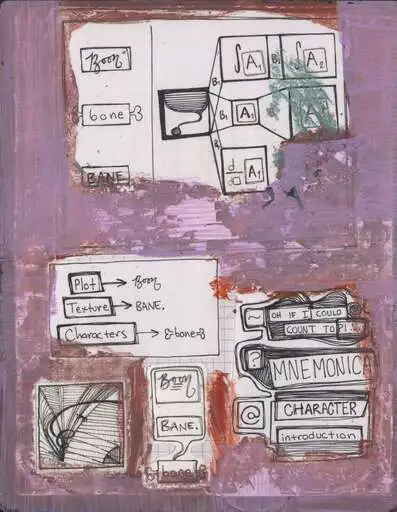
Use boonhonk as a thinking fit.
Pick a project, character, route, or college decision. Name its five transforms if you need a full fit. A scene can start as a pair.
boon
What good arrival does this create?
bane
What cost, constraint, or collateral momentum comes with it?
bone
What structure, route memory, or durable scaffold carries it?
bonk
Where does it collide with reality, humor, limits, or timing?
honk
What public signal helps someone else understand or join?
The five questions are a fit. Example mixes live on the register: boon+honk, bane+bone, bone+bonk, boon+bane, honk+bonk.
Considering college? Build a world first.
College is not only a place you apply to. It is an environment you learn to navigate. This route helps you practice that navigation through quests, characters, systems, and portfolio artifacts.
- 1 NoticeExplore the library, garden, and guide cards. Output: curiosity map.
- 2 NameChoose a character or mechanic. Output: learning identity card.
- 3 BuildComplete one quest. Output: small artifact.
- 4 DocumentAdd a reflection. Output: portfolio page or screenshot card.
- 5 ConnectRelate the artifact to a field of study. Output: college interest statement.
- 6 ExtendMake your own character, location, or system. Output: capstone seed.
The garden gives the library softness.
A garden prompt can stay lightweight: no social network, no heavy account system, just seed types that help someone notice what they want to grow.
These are the kinds of questions a careful person returns to across decades. A Character Seed is not a full backstory. It is the first small claim that a life might be worth keeping company with for a long time.
Question Seed
What are you wondering about?
Skill Seed
What do you want to learn to do?
Memory Seed
What is something you do not want to lose?
System Seed
What pattern have you noticed?
Character Seed
What kind of helper would this world need?
If you are new to this kind of tending, or if generating a character still feels unclear
Start here in the garden. A Character Seed is the smallest honest beginning. Later, when you are ready, the character development page gives the private workshop for name, portrait, pressure, and the five boonhonk questions. The character sheet builder is the press that lets one grammar (the life you imagined) become legible in another (the profile a mentor or collaborator can actually use), without forcing the two to collapse.
You do not need to understand every construct at once. The kernel you can carry from the portal, the operators as gestures the character learns to make, the tags as sigils you inscribe — these become useful the more you live with one person. The table and the Library will teach the rest over time.
The living tools of the garden: semantic labels, attentive braces, the memory cauldron, and spell trails
These four practices are how the Library stays alive and how meaning moves between the real surfaces and the world you are building here.
- Semantic enhancements — the living inscriptions and handles the site keeps for itself and for you. Every frame, card, and gesture can carry clear labels (data attributes, operator sigils, component tags) so the world remembers what it is and what it can become.
- Brace physics — attentive containment and priming. When you hold a semantic brace (tap to notice, hold to gather its local value, double-click or release to prime it), you are performing a small act of care that makes that meaning available to the rest of the garden.
- Cauldron collection — the memory garden at the bottom of every page. Daily observations, journal lines, and primed semantic forces rest here. You mix them, tend them (nourish, prune), and plant what deserves to become a durable vision or character artifact.
- Spell navigation — the trails and paths your attention leaves. The spell path (the breadcrumb that travels with you) and the spells you cast from the cauldron are replayable, shareable memory. Follow them forward into new work or backward to remember how you arrived.
These are not separate features. They are the same patient attention, practiced at different scales. Hold a living term to prime its value; the cauldron remembers the gesture that gathered it. When you plant a mix, the resulting spell trail carries the chain of attentions that created it — you can follow the trail forward or re-gather it later. Every trail is an invitation: the garden remembers what you noticed, and the spell that grew from it is waiting for you to wonder what it becomes next. The portal home makes the full grammar visible; the Library is where you learn to use it by tending one small thing at a time. The Midjourney bench and character tools are simply places where the gathered forces (with their gesture memory) take visible or usable form.
Everything here is inspectable. Open “read / inspect” mode or look at the data attributes on any element. The constructs are meant to be played with.
Serious domains can enter as world forms.
Electrical and Embedded Systems
Grounding Rod, storm wards, responsive lights, signals, and safe discharge diagrams.
Chemistry and Materials
Garden soil, coatings, enchanted surfaces, sensory labs, and clay-body metaphysics.
Library and Information Sciences
Catalogs, archives, metadata spirits, reference desks, privacy, and restraint.
Hospitality Systems
Front desk flow, welcoming rituals, community meals, guest movement, and care under pressure.
Construction and Built Environments
Ramps, shelves, modular rooms, repair, accessibility, and town infrastructure.
Graphic and Communication Design
Signs, cards, maps, wayfinding, zines, stamps, and readable public signals.
What should become a route later?
These are candidates, not promises. Promote one only when the hub proves a visitor needs a dedicated place for it.