Site Design / Publishing Surfaces
Readable web surfaces that still feel alive.
This route is for the layer where interface design, editorial pacing, and visual systems overlap. A page can stay mostly static and still feel deliberate if typography, spacing, imagery, motion, and named frames all answer the same structural question. The aim is not maximal decoration. The aim is to make the surface expressive without hiding how it works.
If you want a site that behaves more like a field guide, a studio register, or a distinctive archive than a template portfolio, this page previews the design standard described on services and the conversation that starts on contact.
Treat the palette probe as a live composition test — not a mockup. Change resonance, wonder memory, and color mode, then walk the study cards and neighboring routes to see whether typography, pigment, and component slots still agree.

Dimensional Resonance
These controls are live site settings, not a mockup. Change them here, then watch the study cards, the canvas accents, and neighboring design surfaces respond to the perspective you chose. The perspective stays familiar for this session.
Live Surface Tuning
Choose the guiding perspective, then judge whether the surface still feels composed.
Current dimension: situate. Wonder memory is nearby, and color mode is auto.
The practical use case is simple: a studio, product, or knowledge surface should stay legible while its emphasis changes. For the full control surface, go to runtime preferences.
Settings are stored locally in this browser.
Studio Presentation
Field-guide pacing, illustrated cards, and image-led thresholds help a studio show references, process, and renders instead of relying on slogans.
@servicesProduct Documentation
Internal anchors, diagrams, and route-aware surfaces can make a library or language site feel authored rather than generic.
~website_guidePresentation Range
Pages that need to be read aloud, screenshotted, cloned, or rewritten on stream work better when copy, cards, and ornament teach the interaction as they go.
@talk_through_a_routeDistinctive Archives
Math, software, craft, and play should not collapse into one portfolio voice. The site can surface distinct genre signals while keeping a shared grammar underneath.
~tour_the_atlasReference Studies
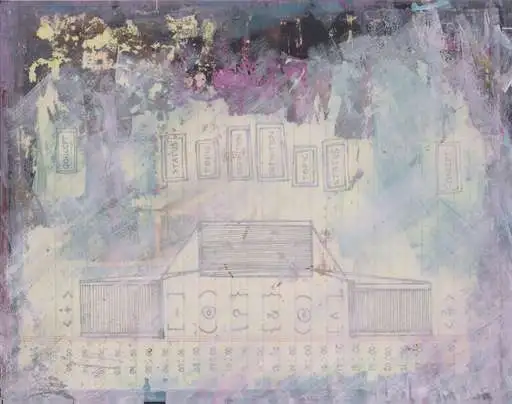
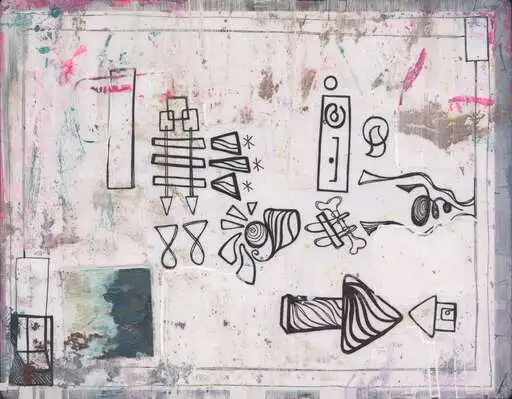
These are useful as site-design references because they show cadence and containment: clusters, pauses, seams, and repeated families of form. They also respond to the dimensional resonance controls above, so the ornament now proves a design choice instead of floating beside it.
What Holds A Surface Together
A design system becomes legible when these parts reinforce each other instead of competing for attention. Treat them as webpage tropes with material behavior before treating them as ornament.
- reading rhythm
- bounded section
- memory cue
- document trail
Behaviors worth carrying across routes
Readable surfaces get more interesting when SVG line grammar, CSS state grammar, recipe material grammar, and play consequence grammar reinforce each other. A component should do more than contain a motif: it should reveal what entered, what changed, and where the result can travel. Returning readers can treat this topic as a tuning guide—not a second design hub.
Path cadence and label spacing from SVG experiments should survive export into recipe diagrams, town maps, and tool shotboards.
stroke → diagram → handoff
Hover preview, hold prime, and explicit collect in CSS experiments mirror cauldron and spw-chip contracts sitewide.
preview → prime → collect
Heat, acid, batch base, and service repair from recipes give copy and ornament a material reason to change — not just a seasonal skin. Test the film side on scene composition beds.
material → copy → scene
Play and tools test whether a behavior still reads under pressure. No standalone games catalog yet — table memory and local records are the live bench.
pressure → record → return
A card, cauldron, or control should expose the relation it performs and leave a visible receipt after discharge. If a payload has no inspectable consequence, keep it as ornament or a note instead of implying runtime power.
payload → relation → state → receipt
Neighbor Routes
Interaction design
For affordances, state change, feedback, progressive enhancement, and the question of what behavior should become explicit.
route: Interaction designAccessibility
For keyboard access, semantics, live regions, and the basic discipline that keeps behavior usable beyond one input style.
route: AccessibilityWebsite field guide
The broadest explanation of how the current site shell, publishing logic, and semantic layers fit together.
route: Website guideFragments
For small HTML and CSS pieces that can prove a visual idea before it becomes a full layout system.
route: FragmentsSVG storytelling
For motif systems, illustrator handoff, and visual marks that can migrate between cover, chapter, map, and page.
route: SVG storytellingRenderers
For the low-level math of light, type shaping, and the visual pipeline beneath public interfaces.
route: Renderers