Midjourney Bench
Illustration door. Packets let a table see a concept tonight. The same packet is what you hand an illustrator — or carry into shot language toward 2027.
Use the kept images in /public/images/ as the reference pool. Ignore everything that has not earned a stable home yet. Style refs should tell you about material and atmosphere. Identity refs should stabilize a character or recurring figure. Omni refs should help multiple scenes share one canon without making every prompt start from zero.
Lifetime Midjourney usage: 8,169 fast, 625 turbo, and 829 relaxed images. The value is not the count alone; it is the repeated judgment about what deserves to be kept, renamed, cited, and published.
Read the site for subject, substrate, material behavior, memory rule, camera job, and failure mode. A good prompt begins as a reasoned component, not a loose vibe.
A kept image should graduate into RPG Wednesday as a scene card or library artifact — and leave a hire brief: subject, light, guardrail, and what must still mean the same after a person draws it.
Ordinary days, journal entries, and poems are useful soil. A line of light, a tiredness after talk, a Tuesday ritual, or a stanza that already knows its weather can become a prompt packet. The packet is what you run here tonight, and what you hand an illustrator later. This sprint has $8 of fast hours. When the budget can carry a yearly tool, prefer annual Standard — or another plan with more fast hours.
A useful prompt packet names the subject, material behavior, light cue, grounding point, and guardrail. “Translucent rice paper” is not just mood if the card also says where text must remain readable and which component or scene should test the surface.
I want this page to feel like a back counter with pinned studies, damp notes, and a few good bottles still on hand: enough order to keep the night moving, enough residue to remember what was worth another round.
Local image mount / paste zone — drop or paste images here to associate them with prompt packets (uses site image metaphysics + prompt memory for recall across sessions). Producers: this is how you build a personal visual canon without losing the files.
As of August 12, 2026, Midjourney V8.2 is the default model. The nearby shelf still includes ChatGPT Images, Gemini, Adobe Firefly, and Ideogram. Write the packet so it can travel; then season it with --v 8.2 when the job is a character concept or a table artifact.
This route is also where storyboarding and collaboration can stay legible. Treat copy as a panel sketch before it becomes an image: subject, camera distance, lighting, caption job, change budget, and what the scene must still mean after an artist improves it. When Raven of the Broken Biscuits starts drawing for the animated series work, that art should live in clearly credited collaborator buckets and route surfaces instead of blending into your own studies.
For producers and directors developing a visual style: Start with rendered cards from the character sheet builder or profile tool. Their tropes, badges, and sections become stable identity packets. Combine them with style refs (material + light + palette) and omni refs (world rules) here. Use the design palettes and slots pages to tune the underlying component language so the same atmosphere holds across stills, motion tests, and UI. Query parameters on this bench and the character tools let you share exact higher-order style combinations (card state + palette + image memory) with your art team.

Screenshot, interpret, share
Share a published crop that already looks like this site. Capture a route, hand the still to Grok Imagine, send the interpretation to a chat or a story. Unpublished generations stay off the feed.
V8.2 for Characters and Artifacts
V8.2 became the default on July 24, 2026. Midjourney framed it as an aesthetics, image-quality, and personalization pass: bolder, cleaner, less accidental mud, and better at reading a rated taste profile. That is useful here when the job is a face, a prop, a ward, or a piece of table kit — not a generic mood board.
Pin the version with --v 8.2 when a packet must stay comparable across a week. Use identity packets and character references for people. Use style refs for material behavior. Use omni refs when a family of scenes has to share one world light. Personalization is worth the ratings if you already have a large profile; V8.2’s pool for building those profiles is larger than the previous default.
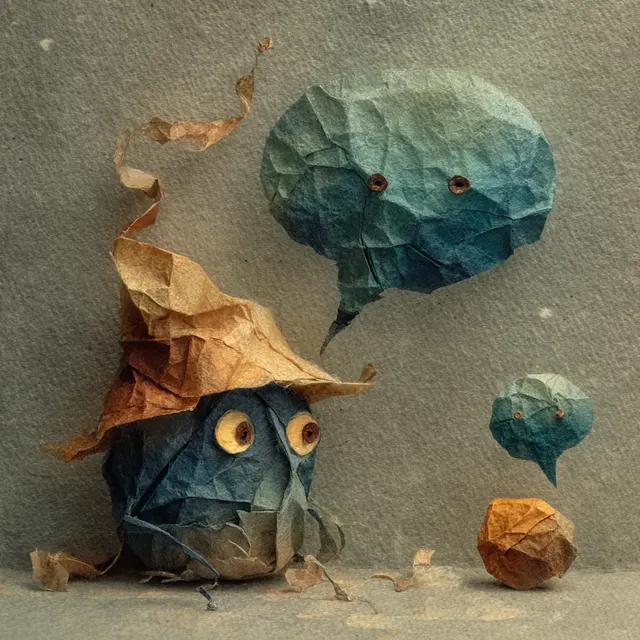
Official notes: version parameter and the V8.2 announcement. Character and omni references still exist on the V8 line; omni currently falls back through V7 under the hood. HD, pan, and edit tools have their own cost and fallback rules — do not assume a character study stays 2K after a crop.
Handles, stickers, then scenes
The prompt packet is usually more useful than the still. The still is often a sticker in a group chat. Grok Imagine is one renderer that can project that sticker into a scene — another >, not a promotion to canon.
Prompt Mining Loop
The reason to read through Spwashi for prompts is that routes name different dimensions of conception. A software paragraph may give memory policy. A recipe may give phase change. A session may give social pressure. A CSS note may give the surface rule that keeps text readable after the image arrives.
Image Resource Utility
A lightweight local utility now scans tracked public images and writes a concept-aware manifest. Use it before swapping a page image so the replacement has a stable path, inferred concepts, role, format, and a swap hint.
npm run images:manifest. The output lands at /public/data/image-resources.json with 260 tracked resources in the first pass.
node scripts/image-resource-manifest.mjs --list --concept=rpg-wednesday, --concept=site-design, --role=hero, or --format=webp when a page needs a different visual register.
Reference Packets
How the garden’s living tools feed vision work
The four practices that keep the Library coherent are the same ones that make rich, specific prompts possible:
- Semantic enhancements give you precise, inspectable language for material, light, gesture, and consequence instead of vague mood words.
- Brace physics (the attentive hold, prime, and release) let you gather the exact local value of a moment before it dissolves.
- Cauldron collection (the memory garden at the bottom of pages) is where daily observations and primed semantic forces rest until they are ready to become a vision seed.
- Spell navigation turns the trails of your attention into replayable, shareable memory that can travel with a character or a world across many images and many years.
When you use the cauldron’s “vision seed” action (or hold a living term anywhere on the site), the gesture history travels with the seed. The resulting prompt packet and image carry the chain of attentions — a true blended artifact that can be planted back into the Library or a character as a vision with memory.
Abstract Assets and Physical Items Gallery
These are kept studies with verified prompt recipes, active site roles, and .spw sidecars. Every specimen falls into either an abstract computational field or a physical crafted item. Copy the prompt recipes to keep visual continuity across sessions.
Abstract Asset Lane: Fields, Lattices, and Machinery
Use when an interface or software route needs computational structure, vector flow, or paper machinery rather than figurative illustration.
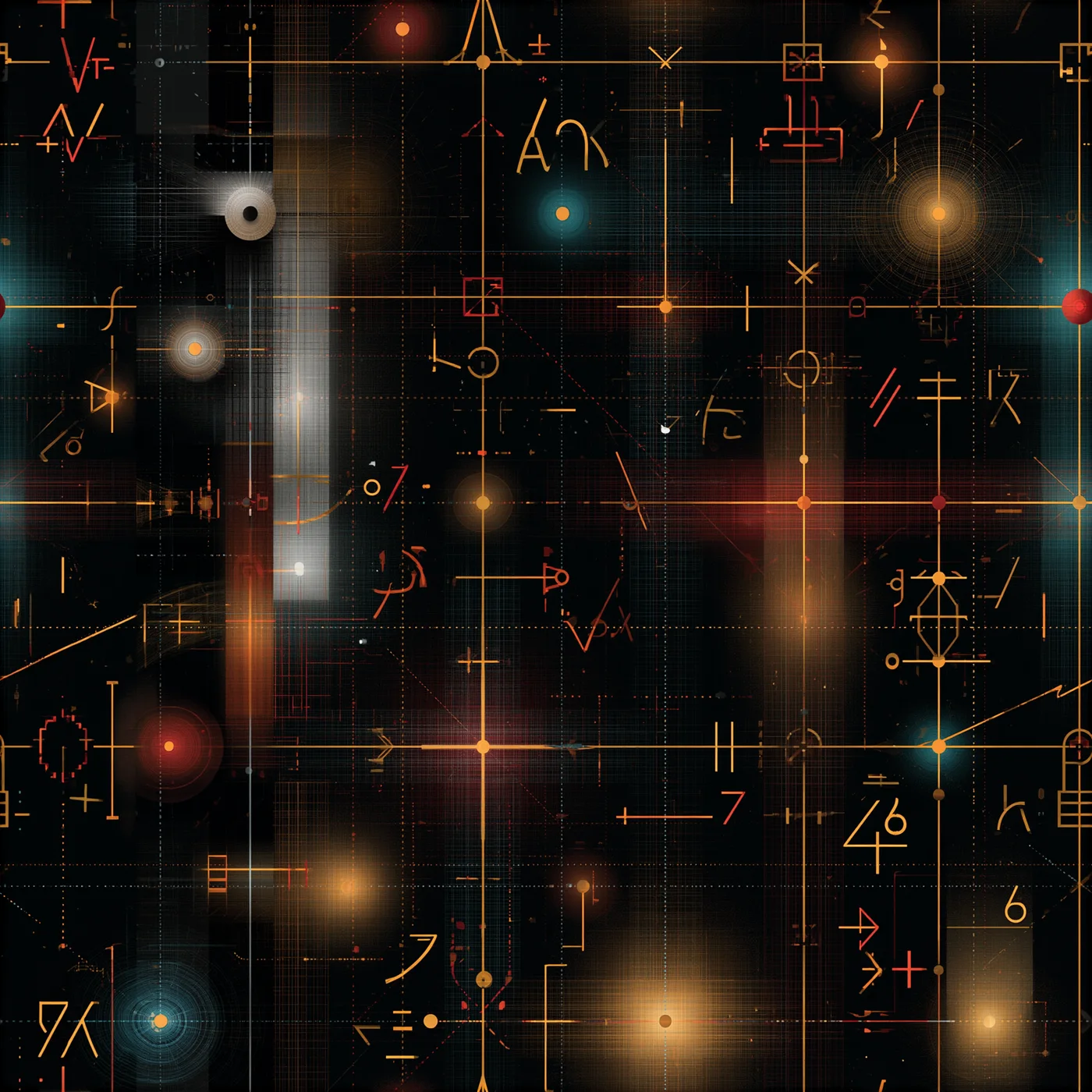
algorithms --chaos 20 --tile --profile 3q5khel --hd --v 8.1
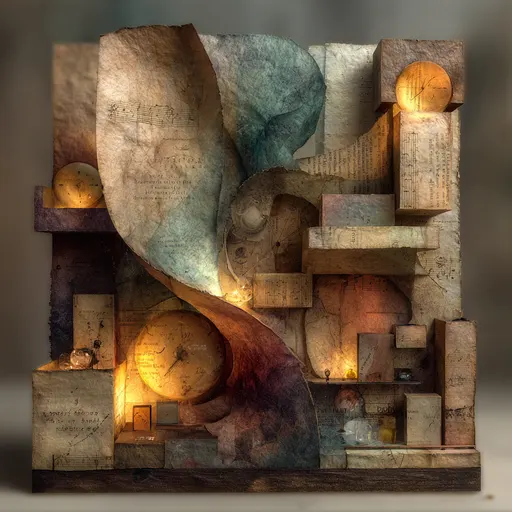
papergami machinery for cognitive layout and web design --ar 1:1 --v 8.2
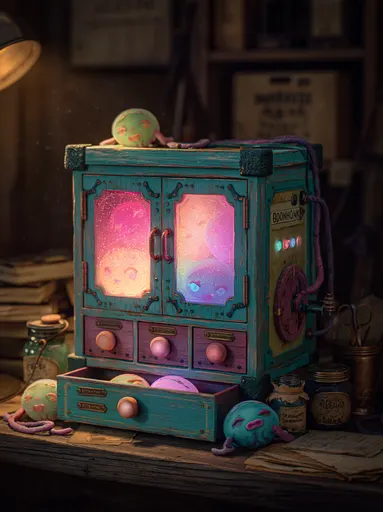
glowing boonhonk machine --chaos 20 --ar 3:4 --profile 3q5khel --hd --v 8.1
Physical Item Lane: Props, Instruments, and Toolkits
Use when a concept needs tactile consequence: mechanical levers, wooden drawers, brass balances, and craftsman tools.

glowing boonhonk machine gearin up to blort some bap --v 8.1

brass balance scale with market pies in an artisanal fantasy stall --v 8.2

wooden library card catalog drawer with handwritten index slips --v 8.2
Route Grammar
- /tools/midjourney/characters/ Identity packets for recurring characters, species studies, wardrobe logic, and expression boards.
- /tools/midjourney/environments/ Set dressing, interiors, exterior motifs, architectural atmospheres, and material cues.
- /tools/midjourney/motifs/ Stickers, glyphs, seals, badges, speech-bubble physics, and emblem systems that need consistency.
- /tools/midjourney/shotboards/ Storyboard sequences, animated-series blocking, and frame-to-frame continuity experiments.
Each page can carry kept images, short prompt notes, failures worth remembering, and what the experiment clarified. The point is accumulation, not one-off prompt spectacle.
Collaboration Notes
Canon maintenance
Streaks, stickers, and screenshots stabilize canon when they become named packets instead of a loose image flood.
Credited art
When Raven contributes art, publish it in clearly labeled collaborator routes or image buckets with attribution in the surrounding copy and sidecars.
Scope discipline
Use the bench for experiments, then promote only the kept images into public routes. Everything else can stay ignored until the category becomes obvious.